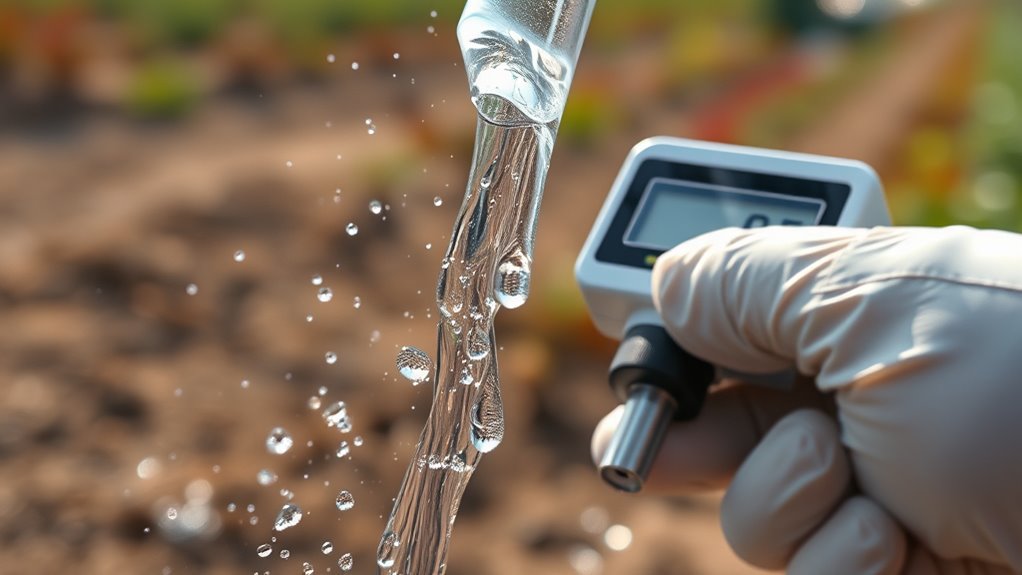
To guarantee good irrigation water quality, you should regularly test for salinity and contaminants like heavy metals or pesticides. This helps you identify issues early and choose the right treatment methods, such as filtration or blending water sources. Proper testing and treatment prevent crop damage, soil degradation, and health risks, keeping your farm productive and sustainable. Keep exploring to discover more effective strategies to maintain ideal water quality for your crops.
Key Takeaways
- Regular testing of irrigation water detects salinity levels and contaminants, enabling early intervention.
- Monitoring water quality helps prevent crop damage and soil degradation caused by poor water conditions.
- Treatment options like filtration, blending, or chemical adjustments address specific issues identified through testing.
- Managing water quality ensures sustainable farming, higher yields, and crop safety.
- Continuous monitoring with sensors enhances detection of fluctuations in water salinity and contaminant levels.
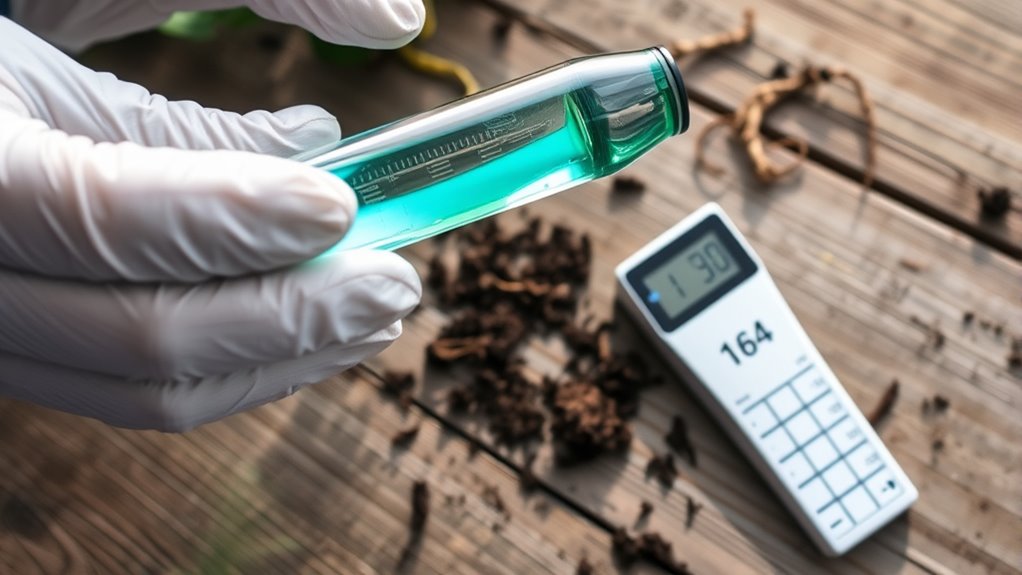
Irrigation water quality directly affects crop health and yield, making it essential for farmers and growers to assess the water they use regularly. Poor water quality can lead to a range of issues, including reduced plant growth, soil degradation, and increased disease susceptibility. To prevent these problems, you need to understand and manage key factors like salinity and contaminants. Salinity management is particularly important because high salt levels in irrigation water can cause osmotic stress, making it difficult for plants to absorb water. Over time, excess salts accumulate in the soil, reducing its fertility and harming your crops. Regular testing helps you identify salinity issues early, so you can adjust your irrigation practices or implement leaching strategies to flush out salts and maintain soil health.
Contaminant detection is equally critical, as water can carry harmful substances such as heavy metals, pesticides, or pathogens. These contaminants, if left unchecked, can pose health risks to consumers and damage your crops. Conducting thorough water tests allows you to detect pollutants before they reach dangerous levels. Once identified, you can take targeted treatment measures, like filtration or chemical adjustments, to remove or neutralize these harmful substances. By staying vigilant about contaminant levels, you safeguard both your crop quality and the safety of your produce.
Testing your irrigation water isn’t just a one-time task; it should be part of an ongoing management plan. Regular analysis provides a clear picture of how water quality fluctuates over time, especially during different seasons or after heavy rainfall. This ongoing monitoring enables you to adapt your irrigation strategies proactively, rather than reactively dealing with crop failures or soil issues later. For instance, if tests reveal rising salinity, you might switch to lower-salt water sources or improve drainage systems. Similarly, if contaminants are detected, you can enhance filtration or use alternative water sources. Incorporating technology like sensors and automated testing devices can further improve your water management efficiency.
Treating irrigation water effectively depends on the issues identified. For salinity, options include blending high-salinity water with fresher sources, improving drainage, or applying soil amendments that help plants cope with salt stress. For contaminant removal, methods like reverse osmosis, activated carbon filtration, or chemical treatments can be employed, depending on the specific pollutants present. The key is to tailor your approach based on thorough testing results, ensuring your crops are nourished with clean, safe water. Maintaining good water quality through vigilant testing and appropriate treatment ultimately leads to healthier crops, increased yields, and sustainable farming practices.
Frequently Asked Questions
How Often Should Irrigation Water Be Tested for Quality?
You should test your irrigation water at least once a year to guarantee it meets quality standards. Regular water sampling helps identify potential issues like high salinity or contamination. If you notice changes in crop health or water appearance, test more frequently. Staying vigilant with water sampling ensures your water consistently meets quality standards and helps prevent problems that could harm your crops or soil.
What Are the Best Treatment Options for Contaminated Irrigation Water?
To improve your irrigation water, consider gentle methods like water filtration to remove impurities and using drip irrigation systems that minimize contact with less-than-ideal water sources. These options help prevent clogging and protect your crops. For more contaminated water, advanced treatments like UV sterilization or biological filters can be effective. Always evaluate your water quality regularly to choose the best treatment approach and guarantee healthy, productive plants.
How Do I Interpret Irrigation Water Test Results?
When interpreting irrigation water test results, focus on key indicators like salinity levels, pH, and contaminants related to water contamination. High salinity suggests you need salinity management strategies to prevent crop damage. Check if contaminant concentrations surpass safe thresholds for your crops. Use this info to adjust your irrigation practices, implement treatment if necessary, and guarantee water quality supports healthy plant growth while minimizing risks from water contamination.
Can Untreated Water Harm Crop Yields?
Untreated water can be a silent thief, stealing your crop yields by causing salt buildup and microbial contamination. Without proper testing and treatment, salts can accumulate in the soil, choking roots like a constricting vice, while microbes can introduce diseases that weaken plants. This unchecked water quality risks turning a lush garden into a barren field, so it’s essential to address water issues early to protect your crops’ health and productivity.
Are There Eco-Friendly Methods to Improve Water Quality?
Yes, there are eco-friendly methods to improve water quality. You can use natural filtration by incorporating sand, gravel, or plant-based barriers that remove impurities without chemicals. Bioremediation techniques also work well; they involve beneficial microbes breaking down pollutants naturally. These approaches are sustainable, cost-effective, and safe for your crops, helping you maintain healthy irrigation water while protecting the environment.
Conclusion
Ensuring your irrigation water is of good quality is vital for healthy crops. Regular testing helps you catch issues early, saving you money and effort. Did you know that over 70% of irrigated lands worldwide face water quality problems? By treating and managing your water properly, you can boost crop yield and protect the environment. Stay proactive, test often, and keep your irrigation water clean for the best results.