
To manage saline soils and irrigation water, focus on improving drainage through tile drains or perforated pipes to prevent waterlogging and salt buildup. Use soil amendments like gypsum and organic matter to enhance soil structure and reduce sodicity. Regular testing of soil salinity helps you adjust irrigation and leaching practices effectively. Choosing salt-tolerant crops and maintaining soil health are also key. Continuing with these strategies will help you optimize conditions and sustain healthy crop growth.
Key Takeaways
- Implement proper drainage systems, like tile drains, to prevent waterlogging and facilitate salt leaching.
- Use soil amendments such as gypsum and organic matter to improve soil structure and reduce salinity effects.
- Regularly monitor soil salinity levels through testing to adjust irrigation and management strategies effectively.
- Select salt-tolerant crops and practice crop rotation to maintain productivity in saline conditions.
- Manage irrigation water quality and volume carefully to avoid further salt buildup and promote effective leaching.
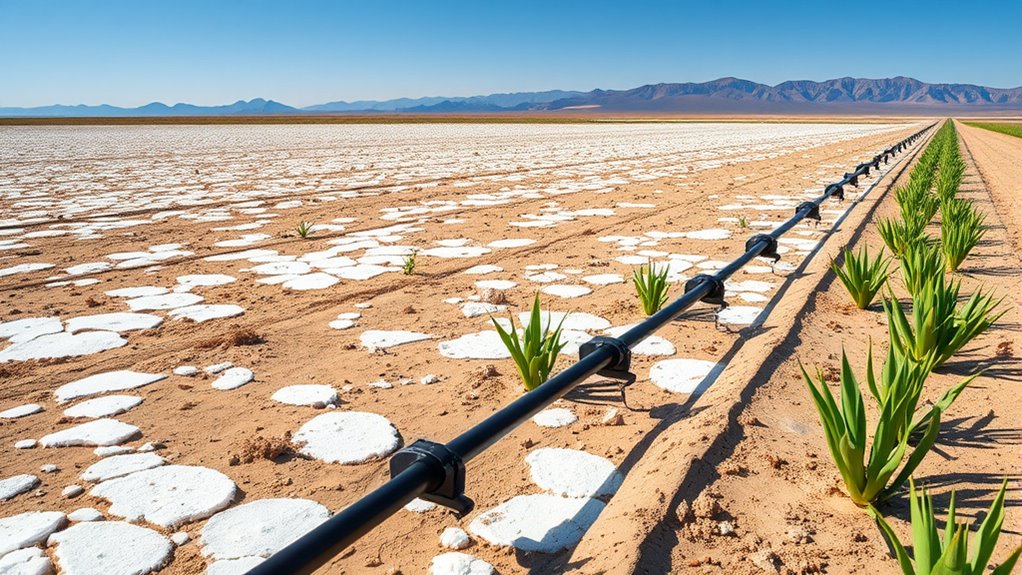
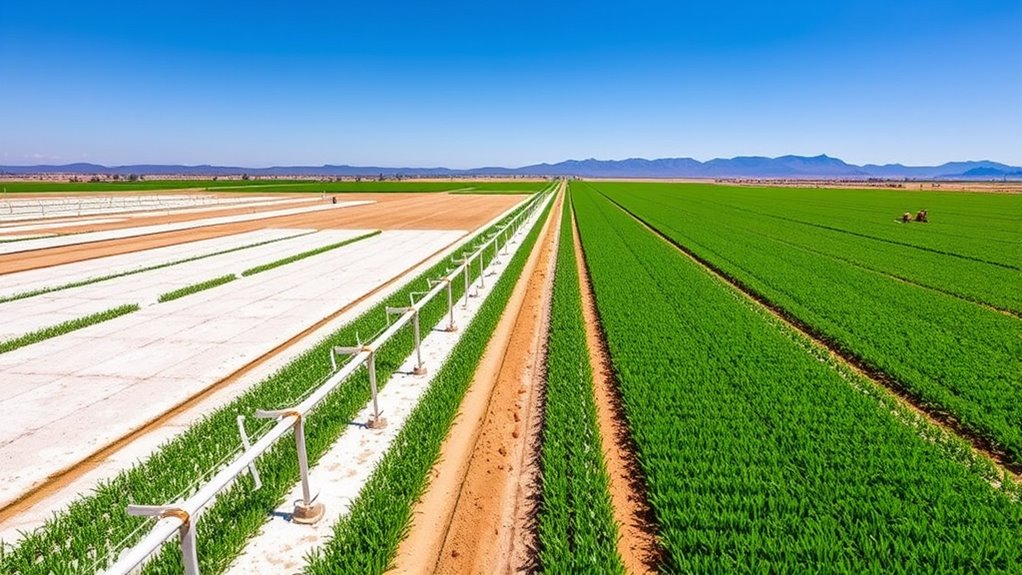
Have you ever wondered how to effectively manage saline soils and irrigation water to protect your crops? The key lies in understanding and implementing proper drainage techniques and soil amendments. Saline soils develop when salts accumulate in the root zone, hindering plant growth. To combat this, you need to ensure excess salts are removed efficiently, which is where drainage techniques come into play. Installing proper subsurface drainage systems helps prevent waterlogging and facilitates the leaching of salts below the root zone. You should evaluate your soil’s drainage capacity and consider installing tile drains or perforated pipes to improve water movement. Good drainage reduces salt buildup, creating a healthier environment for your crops.
Proper drainage and soil amendments are key to managing saline soils and protecting crops.
Alongside drainage, soil amendments are essential for managing saline soils. Organic matter, such as compost or peat moss, can improve soil structure, increase water retention, and promote microbial activity that helps detoxify salts. Gypsum (calcium sulfate) is another effective amendment; it replaces sodium ions on the soil particles, encouraging the leaching process and reducing soil sodicity. Incorporating these amendments requires careful application and mixing to ensure they reach the root zone where they can make the most impact. Over time, they help restore soil fertility and reduce the negative effects of salinity.
It’s equally important to monitor your soil’s salinity levels regularly. Use soil testing kits or send samples to a lab to assess electrical conductivity (EC), which indicates salt concentration. Keeping a close eye on these levels allows you to adjust your management practices promptly. If salinity rises, increasing leaching through additional irrigation with high-quality water can help flush out accumulated salts. However, be cautious not to over-irrigate, as this can lead to waterlogging or nutrient runoff. Balancing irrigation volume with proper drainage ensures salts are effectively removed without harming your crops.
Furthermore, selecting salt-tolerant crop varieties can make a significant difference in saline environments. These plants are adapted to withstand higher salt levels and can continue to produce yields where others might fail. Proper crop rotation and soil management practices also play roles in maintaining soil health. Incorporating cover crops can improve soil structure and organic matter content, which in turn aids in salt management. Regular soil testing for salinity levels can help you stay ahead of potential problems and adapt your practices accordingly.
Frequently Asked Questions
How Can Saline Soils Be Converted to Productive Farmland?
To convert saline soils into productive farmland, you should focus on soil leaching by applying excess water to wash away salts below the root zone. Choose salt-tolerant crops that can thrive under high salinity conditions, reducing the risk of crop failure. Regularly monitor soil salinity levels, improve drainage, and practice proper irrigation techniques to prevent salt buildup. With consistent management, your soil can become more fertile and suitable for farming.
What Are the Long-Term Effects of Saline Water on Soil Health?
Using saline water long-term can harm soil health by disrupting soil microbial dynamics and accelerating organic matter degradation. You might notice reduced microbial diversity, which affects nutrient cycling and plant growth. Over time, soil structure deteriorates, leading to decreased fertility. To counteract this, you should consider leaching salts, adding organic amendments, and managing irrigation practices carefully, helping to restore microbial activity and preserve soil organic matter for sustainable productivity.
Which Crops Are Most Tolerant to Saline Soil Conditions?
You should consider planting salt-tolerant crops like barley, sugar beet, and certain varieties of millet, as they demonstrate high crop resilience in saline soil conditions. These crops can withstand higher salt levels, allowing you to maintain productivity despite challenging soil quality. By choosing salt-tolerant crops, you optimize your chances of successful yields and improve overall soil health over time, making your agricultural efforts more sustainable.
How Does Climate Change Influence Soil Salinity Levels?
Climate change causes climate-induced salinity by altering precipitation patterns, leading to more frequent droughts and increased evaporation. When rainfall decreases, salts in the soil become more concentrated, raising salinity levels. Conversely, changing precipitation can also cause flooding, which brings in additional salts. These shifts impact soil health and crop growth, making it essential for you to monitor salinity levels and adapt your irrigation practices accordingly to mitigate climate-induced salinity effects.
Are There Cost-Effective Methods for Large-Scale Soil Desalination?
Think of soil desalination like a giant sponge needing a good squeeze. Yes, there are cost-effective methods for large-scale soil desalination, especially when using innovative desalination technologies and soil remediation techniques. These methods, including solar evaporation or chemical amendments, can effectively reduce salinity without breaking the bank. They’re your best shot at restoring healthy soil on a large scale while keeping costs manageable and the environment in mind.
Conclusion
By implementing proper management techniques, you can effectively reduce soil salinity and improve water quality. Did you know that over 20 million hectares worldwide are affected by soil salinity, threatening agricultural productivity? Staying proactive with practices like proper drainage and crop selection can turn saline soils into productive lands. Remember, managing salinity isn’t just about preserving land—it’s about securing your farm’s future and ensuring sustainable food production for generations to come.