
If you don’t space your micro-sprinklers properly, you risk wasting water through runoff, dry patches, and uneven coverage. Placing them too close causes overwatering and pooling, while spacing them too far apart leaves dry areas that harm plants. Poor placement reduces efficiency and increases water bills. To avoid these issues, adjusting the spacing based on spray radius and environmental conditions is essential. Keep going to discover how to optimize your system for better results.

Get garden gear delivered free with Prime
- Fast, free delivery on millions of items
- Prime Video, Amazon Music and more included
- Member-only deals all year
Key Takeaways
- Improper spacing causes overlapping spray zones, leading to water runoff and wastage.
- Gaps from incorrect spacing result in dry patches and uneven watering.
- Overlapping micro-sprinklers increase water use without improving coverage.
- Wide spacing can cause dry areas, requiring more watering time and waste.
- Poor placement reduces irrigation efficiency, increasing water consumption unnecessarily.
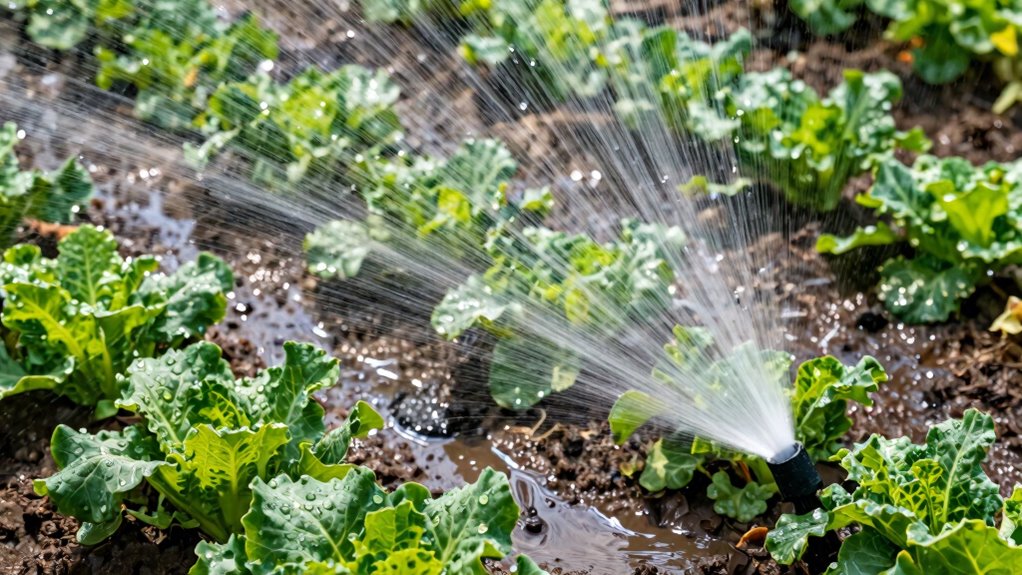
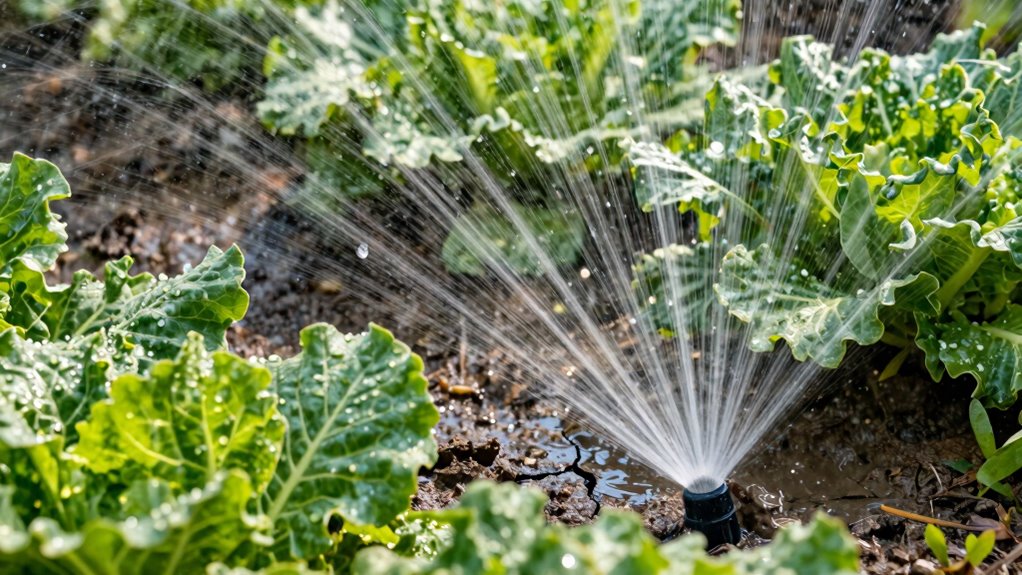
Have you ever wondered why your micro-sprinklers seem to waste water despite their small size? The answer often lies in how you space them. Proper spacing is essential for maximizing irrigation efficiency and guaranteeing water conservation. When micro-sprinklers are too close together, they may produce overlapping spray zones, leading to water runoff or pooling. Conversely, if they’re spaced too far apart, some areas stay dry, forcing you to run the system longer or water more frequently, which wastes water and wastes your resources.
Getting the spacing right isn’t just about covering your garden or lawn evenly; it’s about optimizing every drop of water. If your micro-sprinklers are not properly aligned, you risk overwatering certain spots while neglecting others. Overwatering not only wastes water but also encourages diseases, weeds, and root rot. On the other hand, uneven watering can stunt plant growth, making your efforts less effective. To improve irrigation efficiency, you need to carefully plan the placement of each sprinkler, considering factors like spray radius, wind, and plant type. Proper spacing minimizes water wastage and ensures that each part of your landscape gets the right amount of moisture. Understanding the spray radius of your micro-sprinklers is crucial for effective placement and coverage.
Proper sprinkler spacing ensures efficient watering, prevents overwatering, and promotes healthier plants across your landscape.
Another common mistake is ignoring the spray radius of your micro-sprinklers. Each unit has a specified radius, and understanding this is key. If you place sprinklers too close, their spray zones overlap excessively, creating unnecessary water waste. If they’re too far apart, you might leave gaps. Adjusting the spacing based on the spray radius helps you achieve uniform coverage without excess runoff or dry patches. This way, you make the most of your water supply while reducing waste, which is critical in areas facing water restrictions or drought conditions. Additionally, proper spacing can help prevent pressure issues that reduce coverage effectiveness. Proper system design also ensures your irrigation setup works efficiently and reduces the need for adjustments later on.
Proper spacing also plays a role in reducing the demand on your irrigation system. When micro-sprinklers are correctly spaced, your system doesn’t have to run as long to cover the same area. This saves water and energy, contributing to a more sustainable and efficient landscape. It also lowers your water bill and decreases the environmental impact. By paying close attention to spacing, you’re not only conserving water but also improving overall irrigation efficiency, ensuring healthier plants with less resource waste.
As an affiliate, we earn on qualifying purchases.
Frequently Asked Questions
How Do I Calculate the Optimal Spacing for Micro-Sprinklers?
To calculate ideal spacing for micro-sprinklers, start with sprinkler calibration data to determine their water output rate. Use this info to guarantee coverage overlaps properly, avoiding dry spots and overwatering. Measure your garden area and divide it by the sprinkler’s watering radius. Adjust spacing based on your specific plant needs and landscape layout. Properly calibrated and spaced micro-sprinklers promote water conservation and efficient irrigation.
What Are Signs of Overwatering Caused by Incorrect Spacing?
Like a garden overgrown with weeds, overwatering from incorrect sprinkler spacing shows itself in soggy soil and plant yellowing. You might notice excess runoff or fungal issues, indicating your drip irrigation isn’t watering efficiently. Check your mulch coverage—if it’s too thick, water can’t penetrate, leading to uneven watering and overwatering in some zones. Adjust spacing to improve water distribution, ensuring your plants stay healthy without wasting resources.
Can Adjusting Pressure Improve Watering Efficiency?
Yes, adjusting pressure can improve watering efficiency. Proper pressure regulation guarantees micro-sprinklers deliver the right amount of water, reducing waste and promoting water conservation. When pressure is too high, water sprays too far and can cause runoff or uneven coverage. Lowering pressure allows for more uniform distribution, minimizes overwatering, and conserves water. Regularly checking and adjusting your system’s pressure helps optimize performance and supports sustainable watering practices.
Are There Specific Soil Types That Require Different Sprinkler Spacing?
Yes, you should adjust sprinkler spacing based on soil types, especially if your soil has high compaction or organic matter. Compact soil needs closer spacing to guarantee water penetrates effectively, preventing runoff and waste. Conversely, soil rich in organic matter absorbs water quickly, so wider spacing works better. Proper spacing tailored to your soil helps you avoid water waste and promotes healthier plant growth.
How Often Should I Check and Adjust Sprinkler Spacing?
You should check and adjust your sprinkler spacing at least once a season, especially if you notice dry spots or overwatering. Use drip irrigation for precise watering, and incorporate rain sensors to prevent unnecessary watering. Regularly inspect your system, ensuring sprinklers are correctly spaced to avoid water waste. Adjust spacing if you change your landscaping or observe uneven coverage, maintaining efficient watering and conserving water resources.
Conclusion
If you ignore proper spacing, micro-sprinklers can waste water like a leaky faucet, constantly dripping without purpose. Just as a well-placed puzzle piece completes a picture, correct spacing guarantees your water is used efficiently, nourishing your plants without waste. Don’t let poor planning turn your irrigation system into a flood rather than a benefit. Paying attention to spacing is like tuning a finely made instrument—small adjustments lead to harmony and savings, helping your garden thrive without unnecessary waste.
Fall yard work Picks
leaf blowers
As an affiliate, we earn on qualifying purchases.