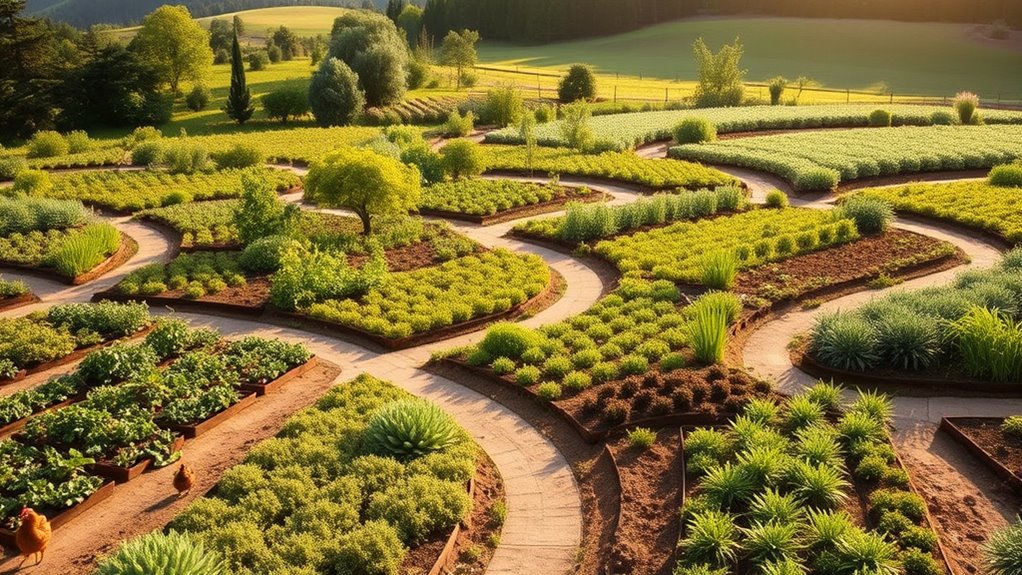

Permaculture design principles guide you to create sustainable farms that work harmoniously with nature. By harnessing natural relationships, you optimize productivity while minimizing waste, focusing on building resilient, self-sufficient ecosystems. Strategies like companion planting improve soil health and pest control, while water harvesting techniques conserve resources and prevent erosion. Combining these practices fosters biodiversity and long-term farm resilience. If you continue exploring, you’ll uncover how these principles can transform your farm into an environmentally sound, thriving system.
Key Takeaways
- Utilize natural relationships and patterns to create resilient, self-sustaining ecosystems aligned with permaculture ethics.
- Implement companion planting to enhance soil health, pest control, and plant synergy.
- Incorporate water harvesting techniques like swales and rain gardens to conserve water and prevent erosion.
- Design farm systems that integrate water management and plant diversity for resource efficiency and ecosystem balance.
- Adopt a holistic approach focusing on long-term sustainability, biodiversity, and working harmoniously with nature.

Permaculture design principles serve as a practical framework for creating sustainable and resilient ecosystems. When you apply these principles on your farm, you harness natural relationships to optimize productivity while minimizing waste and external inputs. Two key strategies that embody this approach are companion planting and water harvesting. Together, they help you develop a farm that’s not only productive but also environmentally sound.
Companion planting involves strategically pairing different crops to improve growth, reduce pests, and enhance soil health. By understanding natural plant relationships, you can select combinations that support each other’s development. For example, planting nitrogen-fixing legumes alongside vegetables like tomatoes or peppers can naturally boost soil fertility. This reduces your dependence on chemical fertilizers, keeping your farm healthier and more sustainable. Companion planting also creates a balanced ecosystem, where beneficial insects are encouraged, pests are naturally kept in check, and plant diseases are less likely to spread. It’s about working with nature rather than against it, creating a symbiotic environment that benefits all species involved.
Water harvesting is another fundamental principle you can implement to increase your farm’s resilience. This technique involves capturing and storing rainwater for later use, reducing reliance on external water sources. You can incorporate simple methods like building contour swales or planting rain gardens to direct runoff into storage systems. These strategies not only conserve water but also help prevent erosion and improve groundwater recharge. When you harvest water effectively, you create a buffer during dry spells, ensuring your crops stay healthy even in drought conditions. It also minimizes your farm’s impact on local water cycles, making your operation more environmentally friendly. Additionally, integrating appropriate irrigation systems can further optimize water use efficiency.
Both companion planting and water harvesting exemplify the permaculture ethic of working with nature. They help you develop a farm that functions as a self-sustaining system, where each element supports others. By integrating these practices, you foster biodiversity, improve resource efficiency, and create a resilient landscape that can adapt to changing environmental conditions. These principles aren’t just about increasing yields—they’re about building a farm that’s in harmony with its surroundings and capable of thriving long-term.
Ultimately, embracing these principles guides you toward a more sustainable farming approach. You’ll find that companion planting and water harvesting are not standalone practices but parts of a holistic system that promotes health, productivity, and resilience. As you implement them, you’ll notice your farm becoming more sustainable, adaptable, and aligned with the natural rhythms of the environment. This is the core of permaculture: designing with nature to ensure a thriving future for your farm and the planet.
Frequently Asked Questions
How Can Permaculture Principles Be Adapted to Urban Farming?
You can adapt permaculture principles to urban farming by focusing on urban integration, such as incorporating rooftop gardens and vertical planting to maximize limited space. Use natural resources efficiently, like rainwater harvesting, and create diverse, resilient ecosystems within small areas. By designing with your environment in mind, you promote sustainability, enhance biodiversity, and produce fresh food right in the city, making urban farming both practical and environmentally friendly.
What Are the Initial Costs of Implementing Permaculture on a Farm?
Your initial investment in permaculture can vary, but a thorough cost analysis helps you budget wisely. While the costs might seem modest at first, you’ll need funds for soil amendments, diverse plants, water systems, and possibly some tools. Though these expenses might appear significant initially, they lay the foundation for a resilient, sustainable farm that reduces long-term costs and environmental impact, making your project truly worthwhile.
How Do Permaculture Principles Address Pest Control Naturally?
Permaculture principles enhance natural pest control by encouraging beneficial insect integration into your farm. You attract these helpful insects by planting diverse, flowering plants that provide nectar and habitat. This reduces the need for chemical pesticides, keeping your ecosystem balanced. As you design your farm, prioritize creating habitats that support beneficial insects, and you’ll naturally control pests while promoting healthy crop growth.
Can Permaculture Design Principles Be Applied to Large-Scale Commercial Farms?
Think of large-scale farms as vast ecosystems where permaculture principles can work wonders. You can apply these principles to improve ecological impact and economic feasibility by designing diversified crop systems and integrating natural pest control. For example, a farm in California adopted permaculture, reducing chemical use and increasing yields. While challenges exist, applying permaculture at scale fosters sustainability and resilience, proving it’s feasible beyond small gardens into commercial farming.
What Are Common Challenges Faced When Transitioning to Permaculture Farming?
When shifting to permaculture farming, you often face challenges like soil erosion and water management. You might struggle to restore soil health and prevent erosion on sloped land, and managing water efficiently can be tricky, especially during droughts or heavy rains. These issues require careful planning and patience. By implementing cover crops, mulching, and water catchments, you can overcome these hurdles and create a resilient, sustainable farm.
Conclusion
By applying permaculture design principles, you can create a sustainable, resilient farm that works with nature. Did you know that farms using permaculture techniques often see a 30% increase in productivity while reducing resource use? This approach not only benefits the environment but also boosts your farm’s long-term health and profitability. Embrace these principles to transform your farm into a thriving, eco-friendly oasis that supports both your livelihood and the planet.