
Choosing pest-resistant plant varieties helps your garden stay healthier and reduces the need for chemical treatments. These plants naturally deter pests, leading to higher yields and better-quality produce. Pairing resistant varieties with companion planting and crop rotation enhances your pest control strategies. By selecting the right plants for your region, you create a resilient, eco-friendly garden. Discover more tips to improve your garden’s pest management as you continue exploring this effective approach.
Key Takeaways
- Selecting pest-resistant varieties reduces the need for chemical treatments and promotes sustainable gardening practices.
- These plants naturally deter pests, leading to higher yields and better-quality produce.
- Combining resistant varieties with companion planting enhances pest control and supports healthy garden ecosystems.
- Crop rotation with resistant plants prevents pest buildup and maintains soil health.
- Tailoring plant choices to regional pests and integrating resistant varieties improves garden resilience and productivity.

Have you ever struggled with pests damaging your garden or crops? If so, you’re not alone. Pests can quickly turn a thriving garden into a battleground, but one effective way to reduce their impact is by choosing pest-resistant plant varieties. These plants are naturally less attractive or vulnerable to pests, making them a smart addition to your gardening strategy. When selecting these varieties, it’s essential to weigh how they fit into your overall pest management plan. Incorporating techniques like companion planting and crop rotation can amplify their benefits and help you maintain a healthy, productive garden.
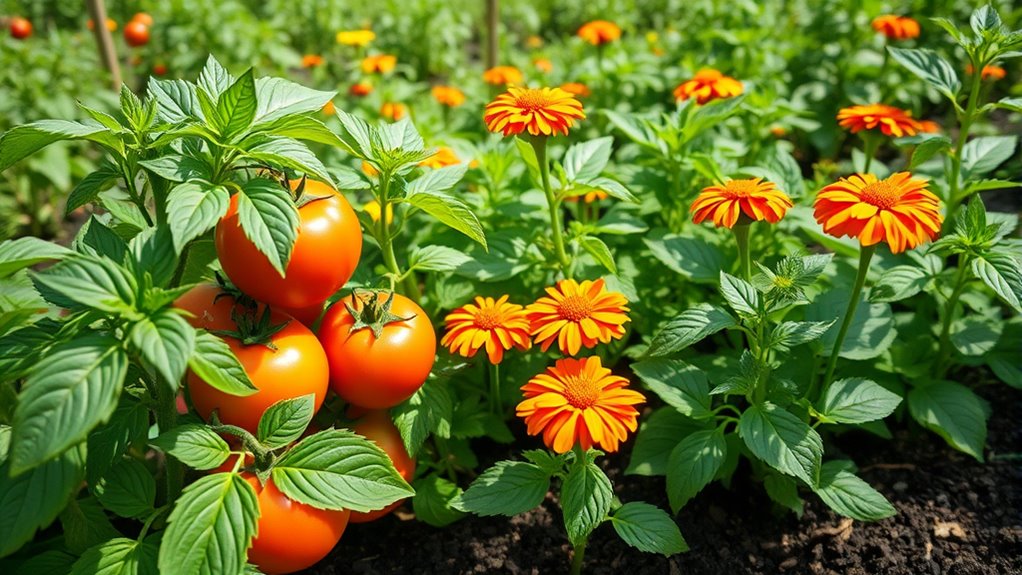
Companion planting involves pairing plants that naturally repel pests with those that are more susceptible. For example, planting marigolds near tomatoes can deter nematodes and aphids, while basil nearby can ward off flies and mosquitoes. This method creates a biological barrier that confuses or repels pests, reducing the need for chemical treatments. When choosing pest-resistant varieties, look for those that are compatible with your preferred companion plants. This synergy not only enhances pest control but can also improve pollination and plant growth.
Pair pest-resistant plants with companions like marigolds and basil for natural pest control and healthier growth.
Crop rotation is another vital tactic to prevent pest buildup. Pests that target specific plants often thrive when the same crops are grown in the same spot year after year. By rotating crops, you interrupt their lifecycle, making it harder for pests to establish themselves. For instance, if you plant beans one year, switch to cabbage or carrots the next. Combining crop rotation with pest-resistant varieties provides a two-pronged defense: the resistant plants are less appealing, and rotating crops prevents pest populations from becoming entrenched. This strategy also helps maintain soil health and reduces the risk of disease.
Choosing pest-resistant plant varieties isn’t just about reducing pest damage; it also promotes a more sustainable gardening approach. These plants often require fewer chemical interventions, which benefits the environment and your health. Plus, they can lead to higher yields and better-quality produce since they’re less stressed by pest attacks. When selecting these varieties, pay attention to local pest pressures and consult your local extension office or gardening guides for recommendations tailored to your region. Incorporating resistant plants with companion planting and crop rotation creates a resilient garden ecosystem that can withstand pest pressures more effectively. Additionally, selecting innovative materials for plant supports and containers can further enhance plant health and pest resistance.
Frequently Asked Questions
Are Pest-Resistant Plants Suitable for Organic Farming?
Yes, pest-resistant plants are suitable for organic farming. They support natural pest control by reducing the need for chemical pesticides, aligning with organic principles. Plus, incorporating these varieties enhances crop diversity, which further helps manage pest populations naturally. You can confidently use pest-resistant plants to improve yields sustainably while maintaining organic standards, creating a healthier environment for your farm and consumers.
How Do Pest-Resistant Plants Affect Local Ecosystems?
You might notice that pest-resistant plants positively affect local ecosystems by reducing the need for chemical pesticides, which helps safeguard beneficial insects like bees and ladybugs. They can support biodiversity impacts by encouraging a variety of species to thrive. However, it’s essential to monitor how these plants interact with native plants and insects to make certain they don’t unintentionally disrupt the natural balance. Overall, they can promote healthier, more resilient ecosystems.
Can Pest-Resistant Varieties Be Genetically Modified?
Imagine you’re in a sci-fi movie—yes, pest-resistant varieties can be genetically modified. Through genetic modification, scientists enhance pest resistance in plants, making them more resilient. This process involves altering their DNA to improve pest resistance traits. So, if you’re wondering whether such varieties can be genetically modified, the answer is yes. This technique helps develop plants better equipped to fend off pests, boosting crop yields and reducing pesticide use.
What Maintenance Is Required for Pest-Resistant Plants?
You need to regularly monitor pests on your resistant plants and prune them as needed to promote healthy growth. While pest-resistant varieties reduce the likelihood of infestations, occasional pest monitoring helps catch issues early. Pruning requirements involve removing dead or diseased branches, which improves airflow and prevents pest hiding spots. These simple maintenance steps guarantee your plants stay healthy, maximize pest resistance benefits, and reduce the need for chemical treatments.
Are Pest-Resistant Plants More Expensive to Purchase?
Ever wonder if pest-resistant plants cost more? They can be slightly pricier upfront, but their lower maintenance and reduced need for pesticides often save you money in the long run. When considering the cost comparison, purchase factors like plant quality and variety matter. Are you willing to invest a bit more now for healthier, less problematic plants later? Ultimately, the initial expense can pay off through fewer interventions and better yields.
Conclusion
By choosing pest-resistant plant varieties, you’re turning your garden into an unstoppable fortress against pests. With these plants, you’ll save time, reduce chemical use, and enjoy healthier harvests—all while outsmarting even the craftiest bugs. Imagine having a garden so resilient, pests stand no chance—it’s practically invincible! So, take action now and transform your garden into a pest-proof paradise that outshines all others. Your plants—and your future harvest—will thank you for it!