Understanding plant hardiness zones helps you choose crops that won’t just survive but thrive in your garden. These zones show the temperature ranges in your area, guiding you to the right plants for your climate. Keep in mind that microclimates and recent climate shifts can affect zone boundaries, so staying updated is key. By considering these factors, you can improve your planting success and avoid costly mistakes—discover more about optimizing your crop choices below.
Key Takeaways
- Plant hardiness zones indicate temperature ranges suitable for specific crops, guiding optimal plant selection.
- Microclimates within a garden can modify zone boundaries, allowing for diverse crop cultivation.
- Climate change has shifted zone boundaries, expanding or altering the range of plants suitable for a region.
- Recognizing local microclimates helps select crops that may thrive outside general zone recommendations.
- Updated zone maps are essential for accurate crop planning and avoiding gardening failures due to outdated information.

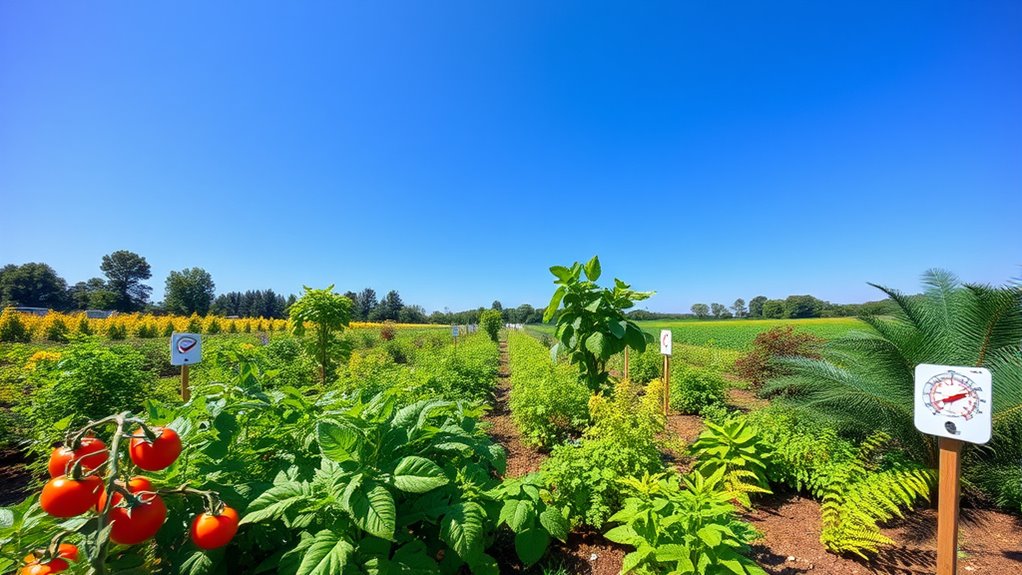
If you’re planning a garden or choosing plants for your landscape, understanding plant hardiness zones is essential. These zones help you determine which plants are most likely to survive and thrive in your specific area. But to truly master the art of crop selection, you need to consider the subtle influences that can affect your local climate, such as microclimate effects and historical zone shifts. Microclimates are small, localized areas where conditions differ from the surrounding region, often caused by factors like buildings, bodies of water, or elevation changes. For example, a south-facing wall might create a warmer microclimate, allowing you to grow plants that typically prefer milder conditions. Recognizing these microclimate effects means you can adapt your plant choices accordingly, giving sensitive species a better chance to flourish. Additionally, understanding cookie policies can help you stay informed about how local data collection might impact your access to climate information and gardening resources.
Microclimates and zone shifts help tailor plant choices for resilient, thriving gardens.
Historical zone shifts also play a significant role in understanding plant hardiness zones. Over the past few decades, climate change has caused noticeable shifts in zone boundaries. Regions once classified in cooler zones now experience milder winters, expanding the range of plants that can grow successfully. Conversely, some areas might face more unpredictable weather patterns, making it necessary to reassess what’s suitable for your garden. Keeping track of these zone shifts is crucial because relying solely on old maps or outdated information might lead you to select plants that won’t survive the changing conditions. By staying informed about recent zone updates, you can make smarter decisions that align with current climate realities.
Knowing how microclimate effects and historical zone shifts influence your local environment allows you to fine-tune your crop choices. For example, if your yard experiences warmer microclimates due to nearby structures, you might consider plants that prefer slightly higher temperatures. If recent zone shifts mean milder winters, you can experiment with more tender species that previously wouldn’t have survived your region. This awareness empowers you to optimize your landscape, making it more resilient to climate variability. It also helps prevent costly mistakes—like planting species that are unlikely to survive harsh winters or that won’t adapt well to unexpected temperature fluctuations.
Ultimately, understanding plant hardiness zones isn’t just about following a map; it’s about interpreting the nuanced climate factors that influence plant survival. By considering microclimate effects and keeping abreast of historical zone shifts, you gain a more accurate picture of what your garden can support. This knowledge allows you to select the right plants, plan for climate changes, and create a thriving landscape tailored to your unique environment. It’s a proactive approach that ensures your garden’s success now and in the years to come.
Frequently Asked Questions
How Do Microclimates Affect Zone Ratings?
Microclimate variations can considerably impact zone ratings by causing local temperature fluctuations that differ from broader regional data. You might find that a spot in your yard is warmer or cooler than the general zone suggests, affecting which crops thrive. By recognizing these microclimate effects, you can better select plants suited to your specific conditions, ensuring healthier growth and more successful harvests despite the zone’s general guidelines.
Can Zone Maps Change Over Time?
Yes, zone maps can change over time due to climate change and historical zone shifts. As temperatures rise, regions may experience warmer conditions, causing zone boundaries to shift. This means your current zone might not be the same in the future, so it’s important to stay updated with the latest zone maps. By monitoring these changes, you can better select crops suited for evolving climate patterns.
Are There Exceptions for Tropical Plants in Cold Zones?
About 10% of tropical plants can survive brief cold snaps thanks to special adaptations like thick leaves or underground roots. In zone shifting zones, where climates shift, some tropical varieties may tolerate colder temperatures if protected or brought indoors. These exceptions highlight how tropical plants adapt uniquely, allowing you to experiment with them beyond their typical zones. Keep in mind, however, that most tropical plants still need warm, stable conditions for ideal growth.
How Precise Are Zone Boundaries for Small Gardens?
Zone boundaries can be quite imprecise for small gardens because microclimate variations and garden microclimates often influence plant hardiness. You might find that certain spots in your yard are warmer or cooler than nearby zone lines, affecting plant survival. To improve accuracy, observe local conditions, use protective measures, or test plants in different areas. This way, you can tailor your crop choices more effectively despite zone boundary limits.
Do Urban Areas Have Different Zones Than Rural Areas?
Urban areas often have different zones than rural ones because of urban microclimates, which can substantially alter temperature ranges. These microclimates make cities feel like a different planet, affecting plant hardiness zones compared to surrounding rural zones. You might find that urban zones are slightly warmer due to heat island effects, meaning you can grow crops that wouldn’t survive in nearby rural zones. Always consider these variations for successful planting.
Conclusion
Now that you understand how plant hardiness zones guide your crop choices, aren’t you enthusiastic to select plants that thrive in your climate? By paying attention to these zones, you can grow healthier, more productive crops and enjoy a successful gardening season. So, why not use this knowledge to make smarter decisions and turn your garden into a flourishing paradise? After all, the right plant in the right place makes all the difference!