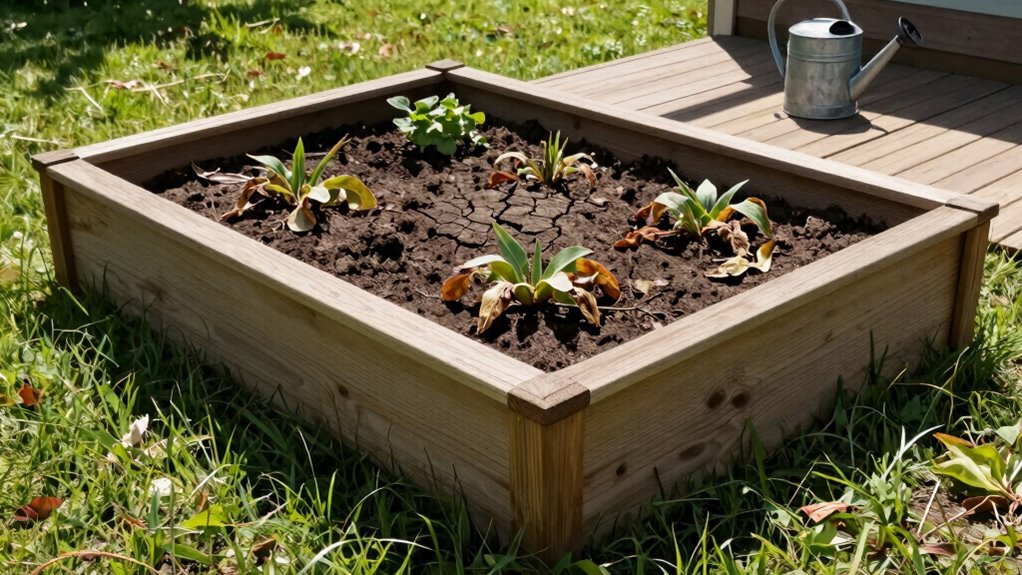

Raised beds tend to dry out faster because their soil is directly exposed to weather, causing quicker water evaporation, especially during hot or windy days. Their good drainage and warmth are benefits, but it also means you need to water more often. Using mulch and compost can help retain moisture. Keeping pests under control supports healthy roots that absorb water better. Stick around to discover more ways to keep your raised beds moist and thriving.

Get garden gear delivered free with Prime
- Fast, free delivery on millions of items
- Prime Video, Amazon Music and more included
- Member-only deals all year
Key Takeaways
- Raised beds have increased exposure to weather elements, leading to faster water evaporation.
- Well-drained soil in raised beds dries out more quickly during hot or windy conditions.
- Lack of mulch and compost can reduce moisture retention in raised beds.
- Proper soil structure and amendments are essential to improve water-holding capacity.
- Regular watering is crucial due to rapid drying caused by environmental exposure.
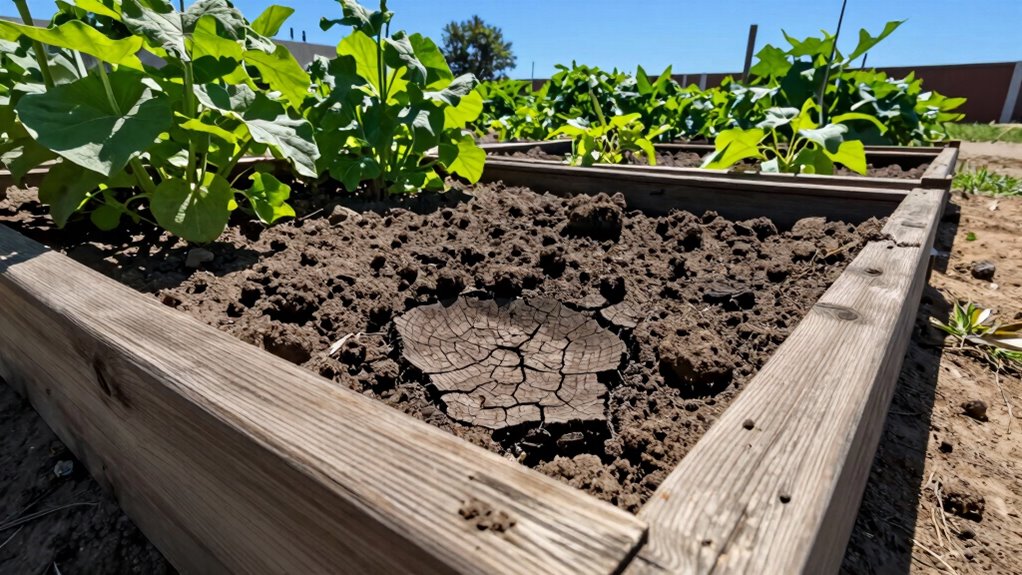
Raised beds can dry out faster than traditional garden beds, especially during hot or windy weather. When you build raised beds, you’re giving your plants better drainage and improved soil warmth, but this setup also exposes the soil to the elements more directly. As a result, water evaporates quickly from the soil surface, making consistent watering crucial to keep plants healthy. You might find yourself watering more often than you expected, especially during the summer months or in windy conditions. To combat this, adding a layer of mulch can help retain moisture, but understanding why your raised beds dry out so fast is key to developing effective watering routines.
Raised beds dry out quickly; mulch and proper watering are essential for healthy plants.
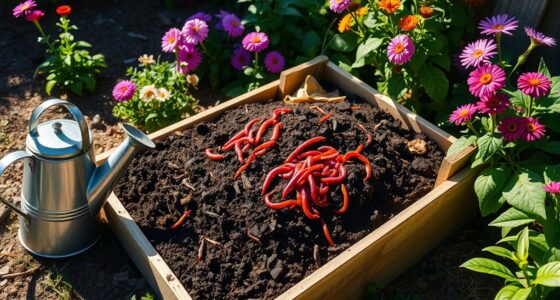
One of the benefits of using compost in your raised beds relates to moisture retention. Well-aged compost, when mixed into your soil, improves its structure and helps it hold onto water longer. This means your plants get a steady supply of moisture even during dry spells. Plus, compost benefits extend beyond moisture retention; it enriches the soil with nutrients, promoting healthier, more vigorous plants. Healthy plants are better able to withstand environmental stresses, including dryness. Additionally, a rich compost layer can also help suppress weeds that compete for water and nutrients, indirectly supporting better moisture management in your beds. Incorporating soil amendments like compost is a practical way to enhance your soil’s water-holding capacity. Proper soil structure also plays a key role in moisture retention, ensuring your plants remain healthy and hydrated.
Pest control is another aspect to contemplate when managing raised beds. While pests can damage your plants, certain pests also accelerate soil drying. For example, pests like root maggots or wireworms can damage roots, reducing the plant’s ability to absorb water. Keeping pests in check helps ensure your plants stay healthy and can access the moisture they need. Organic pest control methods, such as introducing beneficial insects or using organic sprays, can keep pest populations low without harming the beneficial microbes in your soil. Maintaining a healthy, pest-free environment encourages robust root systems, which are crucial for water uptake, especially when the soil dries out quickly. Recognizing that soil health plays a vital role in water retention reinforces the importance of comprehensive garden management.
raised bed mulch for moisture retention
As an affiliate, we earn on qualifying purchases.
As an affiliate, we earn on qualifying purchases.
Frequently Asked Questions
How Can I Tell if My Raised Bed Is Too Dry?
You can tell if your raised bed is too dry by checking the soil moisture. Stick your finger about an inch into the soil; if it feels dry or your finger comes out dry, it’s a sign you need to water. Also, observe your plants—wilting or yellowing leaves indicate a lack of water. To improve water retention, consider adding organic matter or mulch, helping your plants stay hydrated longer.
Does Soil Type Affect Drying Speed in Raised Beds?
Yes, soil type affects drying speed in raised beds. Soil composition plays a key role; sandy soils drain faster and dry out quicker, while clay soils retain moisture longer. Drainage efficiency also impacts drying rates—well-draining soils prevent waterlogging but can cause faster drying. To manage moisture, consider mixing soil types or adding organic matter to improve water retention where needed, ensuring your plants stay healthy and hydrated.
What Are the Best Watering Practices for Raised Beds?
They say, “Better safe than sorry,” and that’s true for watering raised beds. You should establish a consistent watering schedule, checking soil moisture daily. Water deeply so roots grow strong, and avoid overwatering, which can lead to runoff. Early morning is best for watering, helping prevent evaporation. Regularly monitor the soil’s moisture level to keep plants healthy and prevent drying out, especially during hot weather.
Can Mulch Help Retain Moisture in Raised Beds?
Yes, mulch benefits your raised beds by improving moisture retention. Mulching helps slow evaporation, so you don’t have to water as often. It also keeps the soil temperature consistent and reduces weed growth. By applying a layer of mulch around your plants, you create a barrier that maintains soil moisture, making watering more effective and your plants healthier. This simple step can considerably reduce how quickly your raised beds dry out.
How Often Should I Water My Raised Bed During Hot Weather?
During hot weather, you should water your raised bed daily, preferably early mornings or late evenings. The heat causes rapid evaporation, making consistent watering essential. Incorporate soil amendments like compost to improve moisture retention, which helps extend the watering schedule. While it might seem like overkill, regular watering prevents plants from stress and dehydration, ensuring healthy growth despite the scorching sun. Keep a close eye and adjust as needed.
Conclusion
So, if you think your raised bed’s just a little dry, think again—it’s like leaving a sponge out in the Sahara! Without proper watering or mulch, your garden’s moisture vanishes faster than a ice cube on a summer sidewalk. Don’t let your plants turn into crispy critters—keep an eye on that soil, water generously, and mulch like your garden’s life depends on it. Otherwise, your veggies might just dry out into nothingness!
Halloween Picks
halloween
As an affiliate, we earn on qualifying purchases.