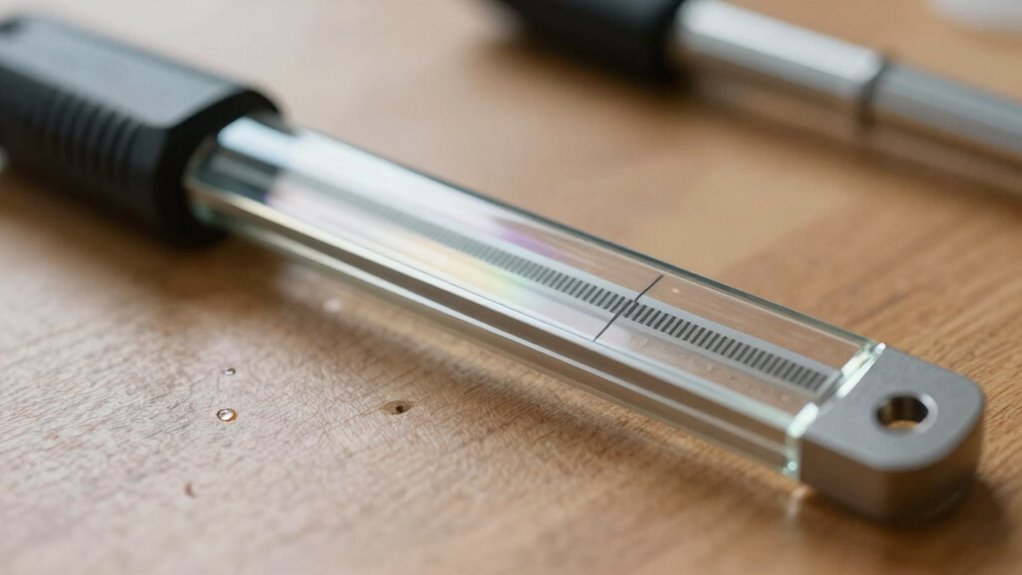

Refractometers are useful tools for analyzing liquids, but their accuracy depends on understanding what you’re comparing and proper calibration. You need to use correct references, like distilled water for analog devices or calibration standards for digital models. Environmental factors, like temperature, can also influence results, so maintaining and calibrating your device regularly is essential. If you’re curious about how to get the most precise measurements, keep exploring to learn more.
Key Takeaways
- Accurate comparisons depend on proper calibration and understanding of the specific refractometer model used.
- Knowing the correct calibration standards ensures reliable measurements across different substances.
- Environmental factors like temperature can affect readings, making context important for accurate comparisons.
- Digital refractometers provide instant, consistent results, facilitating easier and more precise comparisons.
- Proper maintenance and training improve measurement accuracy and help interpret results correctly.
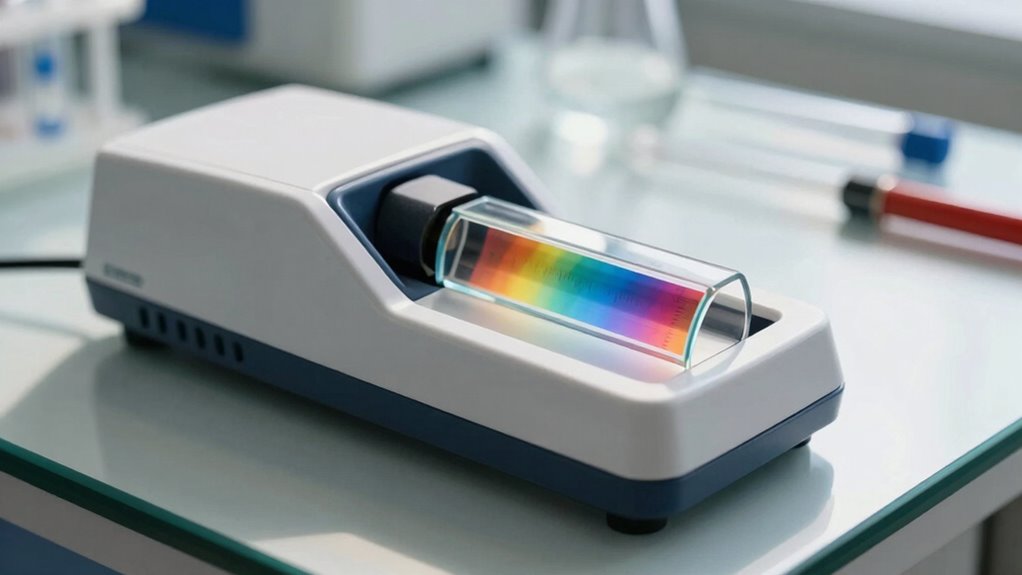
Refractometers are invaluable tools across various industries because they allow you to quickly and accurately measure the refractive index of liquids. This measurement helps you determine the composition, quality, or concentration of a sample. However, to guarantee your readings are reliable, proper calibration is essential. Calibration techniques vary depending on whether you’re using a digital or analog refractometer. With analog models, calibration often involves adjusting a screw or dial to match a known reference, such as distilled water at a specific temperature. Digital refractometers, on the other hand, typically feature automatic calibration functions, which can be quicker and more precise. You simply place the calibration sample on the prism, follow the device’s prompts, and let the digital system do the rest. Both methods require regular calibration, especially if you notice inconsistent readings or after long periods of non-use. Understanding the calibration process and maintaining consistent procedures is crucial for accurate measurements. Additionally, environmental factors like ambient temperature and cleanliness can impact your results, so proper device maintenance is equally important. Regularly checking and cleaning the device helps prevent contamination that could skew your readings.
Regular calibration ensures accurate refractometer readings for reliable results across industries.
Understanding the differences between digital and analog refractometers helps you choose the right tool for your needs. Analog devices are generally more rugged, less expensive, and don’t rely on batteries. They often have a simple design, making them easy to operate and maintain. However, their accuracy can be affected by user error during calibration, and reading the scale requires careful eye focus. Digital refractometers provide instant, digital displays of your measurements, reducing reading errors and allowing for easier calibration with built-in functions. They often come with temperature compensation settings and automatic calibration features, which can save you time and improve accuracy. Nonetheless, they tend to be more expensive and require power sources, which might be a concern in certain environments. Proper maintenance and understanding of your device’s features can help extend its lifespan and ensure consistent results. Investing in training on how to properly use and calibrate your refractometer can further improve measurement reliability.
No matter which type you use, it’s vital to understand the importance of calibration techniques to maintain consistent accuracy. Regularly calibrate your refractometer with appropriate standards, especially before critical measurements. Always consider temperature effects, as they can influence refractive index readings; many digital models include temperature compensation to help mitigate this issue. If you’re working in an environment where precision matters, investing in a digital device with automatic calibration and temperature correction can be well worth the cost. Conversely, if you prefer simplicity and durability, an analog refractometer with proper manual calibration will serve you well. Knowing how to interpret and verify your readings is also essential for ensuring the reliability of your measurements. Proper device handling and storage also play a role in maintaining accuracy over time.
Ultimately, knowing how to properly calibrate and understanding the features of your refractometer—whether digital or analog—are key to making measurements you can trust. It’s not just about having the right tool but also about using it correctly. When you maintain your device properly, you can rely on its readings to make informed decisions, whether you’re measuring sugar concentration in food, checking the quality of a chemical solution, or assessing the purity of a liquid.
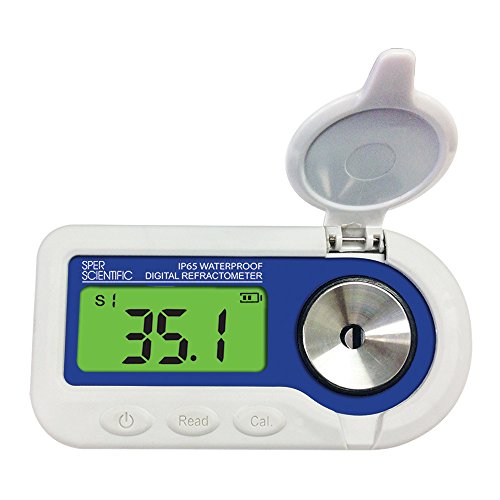
Sper Scientific 300064 Waterproof Digital Refractometer – Clinical, IP65 Waterproof, Lithium-Ion Battery, Automatic Calibration, Clinical Urine & Serum Measurements
- Waterproof and Durable Design: IP65 waterproof rubberized case
- Laboratory-Accurate Measurements: Urine, serum, and refractive index
- Automatic Calibration and Settings: One-button calibration and auto shutoff
As an affiliate, we earn on qualifying purchases.
As an affiliate, we earn on qualifying purchases.
Frequently Asked Questions
How Do Refractometers Differ From Other Measuring Tools?
Refractometers differ from other measuring tools because they utilize optical principles to determine the refractive index of liquids, providing quick, accurate readings of parameters like sugar content or salinity. However, measurement limitations exist, such as needing proper calibration and correct sample preparation. Unlike some instruments, refractometers give immediate results without extensive setup, making them ideal for on-the-spot measurements, but you must understand their specific use cases for accurate results.
Can Refractometers Measure Liquids Other Than Liquids?
Refractometers mainly measure liquids, but they can also assess gelatin concentration and salinity levels in various solutions. When you use a refractometer on liquids like fruit juices or seawater, it helps determine their sugar content or salt levels accurately. However, it can’t measure solids directly. You need to make sure the sample is liquid or has been dissolved to get precise readings of properties like gelatin concentration or salinity.
What Are Common Mistakes When Using a Refractometer?
You should watch out for common errors when using a refractometer. As a user, you might forget to calibrate it properly before testing, leading to inaccurate readings. Not cleaning the prism after each use can also skew results. Additionally, applying too much or too little sample, or testing at the wrong temperature, can cause errors. Always follow the instructions carefully to guarantee precise measurements.
How Often Should a Refractometer Be Calibrated?
Think of your refractometer as a finely tuned instrument that needs regular checkups to sing its best. You should calibrate it daily or before each use to guarantee accuracy maintenance. If you work with liquids regularly, more frequent calibration keeps readings precise, like a compass pointing true. Skipping calibration can lead to misleading results, so stay vigilant. Regular calibration ensures your measurements stay reliable, guiding your decisions confidently.
Are Digital Refractometers More Accurate Than Analog Ones?
Digital refractometers are generally more accurate than analog ones because they reduce human error and provide precise readings. Their calibration techniques are straightforward, often involving automatic calibration with distilled water, ensuring consistent accuracy. Analog refractometers require manual calibration and can be affected by user interpretation and temperature variations. So, if you want ease of use and higher precision, digital refractometers are usually the better choice.
Conclusion
So, now you see how refractometers can be incredibly useful—if you understand what you’re measuring. But beware: misreading or misinterpreting those numbers could lead you astray, whether you’re brewing the perfect coffee or checking crop health. The real question is, are you ready to dive deeper and uncover their full potential? Because once you do, you might just discover secrets that change everything. Are you prepared to take that next step?