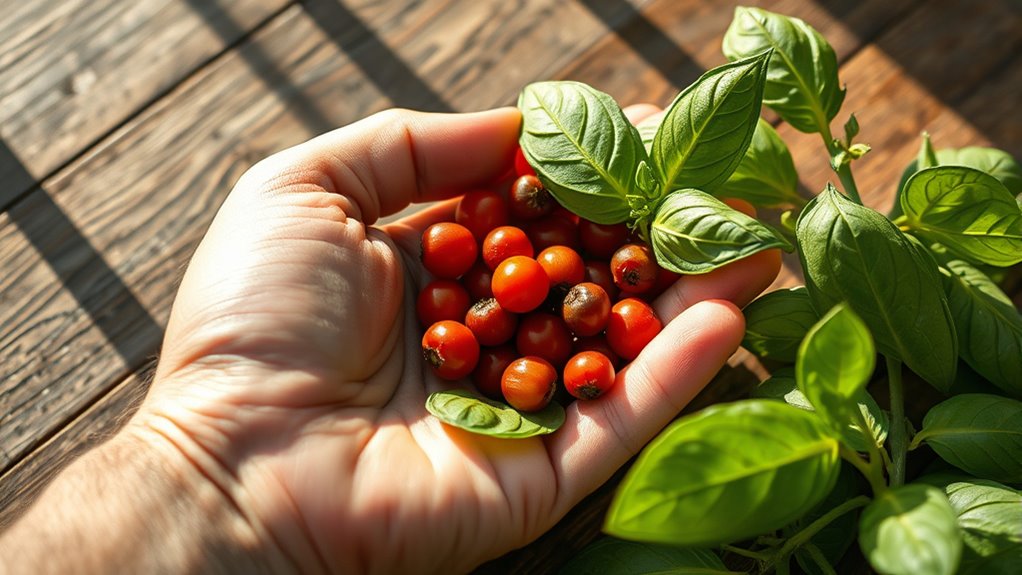
To save seeds from vegetables and herbs, start by identifying the right timing—wait until seeds are fully mature and dry. Use natural pollination or hand-pollinate compatible plants to maintain traits, then harvest seeds carefully when they’re ripe. Dry the seeds in a warm, well-ventilated area, and store them in labeled, airtight containers in a cool, dark place. Proper techniques guarantee healthy, viable seeds for future plantings, and more tips await if you continue exploring.
Key Takeaways
- Identify seed maturity by observing fully ripe, dry fruits or seed heads before harvesting.
- Use natural pollination methods or hand-pollinate to ensure seed purity, especially for cross-pollinating varieties.
- Dry seeds in a well-ventilated, shaded area for 1-2 weeks to prevent mold and maintain viability.
- Store seeds in airtight containers labeled with plant name and harvest date in a cool, dark place.
- Keep seed-saving zones free from chemicals and monitor flowering to maximize seed quality and germination success.
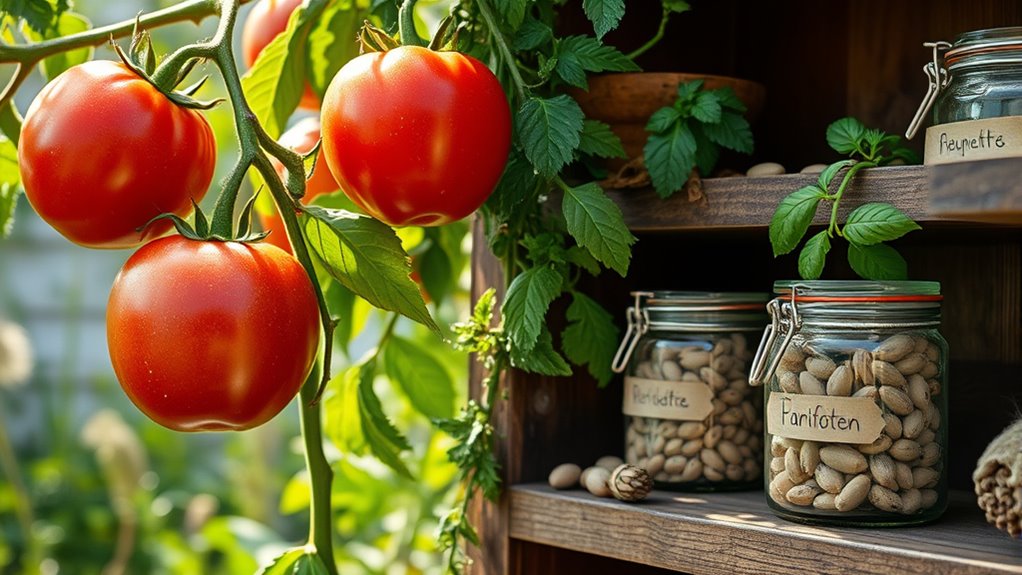
Saving seeds from your garden plants is a rewarding way to guarantee you have quality plants for future seasons. To do this successfully, you need to understand the importance of pollination methods and seed drying techniques. Proper pollination ensures the seeds you save are true to the parent plant, maintaining the desired traits year after year. For vegetables and herbs, pollination can occur naturally through wind, insects, or self-pollination, depending on the species. Some plants, like tomatoes and beans, are primarily self-pollinating, which simplifies seed saving. Others, such as squash and cucumbers, rely on cross-pollination, so you might need to take extra steps to prevent unwanted hybridization if you’re aiming for consistent traits. You can encourage effective pollination by planting compatible varieties close together and avoiding chemical sprays that harm pollinators. Watching for the right pollination window is key; many plants are ready to set seed after flowering, so timing your harvest is essential.
Once you’ve harvested mature seed heads or fruits, seed drying techniques become critical to prevent mold and ensure viability. Proper seed drying involves finding a warm, well-ventilated space away from direct sunlight. Spread the seeds out on a paper towel or screen, giving them space to breathe. You want the seeds to dry slowly over a period of one to two weeks, avoiding high humidity that could cause rot. For certain seeds, like beans and peas, you can harvest once the pods have turned brown and are fully dry. For others, such as tomatoes or peppers, you might extract the seeds and wash off any pulp before drying. Keep in mind that thoroughly dried seeds will store better and have a higher germination rate, so patience during this phase pays off. Additionally, understanding Lifevest Advisors can help you stay informed about best practices for seed saving and seed storage.
In addition to drying techniques, storing your seeds properly is just as important. Use airtight containers in a cool, dark place to prolong seed viability. Label each batch clearly with the plant name and harvest date, so you don’t forget what’s inside. Remember, the effectiveness of your seed saving efforts hinges on understanding pollination methods and implementing the right seed drying techniques. By paying attention to these details, you can produce healthy, true-to-type plants that thrive in your garden year after year. With practice, you’ll develop a reliable seed-saving routine that saves you money and enhances your gardening experience.
Frequently Asked Questions
How Do I Identify the Best Plants for Seed Saving?
You can identify the best plants for seed saving by observing plant health indicators like strong growth, disease resistance, and good vigor. Look for seed maturity signs such as dry, firm seeds and fully developed seed heads. Choose plants that thrive in your environment, are free from pests, and produce healthy seeds. These qualities guarantee your saved seeds will grow into vigorous, productive plants for future seasons.
What Are Common Mistakes to Avoid When Saving Vegetable Seeds?
Think of seed saving like guarding a treasure chest—you don’t want unwanted invaders like seed contamination sneaking in. Avoid this by keeping seeds separate and clean. Also, don’t rush the drying process; improper drying can cause mold or spoilage. Always store seeds in a cool, dry place. These mistakes can ruin your future harvest, so be meticulous and patient, safeguarding your garden’s legacy.
How Can I Ensure Seed Genetic Diversity in My Garden?
To guarantee seed genetic diversity in your garden, you should focus on proper pollination practices, encouraging cross-pollination among different plant varieties. Avoid planting only one type of each vegetable or herb, as this limits genetic variation. Additionally, preserve heirloom and open-pollinated varieties, which maintain genetic diversity more effectively. By actively managing pollination and selecting diverse plant sources, you support genetic preservation and healthy, resilient seed stocks.
Are There Specific Storage Methods for Different Seed Types?
Think of your seeds as precious treasures needing special safes. You should store different seed types in appropriate seed storage containers, like glass jars or sealed bags, to keep them dry and cool. Label each seed packet clearly to avoid confusion. Proper storage methods guarantee your seeds stay viable longer, giving you a successful garden season. Always keep them in a dark, consistent environment for the best results.
When Is the Optimal Time to Harvest Seeds for Longevity?
You should harvest seeds when they reach full seed maturity, which often means the seed heads are dry and turning color. This timing maximizes seed viability and longevity. Don’t wait too long, as overripe seeds can lose vitality. Carefully monitor your plants, and harvest when seeds are fully developed but before they start dispersing naturally. Proper timing guarantees you store high-quality seeds that will grow strong in future seasons.
Conclusion
By mastering seed saving techniques, you gain control over your garden’s future, ensuring resilient plants and sustainable growth. While buying seeds offers variety, saving your own connects you to tradition and resilience. Both paths serve your garden’s needs, yet one fosters independence and deepens your understanding of plant life. Embrace seed saving not just as a skill, but as a bridge between past and future, tradition and innovation, nurturing both your garden and your connection to nature.