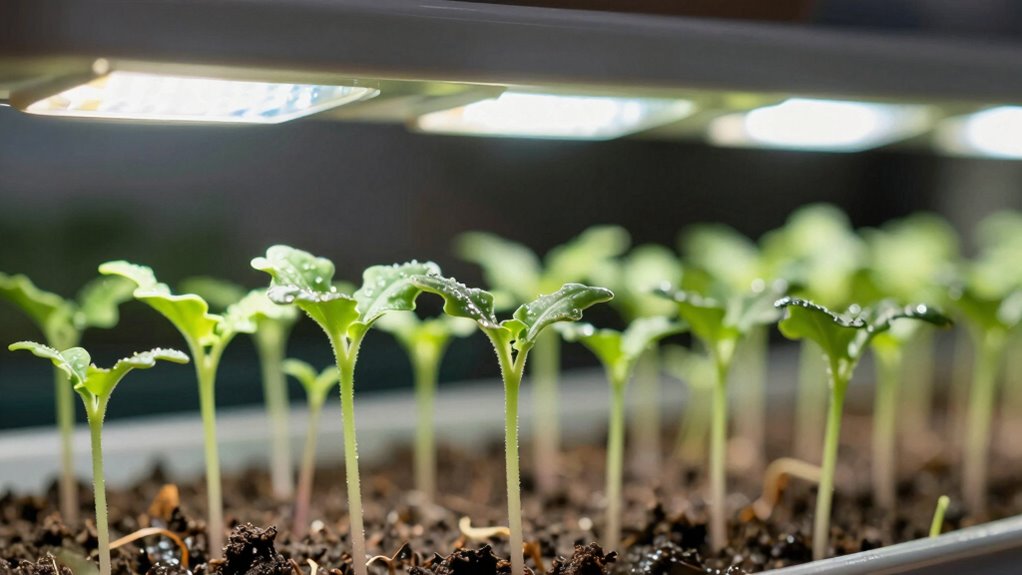
To fix leggy seedlings immediately, check the distance between your grow light and the seedlings. If they’re stretching or leaning toward the light, move the light closer—usually about 2-3 inches above the seedlings—and make sure it provides full-spectrum blue and red light. Keep the light at a consistent distance as seedlings grow and avoid leaving it too far away. Stay tuned to learn more about maintaining healthy seedlings and preventing leggy growth.
Key Takeaways
- Lower the grow light closer to seedlings to reduce stretch and encourage upright growth.
- Ensure the light provides full-spectrum wavelengths, especially blue light, to prevent legginess.
- Maintain a consistent light schedule of 12-16 hours daily to promote healthy, compact seedlings.
- Gradually adjust the light distance as seedlings grow to avoid shock and stress.
- Regularly monitor seedling height and leaf development, adjusting light height as needed for optimal growth.
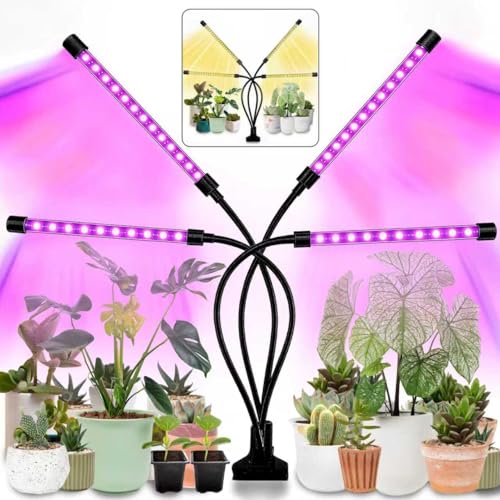
LEOTER Grow Light for Indoor Plants – Upgraded Version 80 LED Lamps with Full Spectrum & Red Blue Spectrum, 3/9/12H Timer, 10 Dimmable Level, Adjustable Gooseneck,3 Switch Modes
🌻Efficient LED Combination: This LED lamp has grow lights made up of 80 efficient growing LEDs (32 red,…
As an affiliate, we earn on qualifying purchases.
As an affiliate, we earn on qualifying purchases.
How Can You Tell if Your Seedlings Are Getting Leggy?
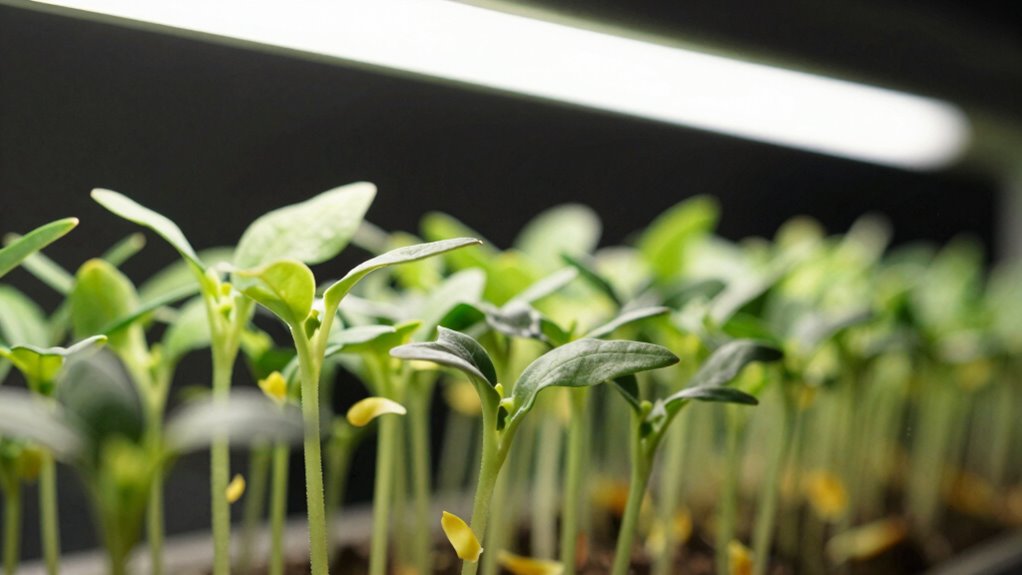
How can you tell if your seedlings are getting leggy? If you notice your seedlings are becoming tall and spindly with thin, elongated stems, they’re likely experiencing seedling stretching due to light deficiency. Leggy seedlings often lean toward your light source, trying to get more illumination. Their leaves may appear pale or stretched out, and the stems might be weak and fragile. This stretching is a clear sign that your seedlings aren’t receiving enough light, causing them to grow taller in an attempt to find more. You might also see a gap between the seed leaves and the stem, indicating they’re reaching for light. Recognizing these signs early helps you correct the issue before your seedlings become too weak to support themselves. Additionally, ensuring proper light distance can prevent this problem from occurring in the first place. Proper light placement and understanding light exposure requirements for seedlings can help you maintain optimal growth conditions and avoid leggy growth altogether. Being aware of light intensity needs and adjusting your setup accordingly are essential for healthy development and strong, sturdy seedlings. Regularly monitoring your seedlings’ growth and adjusting the light as needed can help you maintain the correct light levels for optimal healthy development.

Wolezek Grow Lights for Seed Starting with 6/9/12H Timer, 2ft T5 144 LEDs Full Spectrum Grow Light Seedling with Stand for Indoor Plants, 32W High Output Seed Starter Light Kit, Height Adjustable
Auto On/Off Timer: This plant light is equipped with 3 convenient timer settings (6/9/12 hours), enabling users to…
As an affiliate, we earn on qualifying purchases.
As an affiliate, we earn on qualifying purchases.
Why Proper Light Distance Is Key for Strong Seedlings
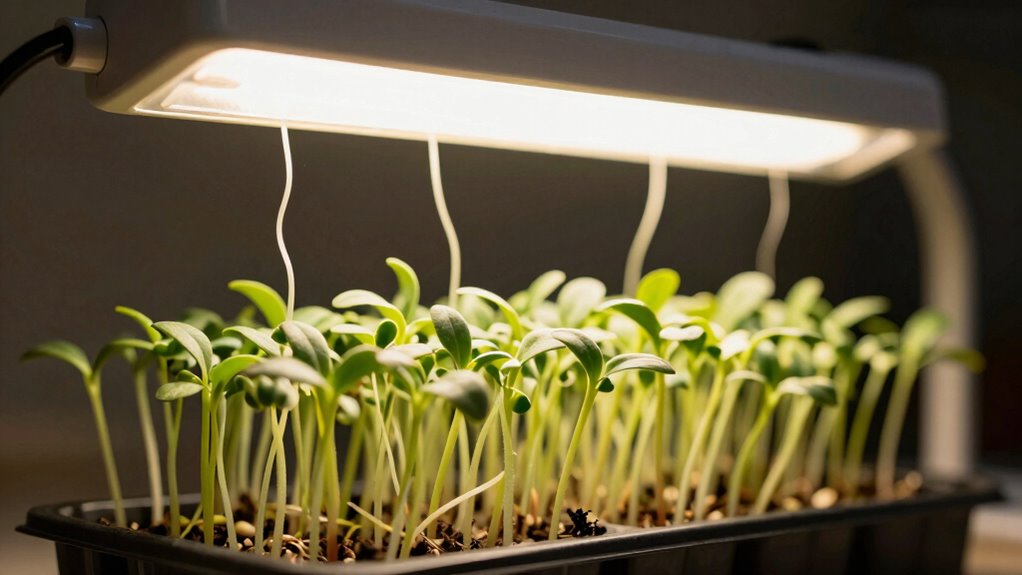
Maintaining the correct light distance is essential for growing healthy, sturdy seedlings. If your light is too far, seedlings stretch towards it, becoming leggy and weak. Too close, and they risk heat stress or leaf burn. Proper light distance ensures your seedlings receive the right light spectrum, which is fundamental for healthy growth. A balanced spectrum supports photosynthesis and strong stem development. Additionally, choosing the right bulb wattage is vital; higher wattage bulbs provide more intensity, but they must be kept at the correct distance to avoid damage. Light spectrum quality also plays a crucial role in promoting vigorous growth. Adjusting the light distance helps seedlings grow with strong stems and vibrant leaves, setting a solid foundation for transplanting. Proper light management is a simple yet critical step in avoiding leggy seedlings and promoting robust growth. Recognizing how different light intensities impact growth enables you to fine-tune your setup for the best results. Monitoring light placement regularly ensures consistent conditions and healthy development. Understanding light requirements for your specific plants can further optimize your setup for optimal seedling health.
LEOTER Grow Light for Indoor Plants – Upgraded Version 80 LED Lamps with Full Spectrum & Red Blue Spectrum, 3/9/12H Timer, 10 Dimmable Level, Adjustable Gooseneck,3 Switch Modes
🌻Efficient LED Combination: This LED lamp has grow lights made up of 80 efficient growing LEDs (32 red,…
As an affiliate, we earn on qualifying purchases.
As an affiliate, we earn on qualifying purchases.
How to Adjust Your Grow Light to Fix Leggy Seedlings Fast
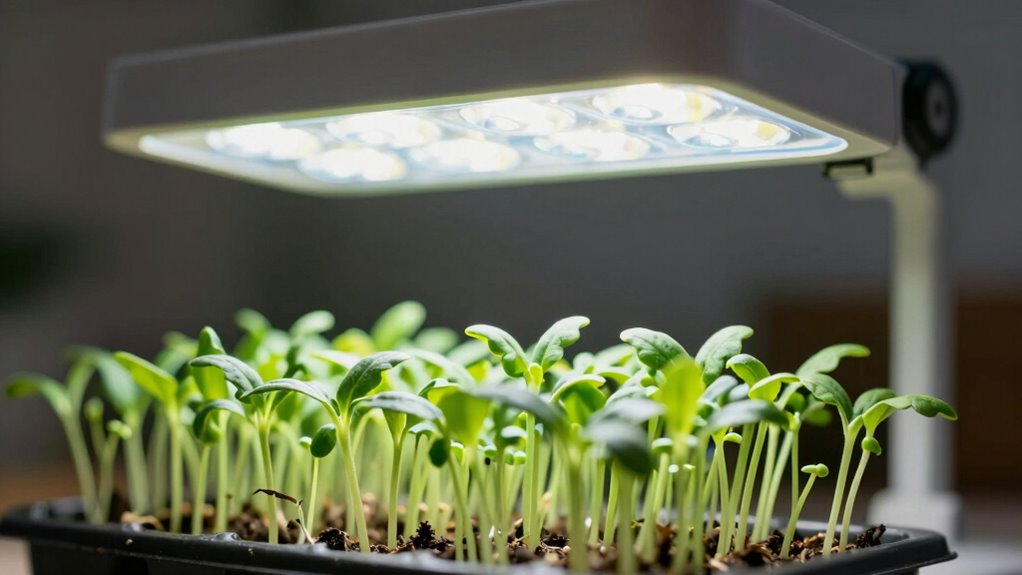
If your seedlings have become leggy, the first step is to quickly adjust your grow light to encourage upright growth. Lower the light closer to the seedlings to reduce seedling stretch caused by insufficient light. Make sure your light spectrum includes both blue and red wavelengths; blue light promotes compact growth, while red supports healthy development. Use this table to fine-tune your setup:
| Adjustment | Effect |
|---|---|
| Move light closer | Decreases seedling stretch |
| Increase blue spectrum | Promotes sturdy, upright seedlings |
| Reduce distance gradually | Prevents shock and stress |
| Use full-spectrum light | Ensures balanced growth |
Additionally, understanding light spectrum can help optimize your setup for healthier seedlings. Proper light management not only corrects leggy seedlings but also plays a crucial role in preventing light deficiency, which can cause similar stretching issues. Being aware of piercing care and hygiene can help maintain overall plant health during growth.
LEOTER Grow Light for Indoor Plants – Upgraded Version 80 LED Lamps with Full Spectrum & Red Blue Spectrum, 3/9/12H Timer, 10 Dimmable Level, Adjustable Gooseneck,3 Switch Modes
🌻Efficient LED Combination: This LED lamp has grow lights made up of 80 efficient growing LEDs (32 red,…
As an affiliate, we earn on qualifying purchases.
As an affiliate, we earn on qualifying purchases.
Easy Tips to Prevent Leggy Seedlings Next Time
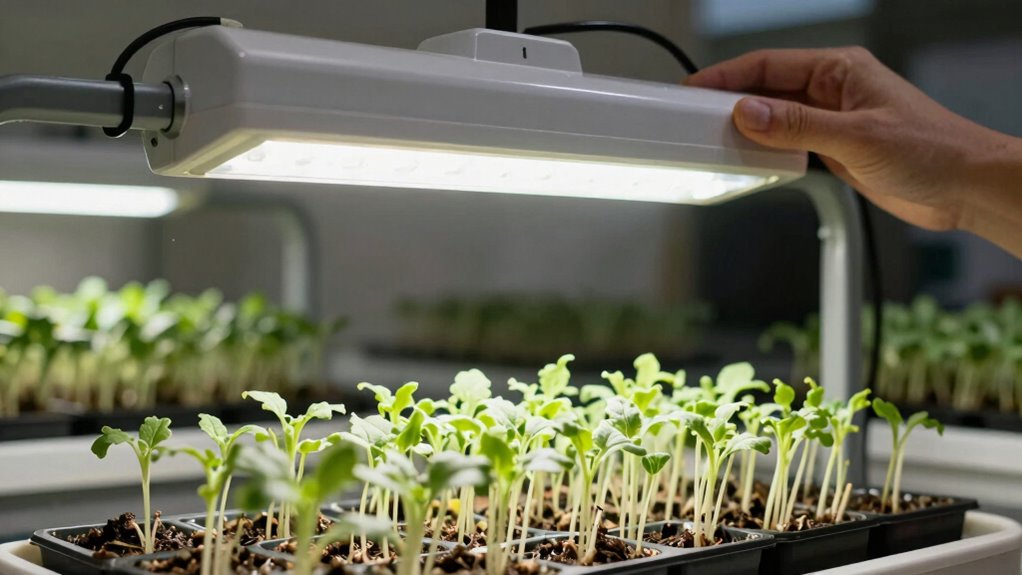
To prevent leggy seedlings before they start, set up your lighting system properly from the beginning. Keep your grow lights at the right distance to avoid seedling stretch, which often results from insufficient light. Use a timer to ensure consistent light exposure, preventing light stress that can cause seedlings to elongate and become weak. Choose a bright, full-spectrum light suited for seedlings, and position it close enough to encourage healthy, compact growth. Avoid sudden changes in light intensity, as this can trigger stress responses. Regularly monitor your seedlings and adjust the light height as they grow. Proper lighting habits from the outset help seedlings develop sturdy stems, reducing the risk of legginess and ensuring strong, healthy plants. Consistent light exposure is key to fostering strong, resilient seedlings, and understanding the importance of light distance can make all the difference. Additionally, maintaining optimal light intensity helps prevent overstimulation or insufficient energy for growth. Paying attention to light spectrum can also enhance seedling development and overall health. Ensuring proper light positioning also minimizes the chances of seedlings becoming leggy due to uneven light distribution.
Common Light Problems With Seedlings and How to Fix Them?
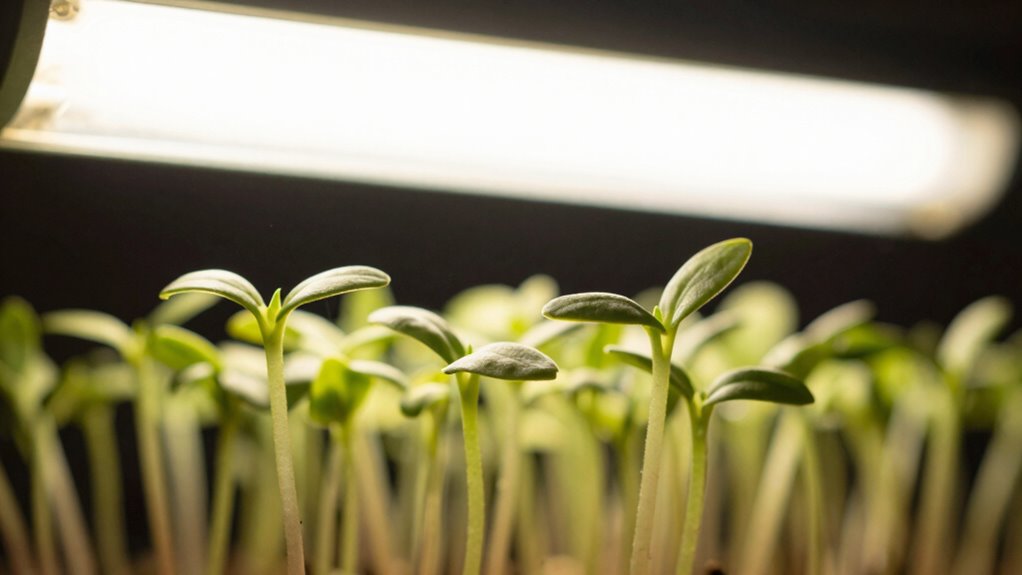
Many common light problems with seedlings stem from improper positioning or timing, which can lead to weak, leggy, or stressed plants. One key issue is using an inadequate light spectrum; seedlings need a balanced spectrum with sufficient blue light to promote healthy, compact growth. If your light source lacks this, plants stretch toward the light, becoming leggy. Additionally, inconsistent light duration can cause problems—too little light results in weak stems, while too much can stress seedlings. To fix these issues, ensure your grow lights emit the right spectrum and are positioned at an appropriate distance. Maintain a consistent light schedule, typically 12-16 hours daily, to promote strong, healthy seedlings. Proper light spectrum and duration are essential for ideal growth. Understanding light quality can help you troubleshoot and optimize your setup effectively, especially considering air purifier maintenance and ensuring your environment is suitable for healthy seedlings. Monitoring light intensity levels helps prevent stretching and ensures optimal growth conditions. Regularly checking light positioning and adjusting as seedlings grow can also improve their overall health and development.
Frequently Asked Questions
What Types of Grow Lights Are Best for Seedling Health?
You should use LED grow lights or fluorescent fixtures for ideal seedling health. LED grow lights provide full-spectrum, energy-efficient illumination that promotes strong, healthy growth, while fluorescent fixtures are budget-friendly and easy to set up. Keep the lights close to your seedlings, about 2-4 inches away, to prevent leggy growth. Both options help guarantee your seedlings develop sturdy stems and vibrant leaves, giving them a great start.
How Often Should I Adjust the Light Distance During Seedling Growth?
You should adjust your light distance daily during seedling growth. Regular light adjustment keeps seedlings healthy and prevents leggy, stretched stems. Monitor your seedlings closely; if they start leaning or stretching, lower the light slightly. If they appear compact and healthy, maintain current distance. Consistent seedling monitoring and timely light adjustments promote strong, vigorous growth, ensuring your plants develop a sturdy foundation for transplanting.
Can Natural Sunlight Be Used to Correct Leggy Seedlings?
Yes, you can use natural sunlight to correct leggy seedlings. Place your seedlings outdoors or near a south-facing window to increase light intensity. Make sure they get direct sunlight for several hours daily, but avoid harsh midday sun that can scorch them. Gradually expose them to more sunlight to prevent shock. This natural light encourages sturdy, healthy growth and helps reduce the legginess caused by insufficient light.
What Are the Long-Term Effects of Improper Light Distance on Seedlings?
If you don’t correct the light distance, your seedlings may develop weak stems and become leggy, negatively impacting seedling development. Over time, this can reduce plant resilience, making them more susceptible to pests and diseases. Proper light management guarantees strong, healthy growth, promoting sturdy seedlings that are better equipped to thrive when transplanted. Adjust the light source promptly to support ideal seedling development and long-term plant resilience.
How Do Temperature and Humidity Influence Seedling Stretch?
Ironically, high temperatures and humidity encourage seedling stretch, making your plants reach for nonexistent sun. When environmental factors like warmth and moisture get out of control, seedlings become leggy, weak, and vulnerable. Too much heat or humidity signals your seedlings to stretch endlessly, wasting energy and stunting growth. Keep temperatures moderate and humidity balanced to prevent this; it’s like giving your seedlings a cozy, stable home instead of an overexcited jungle gym.
Conclusion
To keep your seedlings healthy and robust, paying attention to light distance is essential. If you notice leggy growth, don’t ignore it—act quickly to modify your grow lights. Remember, a stitch in time saves nine. Proper lighting not only prevents legginess but also ensures strong, vibrant plants that will thrive when transplanted. With a little effort and vigilance, you’ll turn challenging seedlings into a flourishing garden, proving that prevention is always better than cure.