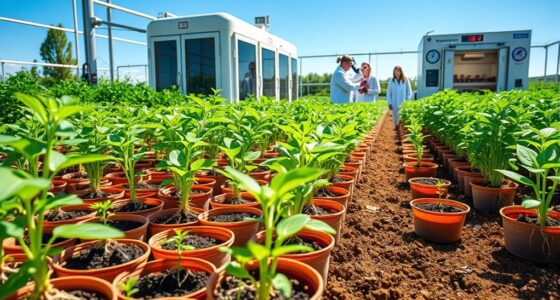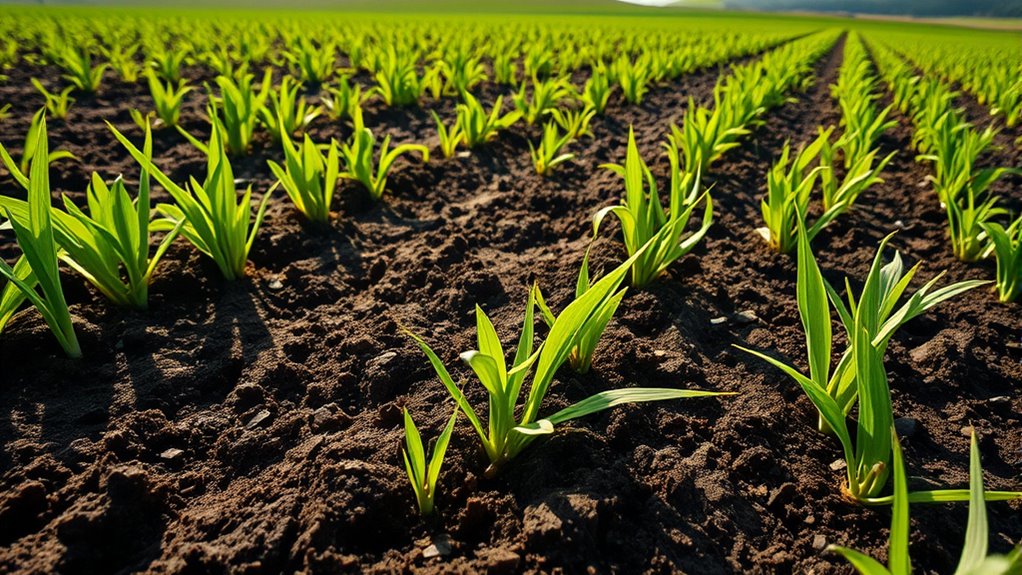

Improving soil health through practices like cover cropping can substantially boost carbon sequestration in your crop fields. By planting cover crops such as legumes or grasses, you add organic matter to the soil, which helps store carbon and strengthens soil structure. These plants also support microbial diversity, enhancing nutrient cycling and stability. As a result, your soil becomes more resilient and better equipped to combat climate change. Discover how these sustainable practices can transform your field’s potential for carbon storage and overall health.
Key Takeaways
- Healthy soils with high organic matter enhance carbon storage and improve overall soil fertility in crop fields.
- Implementing cover crops increases soil organic carbon and promotes microbial diversity critical for carbon sequestration.
- Diverse microbial communities stabilize organic carbon, improve soil structure, and support long-term soil health.
- Practices that boost soil health, such as crop rotation and organic amendments, enhance carbon sequestration capacity.
- Maintaining optimal soil conditions fosters natural processes that convert organic residues into stable carbon forms.
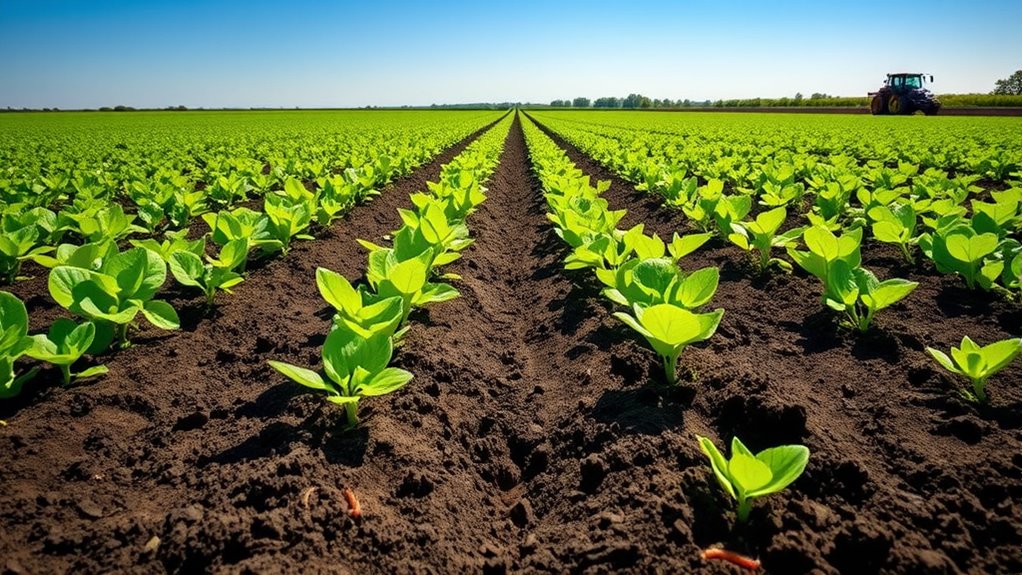
Healthy soils are fundamental for capturing and storing carbon, which helps combat climate change. When you focus on improving soil health, you’re not just boosting crop productivity—you’re also enhancing the soil’s ability to sequester carbon from the atmosphere. One of the most effective ways to achieve this is through the use of cover crops. Cover crop benefits extend beyond protecting the soil from erosion and suppressing weeds; they actively contribute to building soil organic matter, which is a key component in locking away carbon. By planting cover crops such as legumes, grasses, or brassicas during off-season periods, you feed the soil with additional organic material, encouraging the development of a robust and diverse soil ecosystem. This organic matter decomposes gradually, releasing nutrients for your main crops while simultaneously increasing the soil’s carbon storage capacity.
In addition to the tangible benefits of cover crops, they promote soil microbial diversity—a critical factor for soil health and carbon sequestration. When you introduce cover crops, you create a habitat for a wide variety of microorganisms, including bacteria, fungi, and other microbes. These tiny organisms play a crucial role in breaking down organic residues, releasing nutrients, and stabilizing organic carbon within the soil. The greater the microbial diversity, the more resilient and productive the soil becomes. Microbes help form stable soil aggregates, which protect organic carbon from rapid decomposition and loss. This process not only improves soil structure but also enhances the soil’s ability to store carbon over the long term. A diverse microbial community also supports the development of soil structure, which is essential for water retention and aeration.
Furthermore, diverse microbial communities foster a dynamic and balanced soil environment, reducing the need for chemical inputs and promoting sustainable farming practices. When you support microbial diversity, you’re encouraging natural processes that convert organic matter into stable forms of carbon. This continuous cycle of organic material input and microbial activity creates a healthy, resilient soil system capable of sequestering significant amounts of carbon. In essence, cover crops and the microbial diversity they foster work together to transform your soil into a powerful carbon sink, helping to mitigate climate change while improving crop yields and soil resilience. By leveraging these natural processes, you actively participate in building a sustainable agricultural system that benefits both the environment and your farm’s productivity.
Frequently Asked Questions
How Long Does It Take to See Measurable Soil Health Improvements?
You can start noticing measurable soil health improvements within a few months if you implement practices like crop rotation and encourage soil microbial activity. Changes in soil structure, fertility, and microbial diversity often appear early, especially with consistent efforts. However, more significant, long-term benefits, like increased carbon sequestration, may take several years. Stay patient and persistent; your efforts will gradually boost soil health and microbial diversity over time.
What Crops Are Best for Increasing Soil Carbon Sequestration?
You should plant cover crops and perennial legumes to boost soil carbon sequestration effectively. Cover crops like clover, vetch, and rye add organic matter and protect soil from erosion, while perennial legumes like alfalfa fix nitrogen and build soil health long-term. These crops continuously contribute organic material, enhance soil structure, and increase carbon storage, making them ideal choices for maximizing soil carbon sequestration in your fields.
Can Urban Farming Enhance Soil Carbon Storage Effectively?
Urban farming can be a powerful tool for boosting soil carbon storage, like planting seeds of change. By practicing urban composting and establishing rooftop gardens, you actively enrich soil organic matter. These methods turn city waste into valuable resources, helping to trap carbon underground. With your efforts, urban spaces transform into green lungs, pulling carbon from the air and safeguarding the environment one rooftop garden at a time.
How Do Climate Changes Affect Soil Carbon Sequestration Potential?
Climate variability directly impacts your soil’s carbon sequestration potential by altering temperature and precipitation patterns, which can disrupt the soil microbiome. These changes can slow down microbial activity essential for storing carbon, or cause increased decomposition of organic matter. You need to adapt your practices, like cover cropping and minimal tillage, to help maintain a healthy soil microbiome and maximize carbon storage despite climate fluctuations.
Are There Any Economic Incentives for Farmers to Improve Soil Health?
Think of the soil as a treasure chest, offering hidden riches to those who nurture it. Market incentives and policy programs reward you for improving soil health, turning your efforts into tangible gains. These economic incentives encourage sustainable practices, helping you save costs and possibly earn payments for carbon sequestration. By investing in your soil, you reveal long-term benefits that boost your farm’s resilience and profitability, much like discovering a treasure waiting to be uncovered.
Conclusion
By building better soil through balanced biology and boosting biodiversity, you can dramatically deepen your dirt’s capacity to sequester carbon. Embrace eco-friendly practices, enhance earth’s essence, and empower the environment. Remember, small steps in soil management sow significant, sustainable solutions. Your dedication to diligent, deliberate dirt management not only nurtures nature but also nurtures your future. Together, consistent care creates a carbon-conscious crop cycle, cultivating a cleaner, healthier climate—one field at a time.