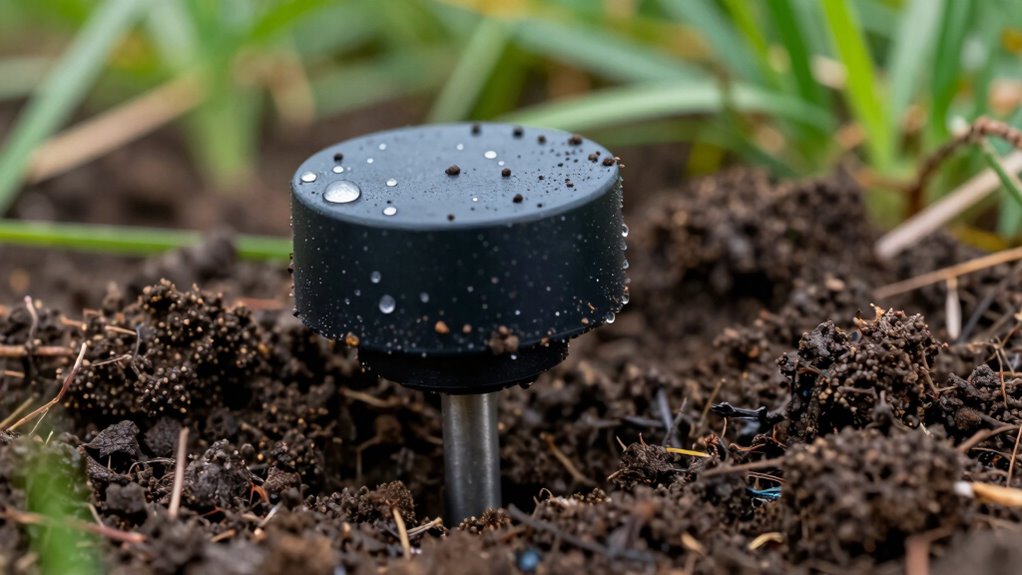

To get accurate soil moisture data, you need to place your sensors within the active root zone, typically 4-6 inches deep, and avoid positions near rocks, roots, or debris. Consistently secure them using stakes or brackets to prevent movement and guarantee good soil contact. Regular calibration and testing help verify proper placement, so you get truthful results that truly reflect your soil’s moisture. Keep reading to learn the best placement strategies for reliable measurements.
Key Takeaways
- Place sensors within active root zones, typically 4-6 inches deep, to get accurate soil moisture readings relevant to plant health.
- Ensure sensors are firmly secured and maintain good soil contact to prevent false or inconsistent data.
- Avoid areas with rocks, roots, or debris that can distort moisture measurements.
- Regularly calibrate sensors by comparing readings with manual moisture tests for accuracy.
- Test and monitor sensor data over time to identify and correct placement issues and ensure reliable readings.
Rain Bird LNDDRIPKIT Drip Irrigation Landscape/Garden Watering Kit with Drippers, Micro-Bubblers, Micro-Sprays
Comprehensive 108-piece kit for flower beds, gardens and landscaped areas; eliminates hand watering, saves time and money
As an affiliate, we earn on qualifying purchases.
Why Proper Sensor Placement Is Critical for Accurate Soil Moisture Data
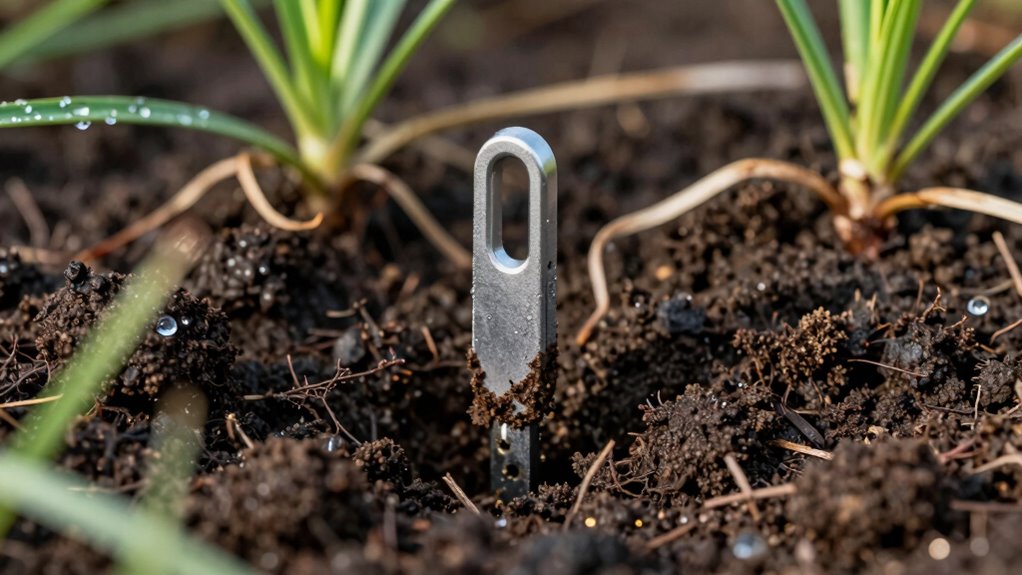
Proper sensor placement is essential because even small differences in location can lead to inaccurate soil moisture readings. Soil composition varies across your garden, with different textures and drainage levels, which affects moisture retention. Placing sensors too close to the surface or outside the plant root zones can give misleading data, causing you to overwater or underwater your plants. To get accurate readings, position sensors within the plant root zones, where moisture levels directly impact plant health. Understanding the soil’s composition helps determine the ideal depth for sensor placement, ensuring you monitor real-time moisture levels effectively. Accurate placement also considers sensor technology to ensure reliable data collection. Considering soil variability and how it influences moisture retention helps optimize sensor placement strategies. Correct placement allows you to make informed watering decisions, promoting healthy plant growth and conserving water. Proper sensor positioning is the key to reliable, actionable soil moisture data.

CARPATHEN Drip Irrigation System - Adjustable Quick Connect Irrigation System for Gardens up to 131ft, Raised Beds - Complete Garden Watering System - 1/4 Emitters, 1/2" and 1/4" Tubing and Connectors
Be a Gardening Master with our Water Pressure Optimised Drip Irrigation System. The new&improved garden watering system includes:...
As an affiliate, we earn on qualifying purchases.
Common Mistakes to Avoid When Installing Soil Moisture Sensors

Many beginners make the mistake of installing soil moisture sensors too close to the surface or outside the root zone, which can lead to misleading readings. Incorrect placement skews data interpretation, making it seem like your soil is wetter or drier than it truly is. Additionally, neglecting proper sensor calibration causes inaccurate measurements. Avoid these common errors by choosing the right depth and ensuring proper calibration. Here’s a quick guide:
| Mistake | Correct Approach |
|---|---|
| Placing sensors too shallow | Install within the root zone for accurate data |
| Ignoring calibration | Regularly calibrate sensors for precision |
| Installing outside roots zone | Place sensors where roots actively grow |
| Using a fixed position long-term | Adjust placement based on plant growth |
| Overlooking soil type effects | Consider soil variability in placement |
Understanding the soil properties and how they influence moisture readings is essential for effective sensor placement. Proper sensor calibration ensures the data you collect is accurate and reliable. Recognizing the importance of soil type can help prevent misinterpretation of moisture levels. Avoid these mistakes to get real, reliable soil moisture readings.
Submersible Sump Pump, Water Pump With 25Ft. Water Hose, Portable Utility Pump, Water Transfer Pump with 25-Foot Cord, 4000 GPH, Ideal for Swimming Pool, Garden Pond, Basement
【Powerful Performance】1.5HP motor delivers 4000GPH flow rate & 31ft max head height, efficiently draining swimming pools, garden ponds...
As an affiliate, we earn on qualifying purchases.
How to Find the Best Depth and Location for Your Sensors
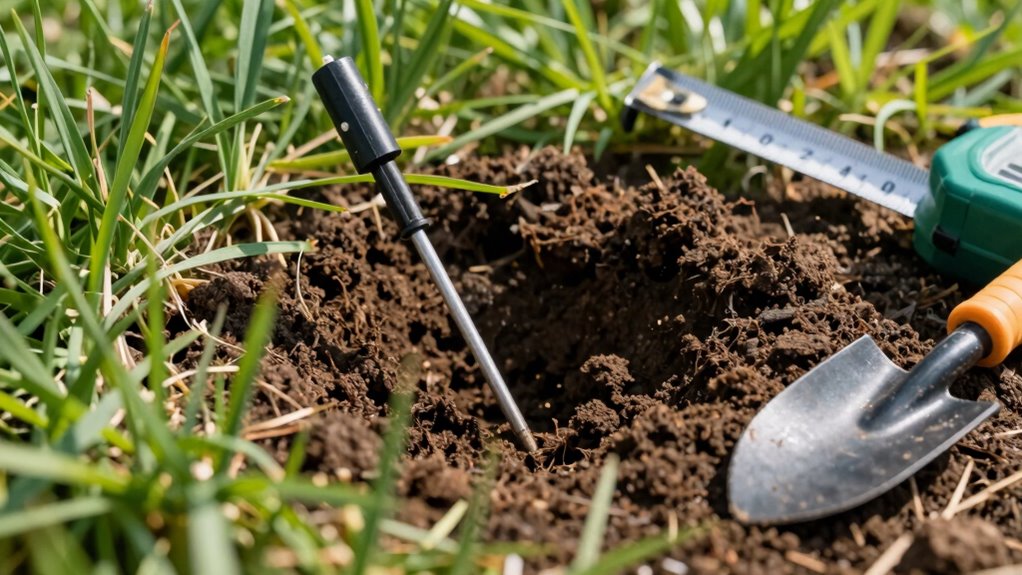
Choosing the right depth and location for your soil moisture sensors is essential for getting accurate readings. Proper placement ensures reliable data interpretation and effective sensor calibration. To find the best spot, consider these steps:
Proper sensor placement at optimal depths ensures accurate soil moisture readings and reliable data interpretation.
- Identify root zones: Place sensors where plant roots actively access water, typically 4-6 inches deep for most crops. Understanding the soil profile helps in selecting optimal sensor locations. Additionally, knowing the soil properties can influence how sensors respond to moisture levels in different areas. Recognizing moisture variability within your soil can further improve sensor accuracy. Consulting soil testing results can provide valuable insights into moisture distribution and composition.
- Avoid obstructions: Keep sensors away from rocks, roots, or debris that could skew readings.
- Select representative spots: Position sensors in areas reflecting typical soil conditions, avoiding shaded or overly moist zones.
- Test and adjust: Calibrate sensors regularly and verify placement by comparing readings across different depths and locations for consistency. Understanding soil properties and potential variability helps optimize sensor placement for more accurate soil moisture data.
Following these guidelines helps you interpret data accurately, ensuring your moisture measurements reflect real soil conditions.

2 Story Solid Wood Rabbit/Bunny Hutch with 2 Large Main Rooms, Indoor Outdoor Rabbit House Guinea Pig Cage Pet House for Small Animals with Ventilation Door Removable Tray Waterproof Roof (Grey)
👍👍👍New Upgraded! Quality plastic trays will never leak or rusty. 100% Finnish spruce timber and treated with water-based...
As an affiliate, we earn on qualifying purchases.
Tips for Securing Sensors to Get Consistent Readings

Securing your soil moisture sensors firmly in place is essential for obtaining consistent, reliable readings. When sensors stay stable, your sensor calibration remains accurate over time, ensuring trustworthy data. Use sturdy stakes, mounting brackets, or waterproof tape to prevent movement caused by wind, animals, or water flow. Proper placement helps maintain moisture retention conditions around the sensor, reducing false readings caused by shifting or exposure. Check that the sensor’s contact with the soil is consistent, avoiding air gaps or loose connections. Regularly inspect and tighten mounts to account for soil settling or erosion. These steps help you gather precise moisture data, enabling better watering decisions and healthier plants. Understanding sensor stability is crucial for accurate data collection and effective irrigation management. Additionally, ensuring your sensors are securely mounted helps prevent accidental dislodging during adverse weather or maintenance activities. Proper sensor placement also involves selecting locations that accurately reflect the overall soil conditions, avoiding areas with unusual drainage or compaction. To improve data accuracy, consider implementing techniques like consistent depth placement and avoiding areas with excessive organic matter or roots.
How to Test and Validate Your Sensor Placement for Reliable Results
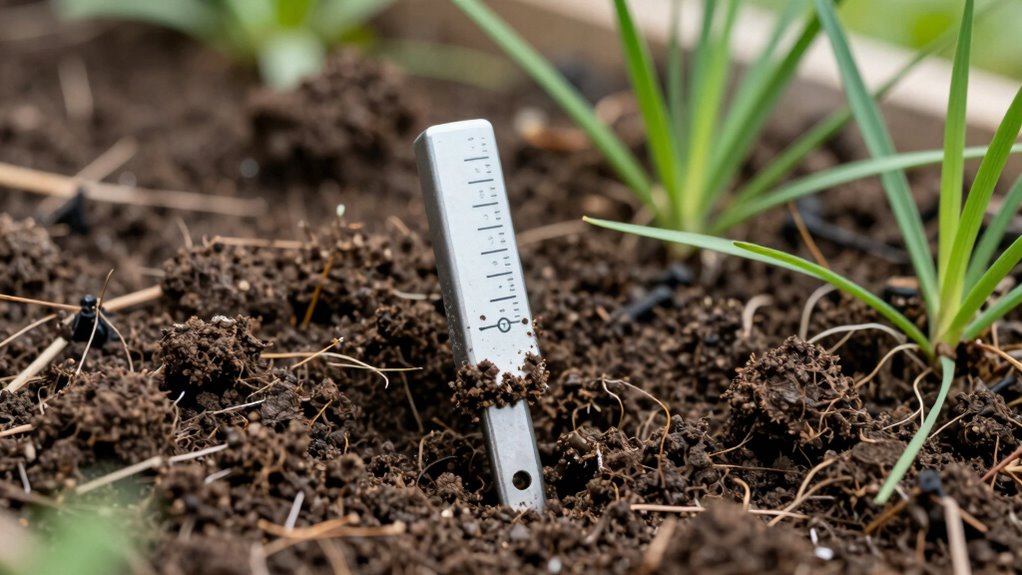
Once you’ve secured your soil moisture sensors properly, it’s important to verify that they’re providing accurate, consistent readings. Start by performing sensor calibration, comparing your sensor’s data with a known moisture reference to ensure accuracy. Next, set up data logging to track readings over time, helping identify fluctuations or inconsistencies. Consider the following steps:
Verify sensor accuracy through calibration and consistent data logging over time.
- Cross-check sensor readings against manual soil moisture tests at different depths.
- Calibrate sensors periodically to account for drift or environmental changes.
- Analyze logged data for patterns indicating unreliable placement or sensor malfunction.
- Adjust placement if readings deviate markedly from expected moisture levels.
Additionally, regular maintenance ensures your sensors remain functional and truthful over time.
Frequently Asked Questions
How Often Should I Calibrate My Soil Moisture Sensors?
You should calibrate your soil moisture sensors at least once a year to guarantee accuracy, considering their lifespan and potential drift over time. If you notice inconsistent readings or significant environmental changes, calibrate more frequently. Regular calibration helps maintain sensor performance and reliability, preventing inaccurate data that could affect your watering decisions. Keep track of calibration dates to maintain ideal sensor lifespan and affirm your soil moisture readings stay precise.
Can Soil Type Affect Sensor Placement Effectiveness?
Yes, soil type can influence sensor placement effectiveness. Different soil compositions, like sandy or clay soils, have varying moisture retention properties, so you should adjust sensor depth accordingly. In sandy soils, place sensors deeper to avoid quick drainage, while in clay soils, shallower placement helps get accurate readings. Always consider soil composition when installing sensors to ensure you get real, reliable moisture data.
What Environmental Factors Influence Sensor Accuracy?
Environmental factors like soil composition and ambient humidity directly influence your sensor’s accuracy. If your soil has high clay content, it retains moisture longer, which can skew readings. High ambient humidity increases surface moisture, causing false moisture levels. To get reliable data, consider these factors when placing your sensor, ensuring it’s positioned where soil composition and humidity levels are representative of the area you’re monitoring.
Are Wireless Sensors More Reliable Than Wired Ones?
Wireless sensors can be quite reliable if you prioritize wireless reliability, but they may face interference issues in certain environments. Wired sensors tend to be more durable, especially in tough conditions, because they don’t depend on signal strength. If you need consistent, long-term performance, wired options often outperform wireless ones. However, for flexibility and easier installation, wireless sensors can work well if you manage potential interference.
How Do I Interpret Inconsistent Sensor Readings?
Think of inconsistent sensor readings as a fog that masks the truth. You can clear this fog by checking for sensor drift, which causes erratic data. Use data smoothing techniques to even out fluctuations, revealing the true moisture levels. If readings still wobble, consider recalibrating or repositioning your sensor. Consistent, honest data helps you make better watering decisions, so treat the sensor’s signals like a guiding light through the fog.
Conclusion
By carefully choosing your sensor placement, you guarantee the most accurate soil moisture readings possible. Remember, proper installation and testing are key to reliable data that truly reflects your soil conditions. Are you willing to risk false readings and misguided decisions? Taking the time to get it right now saves you headaches and errors later. Trust your methods, and you’ll always have the real insights you need to optimize your soil health.