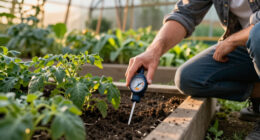
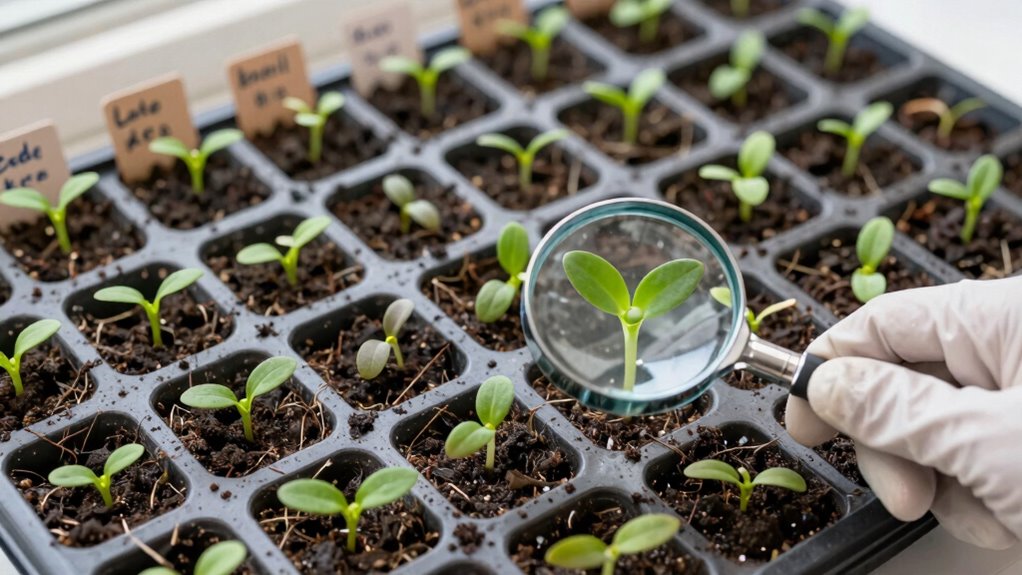

To easily track germination rates by crop and variety, start by recording your planting details, including seed type, depth, and date. Daily, monitor and note how many seeds sprout, noting environmental conditions too. Use simple spreadsheets or apps to organize this data, making it easy to calculate success rates and identify patterns. Staying consistent with your records helps you make informed decisions, and if you keep going, you’ll discover even more ways to optimize your crop growth.

Get garden gear delivered free with Prime
- Fast, free delivery on millions of items
- Prime Video, Amazon Music and more included
- Member-only deals all year
Key Takeaways
- Use standardized data sheets to record daily sprout counts for each crop and variety.
- Mark planting details and environmental conditions to identify factors affecting germination.
- Calculate germination rates regularly to monitor success and compare varieties easily.
- Utilize digital tools or apps for efficient data entry, analysis, and trend visualization.
- Adjust planting or soil preparation methods based on germination data to improve future results.
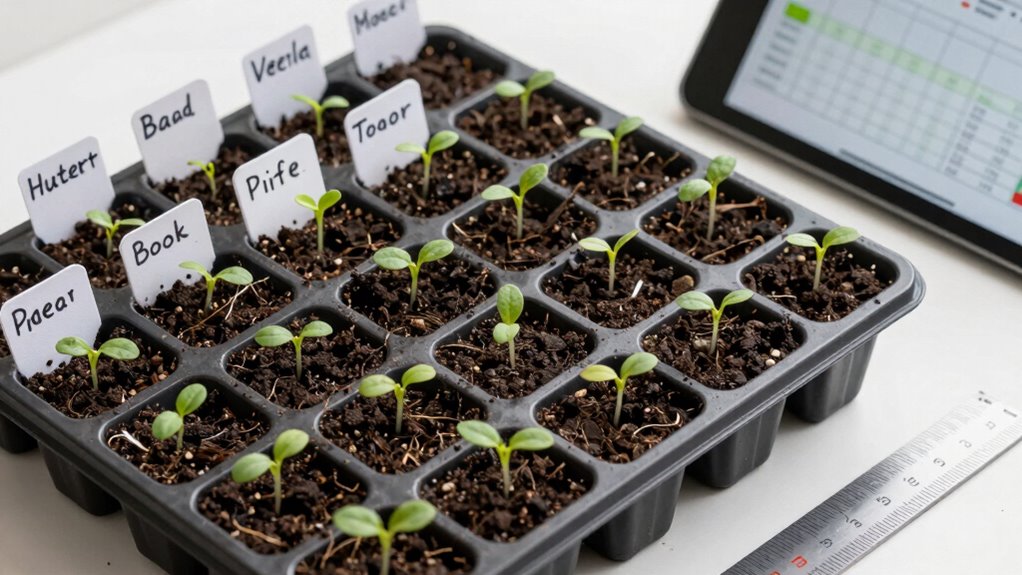
Tracking germination rates is vital for farmers and gardeners aiming to optimize crop yields. When you keep track of how many seeds sprout and develop into healthy seedlings, you gain valuable insights into the success of your planting efforts. This process isn’t just about counting sprouts; it’s about understanding seedling health and making informed decisions to improve your crop production. The first step involves paying close attention to soil preparation, as it directly impacts seed germination. Proper soil preparation ensures your seeds have the ideal environment to sprout quickly and grow strong. You need to loosen the soil, remove weeds, and add nutrients or organic matter to create a hospitable medium. When your soil is well-prepared, you give your seeds the best chance to develop into healthy seedlings, which is pivotal for accurate germination tracking. Additionally, understanding market trends and seed quality can help you select the best varieties for your specific conditions. Once your soil is ready, plant your seeds at the recommended depth and spacing, then keep detailed records. As seedlings emerge, monitor their progress daily and observe the environmental factors that influence germination. Recording the conditions under which your seeds are growing can reveal important patterns and germination triggers. Consistently tracking these factors can also help you identify optimal conditions for seedling growth. Record the number of seeds planted versus the number that sprout within a specific timeframe. This allows you to calculate germination rates accurately for each crop and variety. Tracking these rates helps you identify which seeds are thriving and which aren’t, giving you clues about seed quality, soil conditions, or environmental factors affecting germination. When you notice low germination rates for certain varieties, it might be time to switch to higher-quality seeds or adjust your soil preparation techniques. Recognizing seed viability is essential for making effective planting decisions.
Popular right now

Bose QuietComfort True Wireless Earbuds with Active Noise Cancellation, Black

Vitamix Propel Series 510 Professional-Grade Blender, 3 Programs, Black

Bose QuietComfort Wireless Noise-Cancelling Over-Ear Headphones, Black
As an affiliate, we earn on qualifying purchases.
Frequently Asked Questions
How Often Should I Record Germination Data During the Process?
You should record germination data daily during the early stages, especially around your seed spacing and watering schedule. This helps you monitor progress and identify issues quickly. As germination stabilizes, you can reduce to every few days. Consistent recording guarantees you track the emergence rate accurately, so you can make timely adjustments to watering or spacing if needed, ultimately improving your crop’s success.
What Tools Are Best for Tracking Germination Rates Accurately?
You should use tools like digital spreadsheets or specialized seed tracking apps to monitor germination rates accurately. These tools help you record seed viability data and enable effective data analysis, ensuring you catch trends and issues early. For precise results, combine visual observations with these digital tools, making it easier to calculate germination percentages and improve your planting success. Consistent, organized tracking is key to reliable data and better crop management.
How Do Environmental Factors Influence Germination Rate Variability?
Environmental factors like soil moisture and seed viability directly influence germination rate variability. When soil moisture is inconsistent, seeds struggle to absorb enough water, causing uneven sprouting. Conversely, high seed viability guarantees more seeds successfully germinate despite minor environmental fluctuations. You can improve germination consistency by monitoring soil moisture levels and selecting high-quality seeds, creating a stable environment that minimizes variability and promotes uniform crop emergence.
Can Germination Rates Predict Overall Crop Yield?
Yes, germination rates can help predict overall crop yield. High seed viability and proper soil preparation boost germination success, leading to healthier plants and better yields. If you track germination rates accurately, you can identify potential issues early and adjust your practices accordingly. Consistent monitoring allows you to optimize conditions, ensuring more uniform growth and ultimately increasing your crop productivity.
How Should I Adjust Practices Based on Germination Success?
Think of adjusting your practices like tuning a musical instrument—you want everything in harmony. If germination success is low, focus on improving seedling health by refining watering schedules to keep soil consistently moist but not waterlogged. Increase or decrease watering as needed, and monitor seedlings closely. With healthier seedlings, you’ll boost germination rates, leading to a more uniform crop. Stay attentive and flexible to guarantee ideal growth conditions.
Conclusion
By tracking germination rates carefully, you’re like a gardener tending to a delicate seedling—nurturing each step to guarantee healthy growth. With simple tools and consistent records, you can spot trouble early and adjust your methods, turning your farm into a well-tuned orchestra of thriving crops. Remember, the key to a bountiful harvest lies in understanding each variety’s unique needs, guiding your crops from tiny sprouts to abundant yield, like a painter bringing a vibrant canvas to life.