Trellising and support systems are essential for helping your vining plants grow healthy and produce better yields. By using stakes, trellises, or netting, you can maximize space, improve airflow, and reduce pest problems. These supports also make it easier to monitor pests and diseases, keep fruits off the ground, and promote strong growth. Choosing durable materials guarantees long-lasting benefits. Keep exploring to discover how to set up the best trellising solutions for your garden.
Key Takeaways
- Vertical trellising maximizes garden space and improves air circulation around vining plants.
- Supports plant growth, prevents damage, and reduces pest and disease risks through physical barriers.
- Facilitates easier pest monitoring, inspection, and harvest by elevating plants off the ground.
- Uses durable materials like wire or netting to ensure long-lasting support tailored to plant needs.
- Simplifies watering, fertilizing, and overall garden management while promoting healthy, upright growth.
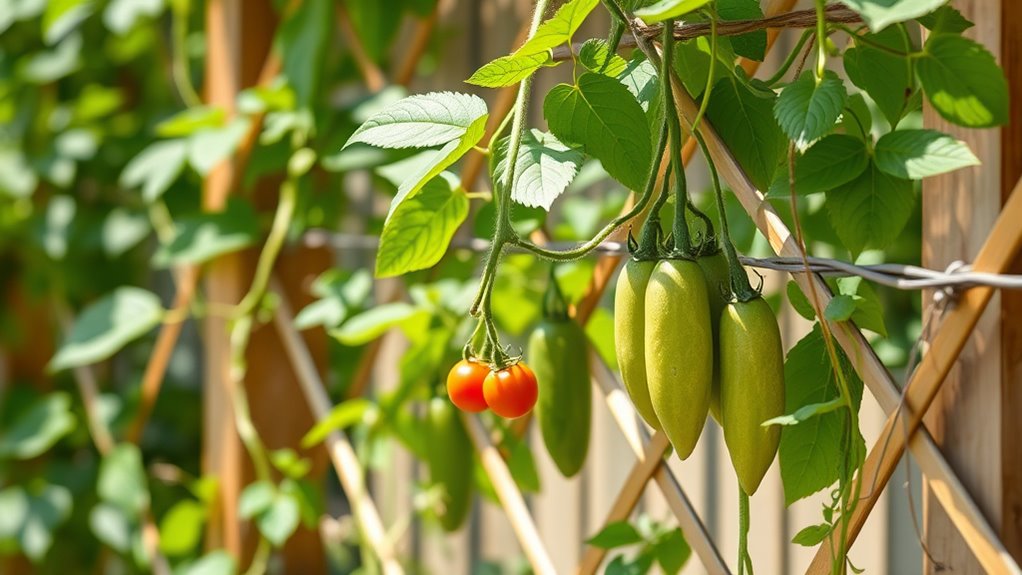
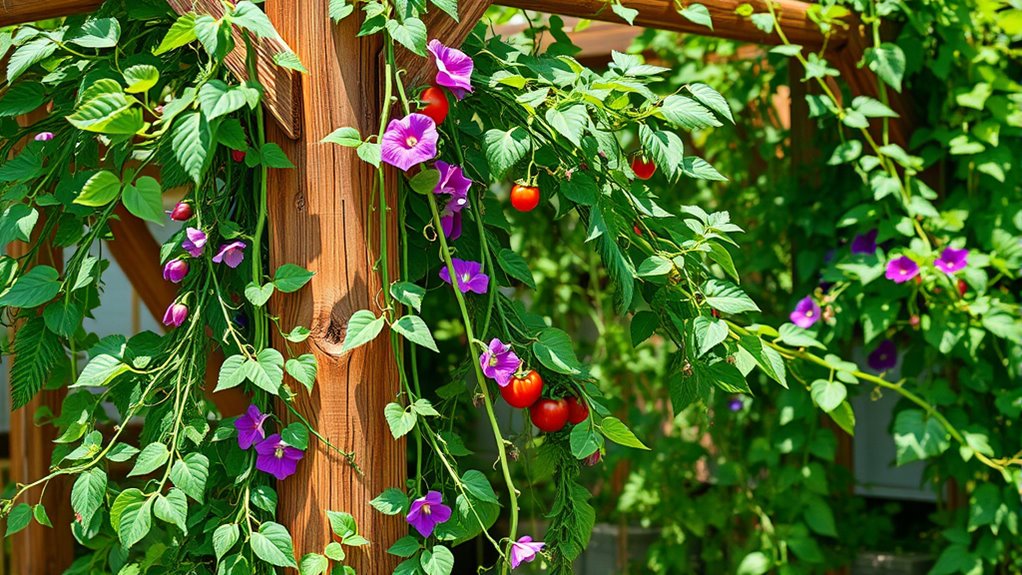
Vining plants can thrive and produce better yields when properly trellised and supported. When you give your plants a sturdy structure to climb, you’re encouraging vertical growth, which not only maximizes space but also improves air circulation around the foliage. Vertical growth is essential for healthy plant development because it reduces the risk of fungal diseases and pest infestations that often thrive in damp, crowded conditions on the ground. By elevating the plants, you make it easier to monitor and manage pests before they become a significant problem, because pests are less likely to hide in the upper parts of the plant where they’re more visible. Trellising acts as a physical barrier, making it harder for pests like aphids, beetles, or slugs to reach the leaves and stems, effectively preventing infestations before they start.
When you set up a trellis, you provide your vining plants with a clear structure to follow, guiding their growth upward instead of outward. This support not only promotes a healthy, upright posture but also guarantees that fruits or flowers are kept off the ground, reducing rot and making harvesting easier. If your goal is to improve pest prevention, it’s vital to position your trellis in a way that allows easy access for inspection and treatment. Regularly checking the undersides of leaves and stems becomes less of a chore, and you can quickly identify early signs of pests or disease. This proactive approach helps you intervene early, minimizing the need for chemical treatments and promoting a healthier garden overall.
Moreover, a well-supported plant is less prone to damage caused by wind or heavy fruit loads. As your plants grow taller, a strong trellis prevents them from collapsing or breaking under their weight. This structural support encourages the plant to focus its energy on producing fruit or flowers rather than repairing damaged stems. When you choose the right materials for trellising—such as sturdy staking, netting, or wire—you’re investing in a long-lasting solution that can support vertical growth season after season. Proper trellising also makes watering and fertilizing more efficient, as you can access all parts of the plant easily, ensuring even nutrition and hydration. Additionally, hackathons provide opportunities to learn about innovative gardening techniques and sustainable materials, which can enhance your trellising setup.
Frequently Asked Questions
What Is the Best Time to Start Trellising Vining Plants?
You should start trellising vining plants early, ideally when you notice the first growth indicators like new shoots or small leaves. Timing considerations are vital because supporting the plants too late can hinder growth and cause damage. Keep an eye on their development, and begin trellising when the vines are still manageable, usually just after transplanting or when they reach about 6-8 inches tall, to guarantee ideal support and healthy growth.
How Often Should I Replace or Upgrade My Trellis System?
You should regularly assess your support system and plan for trellis maintenance at least once a season. Replace or upgrade your trellis system when you notice signs of wear, damage, or if it no longer provides adequate support. Upgrading support system supports healthy growth and prevents plant damage. Consistent maintenance guarantees your vining plants stay healthy, productive, and well-supported throughout the season.
Can Trellising Help With Pest Management?
Yes, trellising can help with pest management. By elevating your plants, you create better airflow and make it harder for pests to reach them. Plus, you can encourage beneficial insects like ladybugs and predatory beetles to inhabit your trellis, naturally controlling pests. Using trellises as pest barriers also helps you spot and address problems early, reducing the need for chemical treatments and promoting healthier plants overall.
What Materials Are Most Durable for Long-Term Support?
Like a sturdy backbone for your garden, stainless steel and heavy-duty galvanized metal stand out for their material longevity. They resist rust and weather, making trellis maintenance easier over time. Wooden supports, though charming, may weaken or rot, requiring frequent repairs. For long-term support, choose durable materials that withstand the elements, ensuring your vining plants stay supported without constant replacements. Your garden’s future depends on the strength you provide today.
How Do I Prevent Plants From Damaging Trellis Structures?
To prevent your plants from damaging the plant support, regularly check your trellis for loose or broken parts and reinforce weak spots promptly. Use sturdy materials suited for trellis maintenance, like treated wood or metal, to withstand plant growth and weather. Gently train your vines along the support, avoiding excessive tension that could cause damage. Consistent oversight and proper support installation will keep your plants healthy and your trellis intact.
Conclusion
By trellising your vining plants, you’re not just guiding their growth—you’re giving them a sturdy ladder to reach the sun, symbolizing your nurturing care. As they climb and flourish, you create a living tapestry of resilience and beauty, a demonstration to patience and support. Remember, your effort is the foundation that helps these plants thrive, turning their upward journey into a reflection of your own growth. Keep supporting, and watch them flourish beyond your expectations.