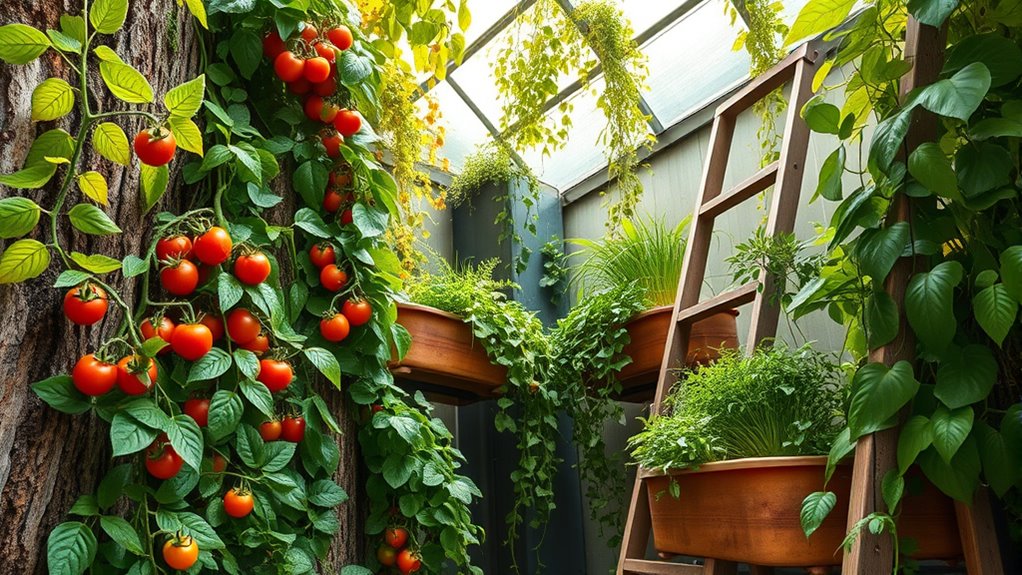

Vertical gardening helps you maximize limited space by growing plants upward instead of outward, making small farms more productive. It transforms compact areas into lush green environments and boosts urban aesthetics. You can choose durable, weather-resistant materials like metal frames or wooden pallets, and select plants suited to your climate. Proper placement and regular maintenance improve airflow and pest control. Keep exploring to discover how smart design makes vertical gardening even more efficient and beautiful.
Key Takeaways
- Vertical gardening maximizes limited farm space by growing plants upward, increasing overall productivity and crop variety.
- Using durable, weather-resistant materials ensures long-lasting structures suitable for small farm environments.
- Proper plant selection and arrangement promote airflow, sunlight exposure, and pest control, enhancing plant health.
- Regular maintenance and monitoring help prevent pests and diseases, ensuring high yields in small farm setups.
- Vertical gardens improve farm aesthetics and functionality, transforming small areas into vibrant, productive green spaces.
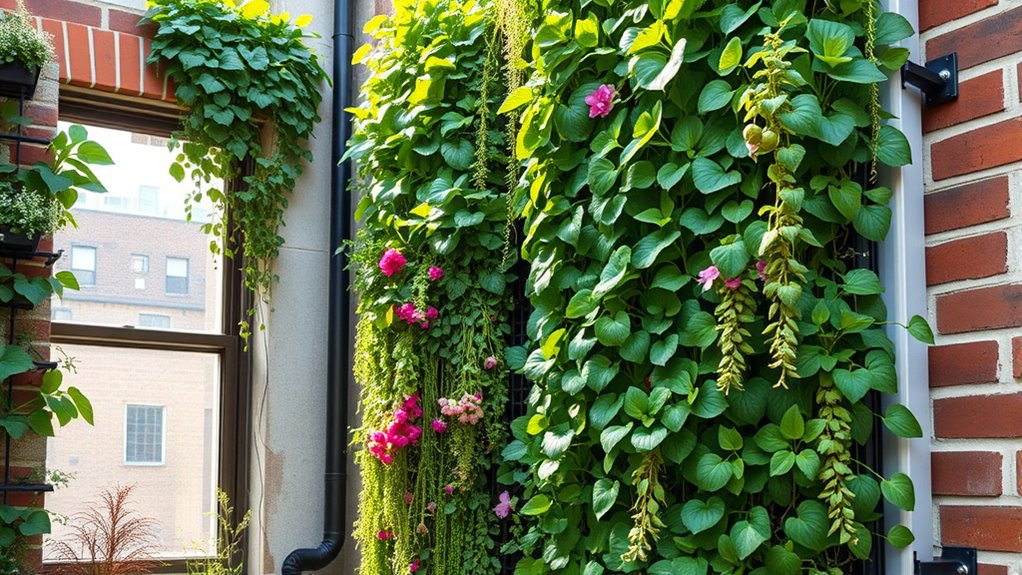
Have you ever wondered how to maximize your limited space for gardening? If you’re working with a small yard, balcony, or rooftop, vertical gardening offers an innovative solution that transforms tight spots into lush, productive spaces. By growing plants upward rather than outward, you can increase your garden’s capacity without sacrificing precious ground area. This approach not only expands your planting options but also elevates the overall urban aesthetics of your environment. Vertical gardens add visual interest and a modern touch to any setting, turning bland walls or fences into vibrant, living art. Plus, they serve as a practical way to introduce greenery into cityscapes, making your space more inviting and lively.
Maximize small spaces with vertical gardening—transform walls into lush, vibrant, and productive green oases.
One of the key advantages of vertical gardening is how it simplifies pest management. When plants are arranged vertically, it’s easier to monitor and control pests. You can quickly spot signs of trouble, such as aphids or mites, and take action before they spread extensively. Many vertical systems, like pocket planters or wall-mounted containers, allow for targeted treatment, reducing the need for broad-spectrum pesticides. Additionally, because pests tend to prefer ground-level plants, elevating your garden can naturally diminish their presence. This layered approach to planting creates a barrier that pests find harder to access, giving your crops a better chance to thrive without constant chemical intervention. It also makes cleanup and maintenance more straightforward, so you spend less time battling pests and more time enjoying your garden.
To make the most of your vertical garden, choose the right materials and structure that complement your space and aesthetic preferences. Metal frames, wooden pallets, or modular planters are popular options, each offering different levels of durability and style. Incorporate a mix of plants—herbs, vegetables, flowers—that suit your climate and sunlight exposure. The arrangement should promote good airflow and prevent overcrowding, which can lead to disease or pest issues. Keep in mind that smart placement and regular inspection are essential for maintaining urban aesthetics and pest management. Using appropriate materials that are resistant to weather and pests can enhance the longevity and effectiveness of your setup. With proper planning and care, your vertical garden can become a striking focal point that enhances your environment while providing fresh produce or lush greenery.
Ultimately, vertical gardening empowers you to optimize small spaces without sacrificing beauty or productivity. It’s a practical, stylish way to grow more in less room, while also making pest management more manageable. Whether you’re cultivating a vegetable wall or a decorative green façade, this method transforms your limited area into a thriving, eye-catching oasis. By balancing functionality with aesthetic appeal, you turn a confined space into a vibrant extension of your home or community, proving that big things can come in small, vertical packages.
Frequently Asked Questions
What Are the Best Crops for Vertical Gardening?
You should grow lightweight, climbing, or trailing crops like lettuce, herbs, strawberries, and tomatoes in your vertical garden. Use plant support structures such as trellises or cages to help these crops thrive. Remember to practice crop rotation to prevent soil depletion and pest buildup. These strategies maximize space and yield, making your small farm more productive and efficient while keeping your plants healthy and well-supported.
How Do I Prevent Pests in Vertical Gardens?
Think of your vertical garden as a fortress where pests are intruders. To prevent them, you actively implement pest control strategies like introducing natural repellents such as neem oil or garlic spray. Regularly inspect your plants for signs of pests, remove affected leaves, and keep the area clean. By staying vigilant and using natural repellents, you create a resilient barrier that keeps pests at bay and guarantees healthy growth.
What Soil Type Is Ideal for Vertical Systems?
You should use a lightweight, well-draining soil mix for your vertical system. Ideally, it has a balanced soil composition with organic matter, perlite or vermiculite for aeration, and compost for nutrients. Good drainage is essential to prevent waterlogging and root rot. Avoid heavy, clayey soils, as they retain too much moisture. Opt for a specialized potting mix designed for containers and vertical setups to guarantee healthy growth.
How Often Should I Water Vertically Grown Plants?
You should water your vertically grown plants every 1-2 days, depending on the plant’s hydration needs and the weather. Keep an eye on the watering schedule and make certain the soil stays moist but not waterlogged. During hot or windy days, you might need to water more frequently. Consistent watering helps maintain proper plant hydration, promotes healthy growth, and prevents pests that thrive in dry conditions.
Can Vertical Gardens Be Used Indoors Effectively?
Yes, you can use vertical gardens indoors effectively. Make sure your plants get enough indoor lighting, such as near windows or with grow lights. Regular pest control is essential since indoor gardens can attract pests. Use natural remedies or insect screens to keep pests at bay. Consistently monitor moisture levels and provide proper drainage to keep your indoor vertical garden thriving and healthy.
Conclusion
By embracing vertical gardening, you can turn even the smallest farms into lush, productive spaces. Imagine a city dweller transforming a tiny balcony into a vibrant vegetable garden, growing herbs and greens vertically on trellises. This approach not only saves space but also boosts your harvest. So, whether you have a tiny yard or a limited balcony, vertical gardening helps you maximize every inch and enjoy fresh, homegrown produce year-round.