
If you regularly overwater or underwater your plants, you risk weakening their root systems. Overwatering causes soil to become waterlogged, depriving roots of oxygen and making them prone to rot. Underwatering dries out the soil, leaving roots brittle and unable to absorb nutrients or anchor the plant. Both habits disrupt soil microbial health and hinder nutrient uptake. To discover how proper watering promotes strong roots, keep exploring these essential tips.

Get garden gear delivered free with Prime
- Fast, free delivery on millions of items
- Prime Video, Amazon Music and more included
- Member-only deals all year
Key Takeaways
- Overwatering causes waterlogged soil, depriving roots of oxygen and leading to rot and weakness.
- Underwatering dries out soil, limiting water and nutrients, resulting in brittle and poorly developed roots.
- Irregular watering creates stress, preventing roots from establishing deep, stable growth.
- Excessive watering washes away vital nutrients, causing deficiencies that weaken root health.
- Poor drainage combined with frequent watering promotes root rot and impairs nutrient uptake.

Weak roots often stem from improper watering habits that either overwater or underwater your plants. When you water too frequently or too much, the soil becomes waterlogged, depriving roots of necessary oxygen. This lack of oxygen hampers soil aeration, which is essential for healthy root growth and function. Roots need oxygen to respire and absorb nutrients effectively. Without proper soil aeration, roots can become weak, stunted, or even rot, making your plant more vulnerable to diseases and environmental stress. Conversely, underwatering causes the soil to dry out completely, leading roots to struggle for moisture and nutrients. When roots are deprived of water, they can become brittle and less capable of anchoring the plant securely in the soil. Proper watering also supports soil aeration, which is crucial for maintaining a healthy root environment and preventing issues like root rot or dehydration. The balance in watering is fundamental because it directly impacts nutrient absorption. Roots extract critical nutrients from the soil, but this process relies on the soil being moist enough to facilitate nutrient uptake. Overwatering can wash away nutrients or create anaerobic conditions, where harmful bacteria thrive and disrupt the soil’s natural balance. This results in nutrient deficiencies, which weaken the root system further, and the plant as a whole. Additionally, soil health plays a vital role in supporting resilient root systems by maintaining microbial activity that benefits nutrient availability. Maintaining soil microbial activity is especially important for promoting healthy root development and overall plant vitality. Proper watering encourages roots to grow deeper and stronger, establishing a resilient foundation for the plant to thrive. Moreover, consistent watering practices contribute to long-term soil stability, which supports sustainable plant growth. Proper watering fosters a healthy soil microbial community, which is essential for breaking down organic matter and releasing nutrients that roots can absorb more efficiently.
plant watering can with adjustable flow
As an affiliate, we earn on qualifying purchases.
As an affiliate, we earn on qualifying purchases.
Frequently Asked Questions
How Can I Tell if I’m Overwatering My Plants?
You can tell you’re overwatering your plants if the soil drainage is poor, staying soggy, or if you notice yellowing leaves and root rot. Keep an eye on your watering schedule—if you’re watering frequently without letting the soil dry out, you’re likely overdoing it. To prevent this, make sure your plants have proper drainage and adjust your watering routine based on the plant’s needs and soil moisture levels.
What Signs Indicate Root Weakness Due to Watering?
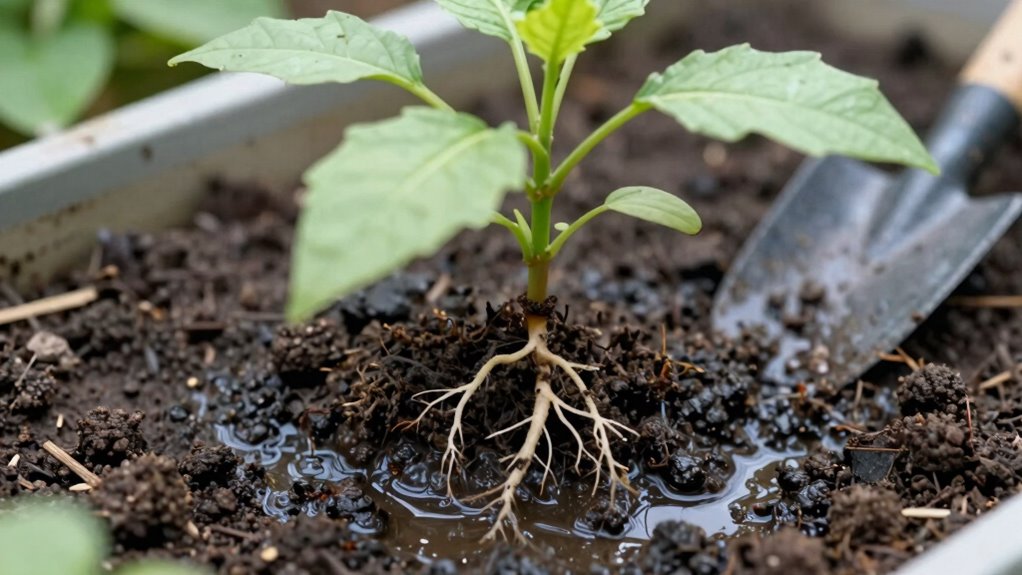
If your plant’s roots are weakening, you’ll notice signs like black, mushy roots that seem to melt away—like ghostly remnants of health—indicating root rot. Soil becomes tightly packed and stifling, causing soil compaction that suffocates roots. You might see wilting leaves despite watering, and the plant struggles to absorb nutrients. These signs scream that overwatering is draining energy, leading to a fragile, compromised root system that can’t support your plant’s growth.
Does Watering Frequency Vary With Different Plant Species?
Yes, watering frequency varies with different plant species. You should consider plant-specific watering needs and monitor soil moisture levels closely. Some plants thrive with frequent watering, while others prefer drier soil. To prevent weak root systems, adjust your watering schedule based on each plant’s requirements, ensuring soil moisture levels stay consistent without becoming overly saturated or too dry. This tailored approach helps promote healthy, resilient roots.
Can Watering at Different Times of Day Affect Root Health?
Have you ever considered how watering at different times of day impacts your plant’s roots? Morning watering allows excess moisture to evaporate, reducing fungal risk and strengthening roots. Evening watering, on the other hand, can cause prolonged dampness, inviting rot and weakening roots. So, isn’t it better to water in the morning? It promotes healthier root systems, keeps your plants happier, and minimizes problems caused by inconsistent watering times.
Are There Specific Watering Tools That Help Prevent Weak Roots?
Using tools like drip irrigation and moisture meters can help prevent weak roots. Drip irrigation delivers water slowly at the base, reducing overwatering and encouraging deep root growth. Moisture meters let you check soil moisture levels accurately, ensuring you water only when needed. Together, these tools promote healthy roots by maintaining consistent moisture and avoiding the pitfalls of uneven watering, strengthening your plant’s overall health.
Conclusion
If you overwater your plants, you’re fundamentally drowning their roots, depriving them of the strength they need to stand tall. Think of your plant’s roots as the roots of a mighty oak—if they’re too soft and waterlogged, they can’t anchor the tree against storms. To keep your greenery thriving, water thoughtfully and sparingly, allowing roots to breathe and grow deep. Remember, a well-watered plant is like a resilient tree—firm, strong, and ready to weather any storm.
Columbus Day / Indigenous Peoples' Day Picks
long weekend sales
As an affiliate, we earn on qualifying purchases.