
To build a reliable watering map for your large garden, start by mapping out all plant groups, flower beds, trees, and vegetable patches, then divide the space into zones based on sunlight and water needs. Label each zone clearly and plan emitter placement for even coverage, using drip irrigation and soil moisture sensors to optimize water delivery. Regularly test and adjust the system, keeping maintenance simple. Keep exploring to learn how you can perfect your garden’s watering setup.
Key Takeaways
- Map the entire garden, dividing it into zones based on plant types, sunlight, and water needs.
- Label each zone with emitter placement, coverage areas, and connection points to the main water source.
- Use detailed diagrams to plan emitter types, flow rates, and placement tailored to individual plant requirements.
- Regularly test water distribution in each zone, adjusting emitter placement and flow for even coverage.
- Incorporate soil moisture sensors and ongoing system evaluations to optimize reliability and adapt to garden changes.
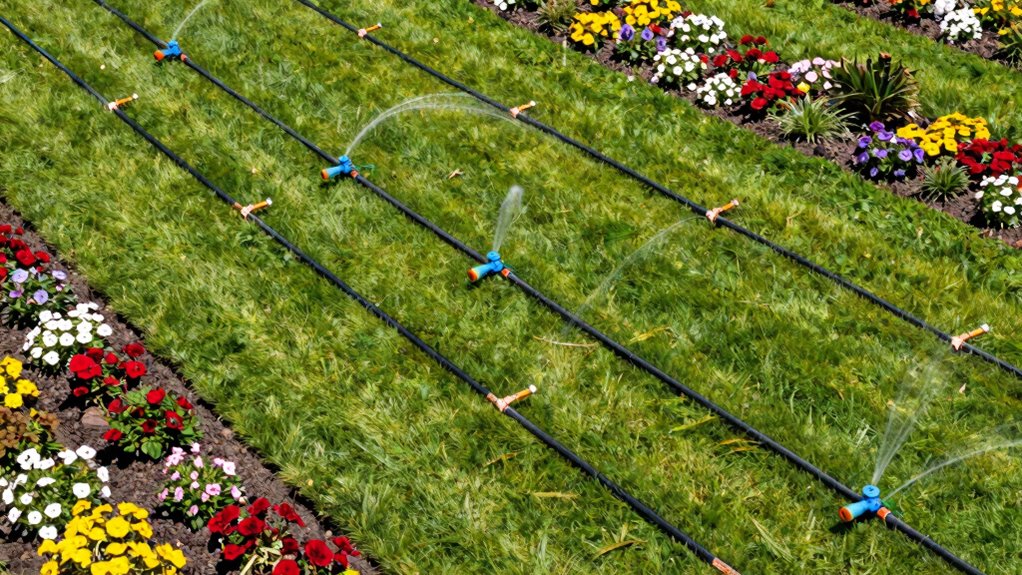
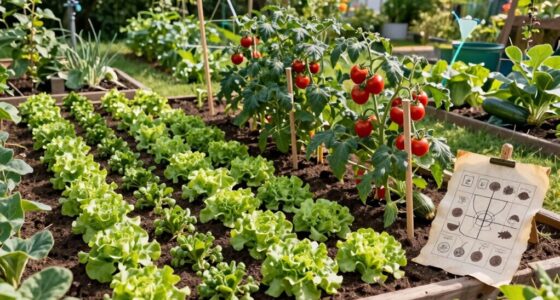
Have you ever struggled to guarantee your plants receive consistent watering? If so, creating a reliable watering map can make a huge difference in managing your large garden effectively. The goal is to assure every plant gets the right amount of water without waste or overwatering. To do this, you need to understand your garden’s layout, plant needs, and available water sources. Start by mapping out your entire garden, noting the location of different plant groups, flower beds, trees, and vegetable patches. This visual overview helps you plan your watering system with precision.
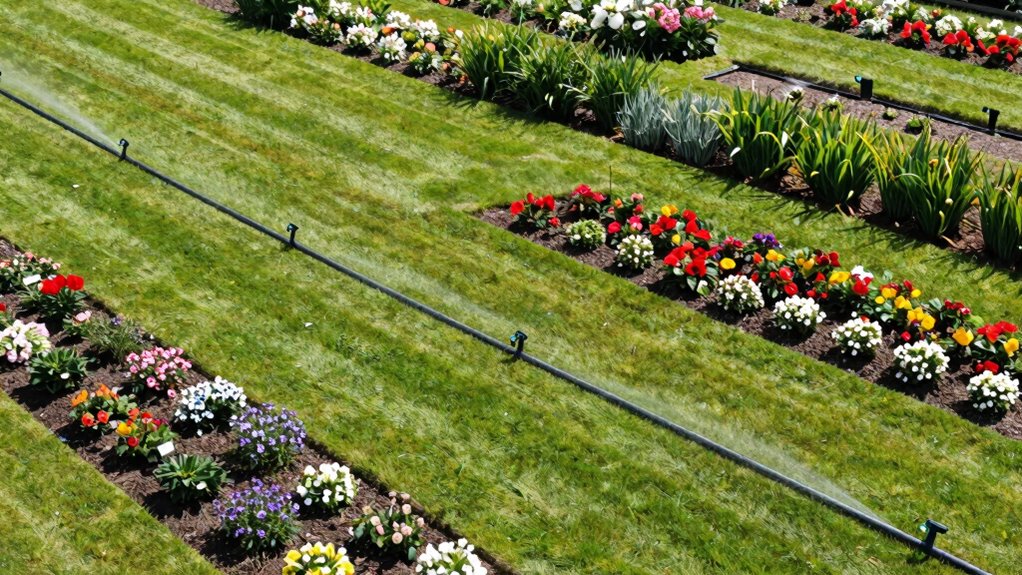
Next, consider the watering method that best suits your garden’s size and complexity. Drip irrigation is an excellent choice because it delivers water directly to the soil around each plant’s roots, reducing evaporation and runoff. When setting up drip lines, install emitters at appropriate distances based on each plant’s water requirements. Be sure to check soil moisture levels regularly; this guarantees your watering schedule aligns with real needs rather than fixed timers that may overwater or underwater at times. Using soil moisture sensors can automate this process, providing real-time data to adjust watering times accordingly.
Choose drip irrigation and soil moisture sensors for precise, efficient watering tailored to your garden’s needs.
To build a dependable watering map, divide your garden into zones based on plant types, sunlight exposure, and water needs. This zoning allows you to assign specific watering schedules and systems to each area. For example, your thirsty vegetable beds might need daily watering, while shaded flower borders require less frequent moisture. Once zones are established, design a layout for your drip irrigation lines, ensuring each zone has adequate coverage. Label each zone clearly on your map, and plan connections to your main water source, considering ease of access and future maintenance. Incorporating biodiversity principles into your garden design can also help create a more resilient and sustainable watering system. Additionally, understanding the types of soil present in your garden can influence your watering strategy, as different soils retain water differently. Regularly evaluating your system’s efficiency and considering soil health practices can further optimize water retention and plant growth. Exploring local climate conditions is also crucial, as it affects watering frequency and duration. Moreover, familiarizing yourself with watering schedules tailored to your specific plant varieties can significantly improve your garden’s health. Test your system thoroughly before fully implementing it. Run each zone to verify that water reaches all plants evenly and adjust emitter placements or flow rates as needed. Keep detailed notes on your map—marking the location of each emitter, flow rate, and watering schedule—so you can easily troubleshoot or modify the system later. Remember, a reliable watering map isn’t static; as your garden evolves, revisit your plan regularly to adapt to new plantings or changing weather patterns. By paying close attention to soil moisture levels and customizing your drip irrigation zones, you’ll develop a precise, efficient watering system that keeps your large garden thriving with minimal effort.
drip irrigation system for large garden
As an affiliate, we earn on qualifying purchases.
As an affiliate, we earn on qualifying purchases.
Frequently Asked Questions
How Often Should I Update My Watering Map?
You should update your watering map whenever you notice changes in plant health or seasonal variations. Regular updates guarantee your watering schedule remains effective, promoting healthy growth and water conservation. Check for signs of over- or under-watering, and adjust accordingly. Additionally, revise your map after planting new sections or experiencing weather shifts. Staying proactive helps maintain ideal plant health and conserves water, making your garden more sustainable and thriving.
What Tools Are Best for Mapping Large Gardens?
You should use GPS mapping tools or garden planning software for large gardens. These tools help you accurately chart your garden layout and consider plant types, ensuring efficient watering zones. Combining digital apps with physical tools like measuring tapes or garden markers provides clarity. By integrating these tools, you create an all-encompassing, adaptable watering map that caters to your garden’s unique layout and diverse plant needs, saving time and water.
How Do I Account for Seasonal Plant Needs?
You need to incorporate seasonal adjustments into your watering plan by tracking each plant’s specific watering needs throughout the year. Regularly observe how different plants respond to changing weather, adjusting watering frequency accordingly. For plant-specific watering, note each plant’s drought tolerance and preferred moisture levels, updating your map to reflect these needs seasonally. This approach guarantees your garden stays healthy and thriving, no matter the season.
Can I Automate My Watering System Based on the Map?
Yes, you can automate your watering system using your map. Install smart sensors in different zones to monitor soil moisture and weather conditions. Pair them with automated timers that adjust watering schedules based on sensor data, ensuring plants get the right amount of water. This setup saves you time, conserves water, and keeps your garden healthy by providing precise, responsive watering tailored to each area’s needs.
How Do I Troubleshoot Uneven Water Distribution?
Think of your drip system as a river flowing evenly across your garden. To troubleshoot uneven water distribution, check soil moisture levels at various points, ensuring the water reaches every corner. Inspect hoses and emitters for clogs or leaks, and adjust pressure if needed. By maintaining consistent soil moisture and fixing blockages, your watering system will deliver a balanced flow, keeping every plant healthy and well-hydrated.
Conclusion
With a well-crafted watering map, you’re gently guiding your garden’s roots to stay nourished and vibrant, even when the seasons shift. Think of it as planting the seeds for effortless growth, where every corner receives just what it needs without fuss or worry. As your garden flourishes quietly under your careful planning, you’ll find peace in knowing that each plant’s well-being is woven into your thoughtful design. Your garden’s future blooms brighter with your steady hand.