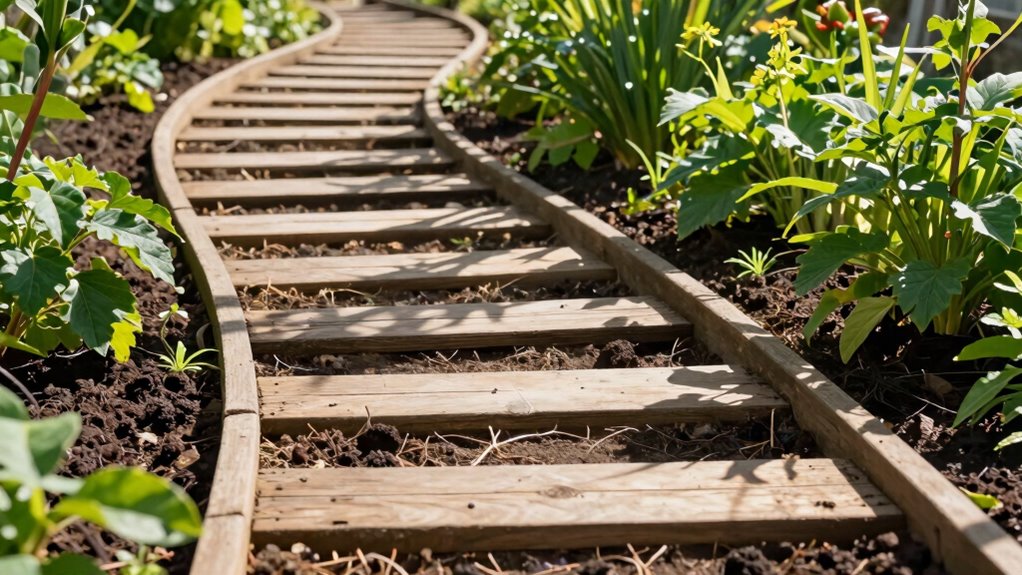

Garden paths are essential for protecting soil health and improving access. They prevent soil compaction by directing foot traffic away from plant beds, help control erosion, and keep soil loose and healthy. Properly chosen materials like gravel or pavers slow water runoff and promote water absorption, supporting plant roots. Well-designed paths make garden maintenance easier and protect delicate soil ecosystems. Continue exploring to discover how the right path choices can enhance your garden’s longevity and significance.

Get garden gear delivered free — and shop member deals
- Fast, free delivery on millions of items
- Access to Prime Big Deal Days deals on October 6–7
- Prime Video, Amazon Music and more included
Key Takeaways
- Proper paths prevent soil compaction by directing foot traffic away from planting areas, promoting healthy root growth.
- Durable, permeable materials reduce water runoff, minimizing erosion and preserving soil fertility.
- Well-designed paths improve garden access for maintenance, reducing soil disturbance in planting beds.
- Paths act as barriers, protecting soil from erosion caused by rainwater and foot traffic.
- Selecting appropriate materials supports soil ecosystems and enhances long-term garden stability.
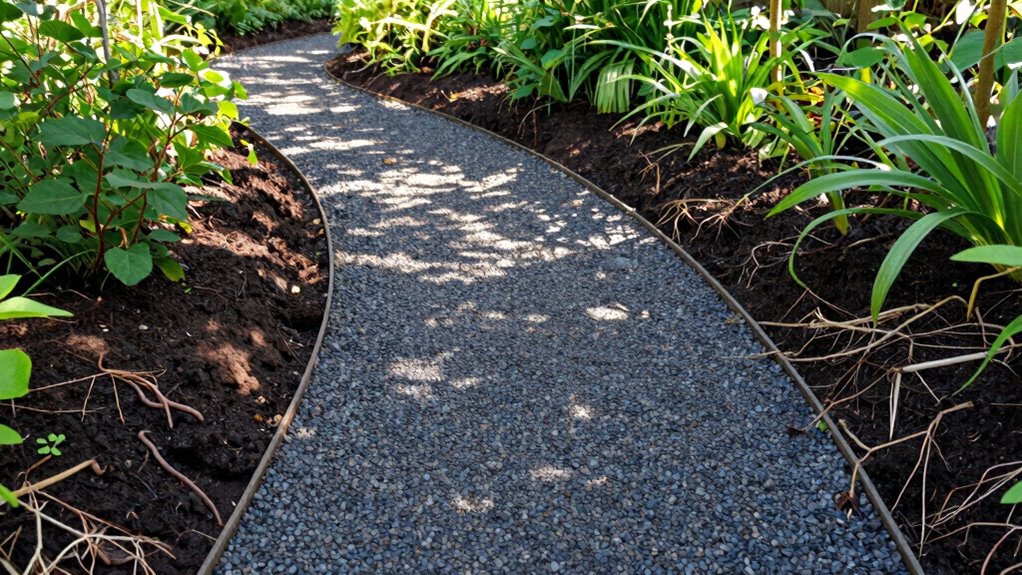
Creating garden paths can enhance the beauty and functionality of your outdoor space, but they also play an essential role in maintaining soil health. When you design and install paths thoughtfully, you help prevent soil compaction, which is critical for plant roots and water absorption. Walking repeatedly over the same patches without designated pathways can lead to soil becoming densely packed, reducing air pockets and making it harder for roots to grow. By directing foot traffic onto well-constructed paths, you minimize soil disturbance in planting areas, keeping it loose and healthy. Properly laid paths act as a barrier, preventing soil from becoming overly compacted and ensuring plants have the environment they need to thrive.
Designing paths thoughtfully prevents soil compaction, supporting healthy roots and thriving plants in your garden.
Erosion is another pivotal issue that garden paths can help prevent. Without defined walkways, rainwater can wash away topsoil, exposing roots and reducing soil fertility. Over time, this erosion can seriously undermine your garden’s foundation, leading to uneven ground and loss of valuable nutrients. When you incorporate durable materials like gravel, stone, or pavers, your paths serve as effective barriers against water runoff. They slow down the flow of water, allowing it to soak into the ground rather than rushing across the surface and carrying away soil. This not only preserves your soil but also helps maintain a stable, level garden bed, making planting and maintenance easier. Additionally, using permeable materials can further enhance water infiltration and soil health.
Moreover, well-designed paths improve access to different parts of your garden. Access is essential for routine tasks like watering, weeding, and pruning. When you create clear routes, you reduce trampling in planting beds, which can lead to soil compaction and erosion over time. These paths also prevent damage to delicate soil structures and roots, especially in areas where plants are young or sensitive. By establishing designated walkways, you guarantee that your garden remains accessible without compromising soil integrity. Incorporating soil-friendly materials into your paths can further support healthy soil ecosystems and promote biodiversity.
As an affiliate, we earn on qualifying purchases.
Frequently Asked Questions
How Do Garden Paths Affect Underground Water Flow?
Garden paths can influence underground moisture flow by redirecting subsurface water channels. When you install a path, it can create barriers that slow or redirect underground water movement, affecting how moisture reaches plant roots. Properly designed paths allow water to flow smoothly beneath them, promoting healthy soil and plant growth. Conversely, poorly placed paths can cause water pooling or drought conditions, disrupting underground water flow and soil health.
Can Garden Paths Prevent Soil Erosion Effectively?
Yes, garden paths can effectively prevent soil erosion. They act like sturdy shields, protecting soil from rain runoff and wind, which would otherwise wash away nutrients. By reducing soil compaction, paths create a stable environment for plant growth, allowing roots to anchor deeply and hold the soil in place. Properly designed paths maintain soil structure, ensuring your garden remains lush and resilient against erosive forces.
What Materials Are Best for Sustainable Garden Paths?
You should choose natural materials like gravel, wood chips, or permeable pavers for sustainable garden paths. These path materials allow water to filter through, minimizing runoff and soil erosion. Sustainable choices also include recycled or locally sourced materials, reducing environmental impact. By selecting eco-friendly options, you promote healthier soil and better access around your garden. Prioritize these materials to create durable, environmentally responsible paths that support your garden’s overall health.
Do Garden Paths Influence Soil Temperature?
Yes, garden paths influence soil temperature by providing insulation that moderates temperature fluctuations. When you choose materials like wood chips or mulch, they act as soil insulation, keeping roots protected from extreme heat or cold. This helps maintain a stable environment for plant roots, reducing stress and promoting healthier growth. Properly designed paths prevent soil from heating up too much, ensuring your garden stays balanced and vibrant.
How Often Should Garden Paths Be Maintained for Soil Health?
You should maintain your garden paths at least once a year to prevent path compaction and control weeds. Regular upkeep loosens the soil, reducing compaction that harms soil health and root growth. It also makes weed control easier, preventing weeds from spreading and competing with your plants. Consistent maintenance ensures your paths stay functional, protecting soil quality and making access simple while supporting overall garden health.
Conclusion
Think of your garden as a living map, where paths are the rivers guiding essential nutrients and water to every corner. When you create thoughtful paths, you’re not just walking through your garden—you’re nurturing its soul. These pathways become the arteries of your outdoor sanctuary, ensuring healthy soil and lush growth. So, lay down your paths with care; they’re the secret roads that keep your garden thriving and alive.
Fall yard work Picks
leaf blowers
As an affiliate, we earn on qualifying purchases.