
TL;DR

Get garden gear delivered free — and shop member deals
- Fast, free delivery on millions of items
- Access to Prime Big Deal Days deals on October 6–7
- Prime Video, Amazon Music and more included
Virginia has enacted new legislation (SB 340/HB 508) to support agrivoltaic projects, allowing farmers to combine solar energy generation with agricultural activities. The law aims to help farmers maintain land use and generate income amid ongoing land loss issues.
Virginia has officially enacted legislation (SB 340/HB 508) that defines and supports agrivoltaic projects, aiming to help farmers sustain their land and income while generating solar power. This marks a significant policy shift in a state struggling to conserve its agricultural land amid land development pressures.
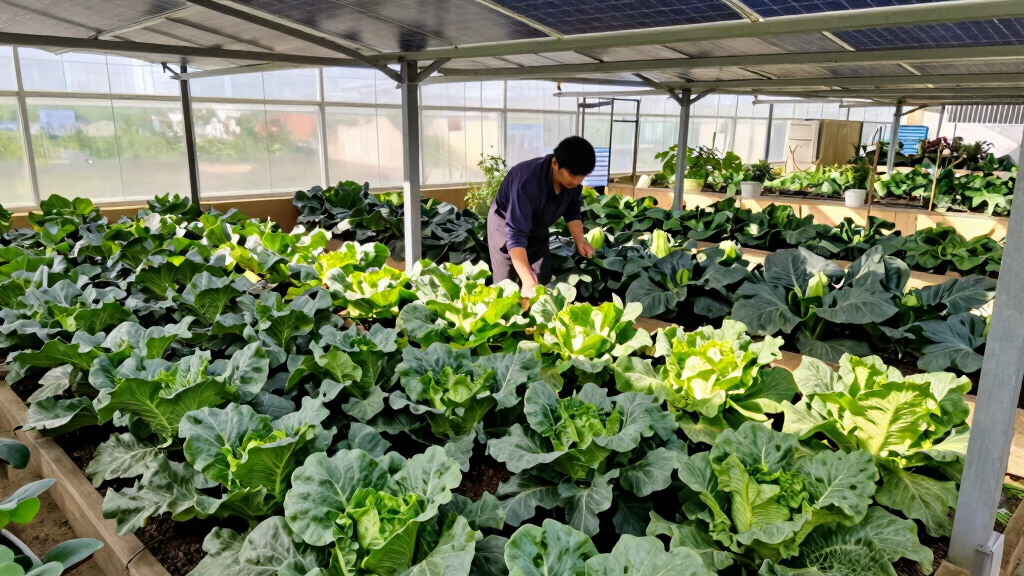
The Virginia General Assembly approved SB 340/HB 508, which establishes a clear legal framework for agrivoltaic systems—co-locating solar energy generation with agricultural activities. The legislation emphasizes that such projects must prioritize existing farm operations, with a focus on maintaining agricultural productivity over the lifespan of the solar arrays, typically 25-30 years.
The bill was introduced after advocacy from the Piedmont Environmental Council (PEC), which supports crop-based agrivoltaic systems. PEC highlights that this legislation will enable farmers to diversify income streams, reduce land loss to real estate development, and utilize land more efficiently while supporting renewable energy goals.
Virginia’s new law also sets specific standards to ensure projects are flexible and adaptable, allowing farmers to respond to changing markets and operational needs. The legislation received bipartisan support, signaling broad political backing for integrating solar energy with agriculture.
Legal Framework for Sustainable Farming and Solar Co-Use
This legislation is a notable step toward balancing agricultural preservation with renewable energy development. It provides farmers with a stable legal foundation to adopt agrivoltaic systems, which can help mitigate land loss, support farm viability, and advance Virginia’s clean energy commitments. The law could serve as a model for other states seeking to harmonize land conservation and renewable energy expansion.
As an affiliate, we earn on qualifying purchases.
Virginia’s Agricultural Land and Renewable Energy Policies
Virginia has faced ongoing challenges in conserving agricultural land amid rapid development and rising land prices. Historically, land conversion to real estate and infrastructure projects has threatened farming communities. While the state has made strides in renewable energy policies, specific support for agrivoltaics has been limited, partly due to lack of a legislative framework.
The Piedmont Environmental Council (PEC), an influential land conservation organization, has been advocating for crop-based agrivoltaic systems, which involve growing edible crops beneath solar panels. Their efforts led to the development of the recent legislation, aligning conservation goals with renewable energy deployment.
Prior to this law, most agrivoltaic activity in the U.S. was limited to grazing sheep, which helps maintain vegetation and soil health but does not involve edible crops. Virginia’s new law aims to expand this practice to include more diverse agricultural uses, supporting farmers’ economic resilience.
“By establishing clear enforceable definitions of agrivoltaics and code of Virginia, we are protecting farmers and ensuring land remains in productive use for the life of the solar array.”
— Virginia Governor Spanberger
Remaining Questions About Implementation and Impact
It is still unclear how quickly and widely these agrivoltaic projects will be adopted across Virginia, and how effectively the legislation will be enforced. Details about specific project standards, funding mechanisms, and potential barriers for farmers are still emerging. Additionally, the long-term environmental and economic impacts of the projects remain to be studied.
Monitoring Adoption and Effectiveness of New Law
The next steps involve monitoring how Virginia farmers and solar developers implement agrivoltaic systems under the new law. State agencies and advocacy groups will likely track project development, compliance, and outcomes over the coming years. Further legislative or policy adjustments may be considered based on initial results and feedback from stakeholders.
Key Questions
How does the new Virginia law support farmers interested in agrivoltaics?
The law provides a clear legal definition and standards for agrivoltaic projects, ensuring they prioritize agricultural productivity and land conservation while enabling farmers to generate income from solar energy.
What types of agricultural activities are supported under the new legislation?
The legislation emphasizes crop-based agriculture, including edible crops, alongside solar energy generation, with flexibility for farmers to adapt operations over time.
Will this law help prevent land loss to real estate development?
Yes, by enabling farmers to keep land in productive use through agrivoltaics, the law aims to reduce the pressure to sell land for development, supporting land conservation efforts.
Are there any financial incentives associated with the new law?
The legislation primarily provides a legal framework; specific financial incentives or subsidies are not detailed but may be considered in future policy discussions.
When can farmers start applying for agrivoltaic projects under this law?
Implementation details are still being finalized; farmers can expect guidance from state agencies and organizations like PEC in the coming months.
Source: CleanTechnica
Halloween Picks
halloween
As an affiliate, we earn on qualifying purchases.