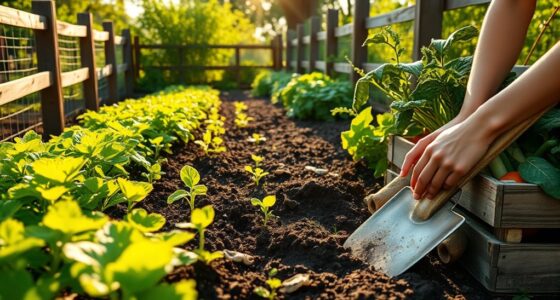

To review land use on your small farm annually, start with mapping your land’s layout using satellite images or aerial photos, noting crop fields, grazing areas, water sources, and structures. Assess whether land is used efficiently, identifying underutilized or unused spaces, and guarantee wildlife corridors remain intact for biodiversity. Check your infrastructure like fences and water systems for effectiveness, and consider natural land features for sustainable management. If you want tips to make this process easier, keep exploring further.

Get garden gear delivered free with Prime
- Fast, free delivery on millions of items
- Prime Video, Amazon Music and more included
- Member-only deals all year
Key Takeaways
- Conduct a visual land assessment using satellite images or aerial photos to identify current land use and potential improvements.
- Map out crop, grazing, water sources, and infrastructure to evaluate utilization and identify underused areas.
- Check ecological features like habitat corridors and natural land features to ensure biodiversity is maintained.
- Review water management systems and barriers to ensure wildlife movement and ecosystem health are supported.
- Document findings and update a land use plan focusing on conservation, crop rotation, and community engagement goals.
Small farms play an essential role in local food systems and sustainable agriculture, but their land use practices often face unique challenges. To guarantee your farm remains productive and ecologically balanced, conducting an annual land use review is critical. This process helps you understand how your land is being utilized, where improvements are needed, and how your farm fits into the broader landscape. As you review, consider how your farm integrates with urban areas—urban integration—and the importance of maintaining wildlife corridors for biodiversity. These factors influence your farm’s long-term health and sustainability.
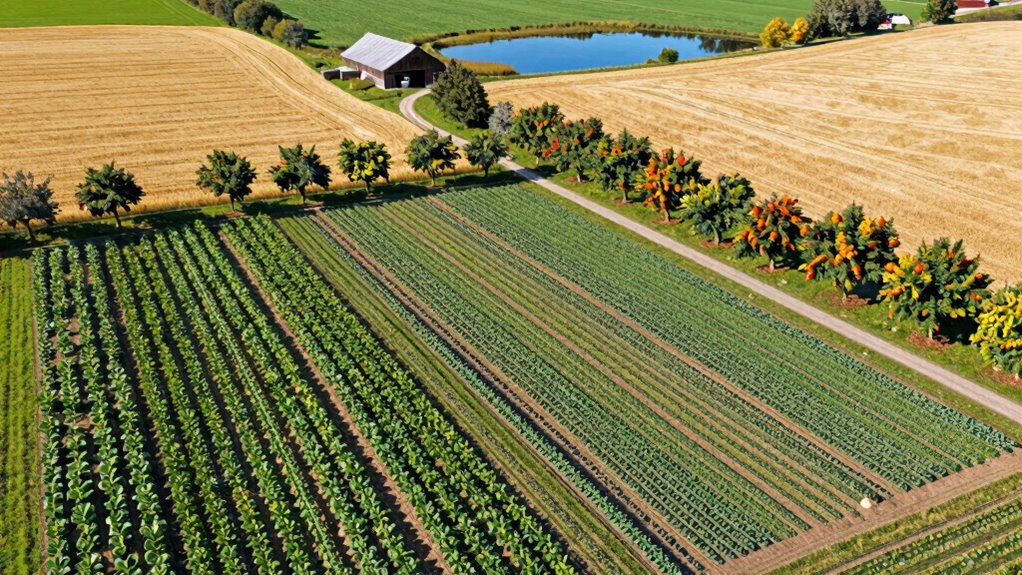
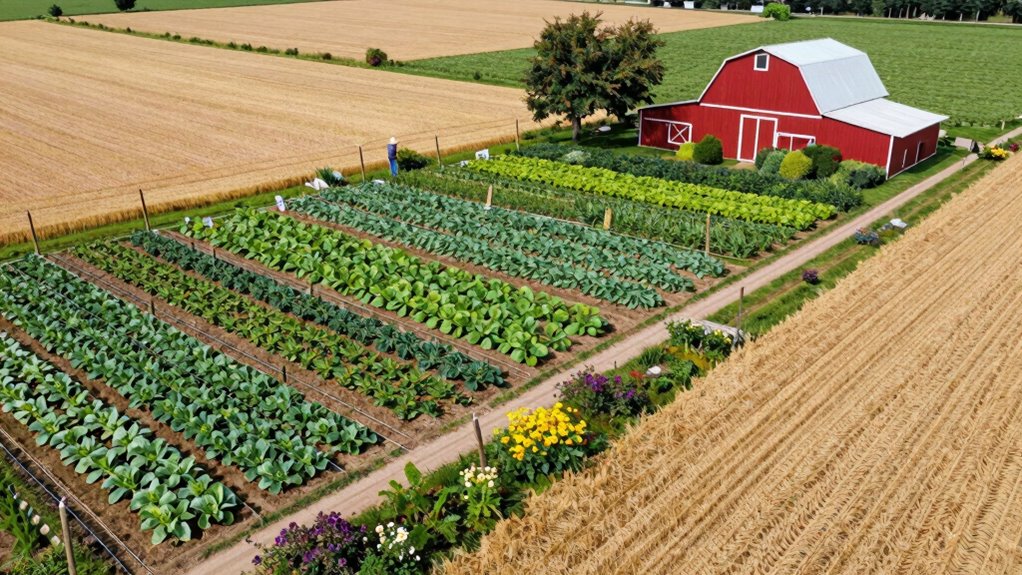
Begin by mapping your entire farm. Use satellite images or aerial photos to get a clear view of your land’s current layout. Mark existing crop fields, grazing areas, water sources, and any structures. Pay special attention to how your farm connects with neighboring lands, especially in urban settings. Is the farm effectively incorporated into the local community? Are there opportunities to improve access or collaboration? Urban integration can foster local partnerships, support community-supported agriculture, and boost your farm’s resilience. If your farm is near a city or town, consider how your land use impacts urban residents and how you might enhance this relationship through educational programs or farm visits. Recognizing the importance of biodiversity can help you prioritize habitat preservation and ecosystem services on your farm.
Map your farm using satellite images to assess urban connection and opportunities for community engagement.
Next, evaluate the distribution of your land. Are you making the most of your available space? Are there unused or underutilized areas? Think about how you can optimize land use without sacrificing ecological health. For example, maintaining wildlife corridors—strips of natural habitat that allow animals to move safely across your property—is essential. These corridors support biodiversity and help control pests naturally. When reviewing, identify if these corridors are intact and functioning well or if they need restoration. Protecting wildlife corridors ensures your farm remains sustainable and supports the surrounding ecosystem. Understanding the importance of soil health practices during land review can improve productivity and ecological balance over time. Incorporating diverse plantings and habitat features can further enhance these ecological benefits.
Assess your farm’s infrastructure and its impact on land use. Are water management systems effective? Are fences or barriers hindering wildlife movement? Do structures interfere with natural land features? Incorporate sustainable practices that respect natural boundaries and promote habitat connectivity. As you review, look for ways to enhance urban integration by creating inviting spaces for community engagement or educational purposes. Consider how your land use supports or conflicts with local wildlife and whether adjustments are necessary to improve ecological balance. Recognizing the role of natural land features can guide you in designing more harmonious land management strategies. Additionally, understanding local ecosystems can help tailor your land use practices to better suit the specific environmental conditions of your area.
Finally, document your findings and develop a plan for the upcoming year. Set clear goals for land conservation, crop rotation, habitat preservation, and community involvement. Regular review keeps you aligned with your farm’s ecological and economic objectives, ensuring that your small farm remains productive, sustainable, and harmonious with its surroundings.
satellite imaging land mapping for farms
As an affiliate, we earn on qualifying purchases.
As an affiliate, we earn on qualifying purchases.
Frequently Asked Questions
How Do I Prioritize Land Use Changes Effectively?
To prioritize land use changes effectively, start by evaluating your farm’s needs and goals. Focus on implementing crop rotation to improve soil health and prevent pests. Next, identify areas needing soil enrichment, like adding compost or cover crops. Balance expanding crop areas with conserving natural habitats. Regularly review your land’s productivity and adjust based on soil health, yield outcomes, and sustainability, ensuring your land use aligns with your farm’s long-term success.
What Tools Can Help Track Land Use Over Time?
You can use mapping tools like GIS software or online mapping platforms to track land use over time effectively. These tools help you visualize changes and analyze data to see patterns or shifts in land utilization. Regularly updating your maps with new data allows you to monitor progress, identify issues early, and make informed decisions about land management. Data analysis within these tools makes tracking land use both precise and manageable.
How Should I Involve Family or Community in Reviews?
You should foster community engagement and family collaboration by holding regular meetings or farm walks, encouraging everyone to share their insights. Invite family members and community members to review land use plans together, discuss changes, and set goals. This inclusive approach helps gather diverse perspectives, builds shared responsibility, and guarantees your land use aligns with everyone’s needs and values. Active participation strengthens your farm’s overall sustainability and community ties.
What Legal Considerations Should I Be Aware Of?
You should prioritize legal compliance and understand zoning regulations to avoid penalties. Review local ordinances related to land use, permitted activities, and buffer zones, ensuring your farm operations align with these rules. Keep updated on any changes in regulations, and consider consulting with a land use attorney or local planning department. Staying proactive helps you avoid legal issues and maintains your farm’s good standing within community standards.
How Can I Incorporate Sustainable Practices Into Land Review?
Like a knight of old, you can defend your land’s future by integrating sustainable practices during your annual review. Focus on soil health by rotating crops and adding organic matter, and prioritize water conservation through efficient irrigation and rainwater harvesting. These steps help maintain productivity, protect natural resources, and guarantee your farm remains resilient. Regularly evaluating these practices keeps your land sustainable, just like a well-guarded castle stands strong over time.
Conclusion
Regularly reviewing your land use isn’t just about keeping things tidy—it’s about nurturing a quiet promise to your farm’s future. By taking a moment each year to reflect and adjust, you gently steer your land toward harmony and resilience. Think of it as tending a delicate garden; with care and attention, your small farm can flourish quietly, offering abundance and beauty for years to come. Embrace this yearly ritual, and let your land whisper its stories of growth and renewal.
Columbus Day / Indigenous Peoples' Day Picks
long weekend sales
As an affiliate, we earn on qualifying purchases.