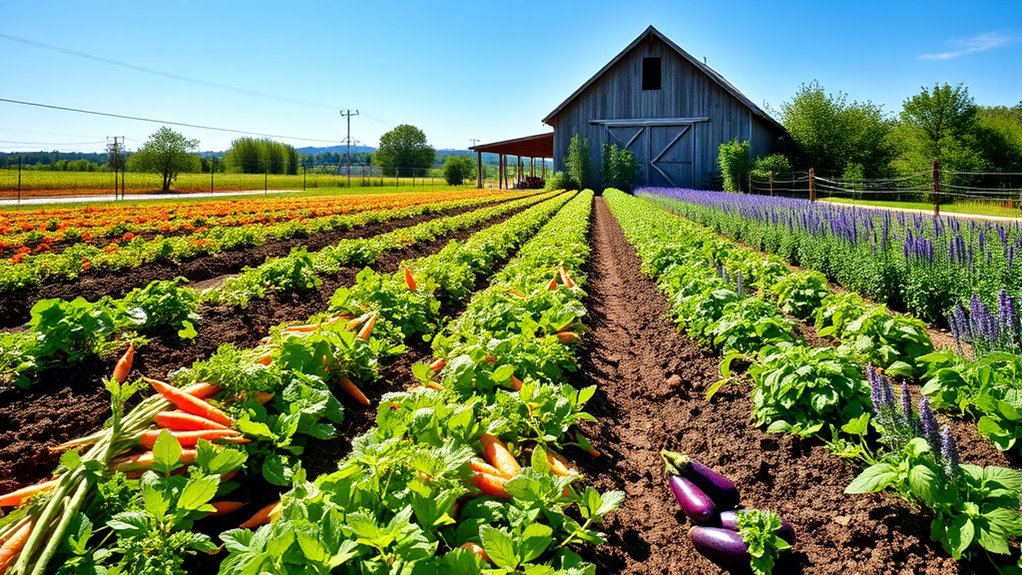

By diversifying your farm with specialty crops, you can boost your income and reduce financial risks. Growing niche products like herbs, organic vegetables, or exotic fruits allows you to tap into high-value markets. Shorter crop cycles mean more frequent harvests, and adding value through products like jams or dried herbs expands your market reach. Embracing sustainable practices and crop rotation further enhances soil health and farm resilience. Keep exploring to discover how to maximize your farm’s potential with these strategies.
Key Takeaways
- Incorporate specialty crops like herbs and exotic fruits to command higher market prices.
- Use crop rotation to integrate new crops without harming soil health or productivity.
- Focus on value-added products such as jams or dried herbs to increase farm revenue.
- Leverage niche markets and organic certifications for premium pricing opportunities.
- Employ sustainable practices to enhance farm resilience and meet consumer demand for eco-friendly products.
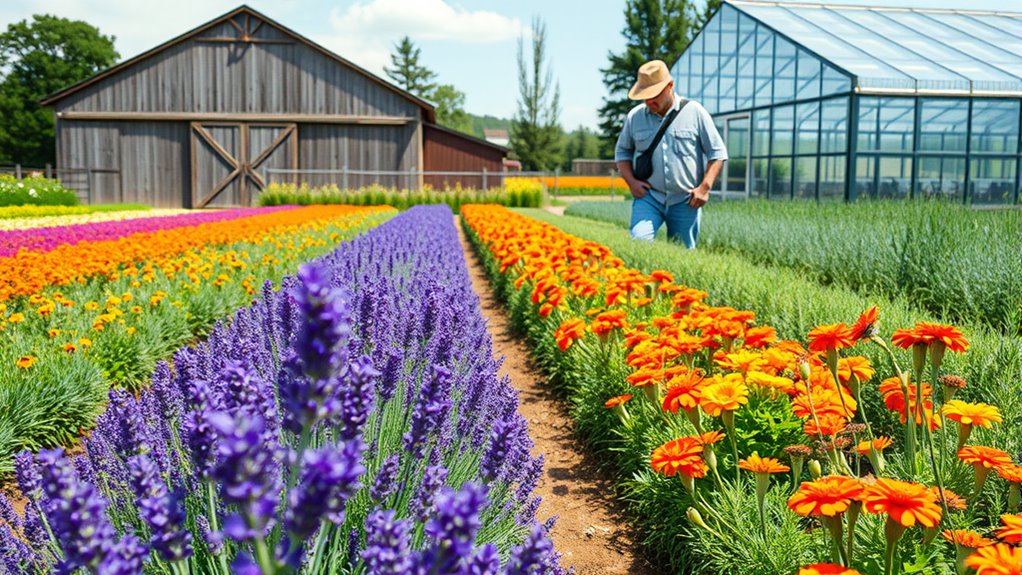
Have you ever wondered how farmers can boost their income and reduce risks? One effective way is through farm diversification, especially by adding value with specialty crops. But before diving into new crops, it’s essential to consider sustainable practices that support long-term productivity. Sustainable farming isn’t just a buzzword; it’s about managing land, water, and resources responsibly to ensure your farm remains viable for generations to come. Incorporating crop rotation into your practices plays a vital role here. By rotating different crops, you can break pest and disease cycles, improve soil health, and reduce the need for chemical inputs. This method not only promotes sustainability but also enhances crop yields, making your venture into specialty crops more profitable and resilient.
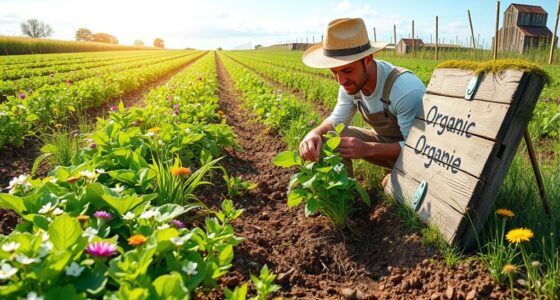
When you choose to diversify with specialty crops, you tap into niche markets that often command higher prices. Think about herbs, organic vegetables, or exotic fruits—these can attract a premium and appeal to consumers seeking quality and uniqueness. However, success depends on understanding your land and climate, and integrating these crops into your existing farm system thoughtfully. Crop rotation can help you manage the transition smoothly, preventing soil depletion and maintaining fertility. For example, planting legumes after a heavy fruit crop can fix nitrogen in the soil naturally, reducing the need for chemical fertilizers. This approach aligns with sustainable practices, keeping your farm productive without harming the environment or increasing costs.
Diversification isn’t just about planting new crops; it’s about creating a balanced system that minimizes risk. If one crop suffers from pests, weather, or market fluctuations, others can compensate. Specialty crops often have shorter growing cycles, allowing you to harvest more frequently and generate continuous income streams. You can also explore value-added products, like drying herbs for teas or making jams from specialty fruits. These options increase your farm’s revenue and expand your market reach. Plus, by practicing crop rotation and sustainable methods, you build a reputation for environmentally friendly and responsible farming, which many consumers value highly. Incorporating innovative technology can further optimize your crop management and boost productivity.
Ultimately, farm diversification with specialty crops is a smart strategy to enhance your farm’s resilience and profitability. It requires careful planning, understanding of your land, and commitment to sustainable practices like crop rotation. By doing so, you create a thriving farm system that benefits your pocketbook and the environment. So, if you’re looking for ways to add value, reduce dependency on a single crop, and foster long-term sustainability, diversifying with specialty crops might just be the move you need. It’s about building a farm that’s not only productive today but also prepared for the challenges of tomorrow.
Frequently Asked Questions
What Are the Initial Costs for Starting a Specialty Crop Farm?
The initial costs for starting a specialty crop farm vary, but you should expect to invest in land preparation, seeds or seedlings, equipment, and irrigation systems. Conducting a detailed cost estimation helps you plan your investment wisely. You’ll also need to take into account marketing and labor expenses. Proper investment planning ensures you allocate funds effectively, reducing surprises and setting your farm up for success from the start.
How Do I Assess Market Demand for Niche Crops?
You should start by analyzing consumer trends, which reveal a 25% increase in demand for niche crops over the past five years. Visit local markets and talk to buyers to understand regional preferences. Additionally, review online sales platforms and industry reports to gauge interest. Conduct surveys or focus groups in your area to gather direct feedback, helping you determine if there’s a sustainable market for your specialty crops.
What Are the Best Practices for Sustainable Crop Diversification?
To practice sustainable crop diversification, you should implement crop rotation to maintain soil health and reduce pests. Incorporate water conservation techniques like drip irrigation and mulching to minimize water use. Planting a variety of crops helps prevent disease spread and improves resilience. Regularly monitor soil nutrients and adjust practices accordingly. By balancing these methods, you promote long-term farm sustainability while expanding your crop offerings effectively.
How Can I Access Government Grants for Specialty Crop Farming?
Think of grant programs like treasure chests waiting to be opened; you just need the key. To access funding opportunities for specialty crop farming, start by researching government websites such as USDA or local agricultural agencies. Attend workshops or consult with local extension offices—they often have insights and application tips. Keep an eye out for deadlines, gather your project details, and craft a compelling proposal to increase your chances of securing funds.
What Are Common Challenges Faced in Specialty Crop Value Addition?
You’ll face challenges like crop price fluctuations, which can make income unpredictable, and pest management, requiring constant vigilance and targeted solutions. Managing these issues demands careful planning, investing in pest control methods, and staying updated on market trends. By proactively addressing these challenges, you can successfully add value to your specialty crops, ensuring better profitability and sustainability in your farm diversification efforts.
Conclusion
By embracing farm diversification and adding specialty crops, you open the door to new opportunities and greater resilience. It’s like planting seeds of innovation that grow into a thriving, varied farm. Remember, each new crop is a brushstroke on your farm’s masterpiece—creating a vibrant, sustainable future. So, take the leap today; your farm’s success is waiting just beyond the horizon, ready to blossom with the right choices.