
Farm labor shortages are making it harder for you to find enough workers for planting, harvesting, and managing crops. To tackle this, many farmers turn to automation, using machinery like autonomous tractors and drones to boost efficiency. Crop diversification also helps spread out labor needs and create flexible schedules. Combining these strategies builds a resilient farm system that can keep up with current and future challenges. Keep exploring to discover how these solutions can work for your farm.
Key Takeaways
- Automation technologies like autonomous tractors and drones reduce reliance on manual labor for farm operations.
- Crop diversification allows flexible harvesting schedules, easing labor demands and improving resource allocation.
- Integrating machinery with suitable crops enhances efficiency and minimizes workforce needs.
- Training farmers in automated systems ensures effective implementation and long-term productivity gains.
- Combining tech and diversified crops builds resilient farms capable of overcoming labor shortages sustainably.
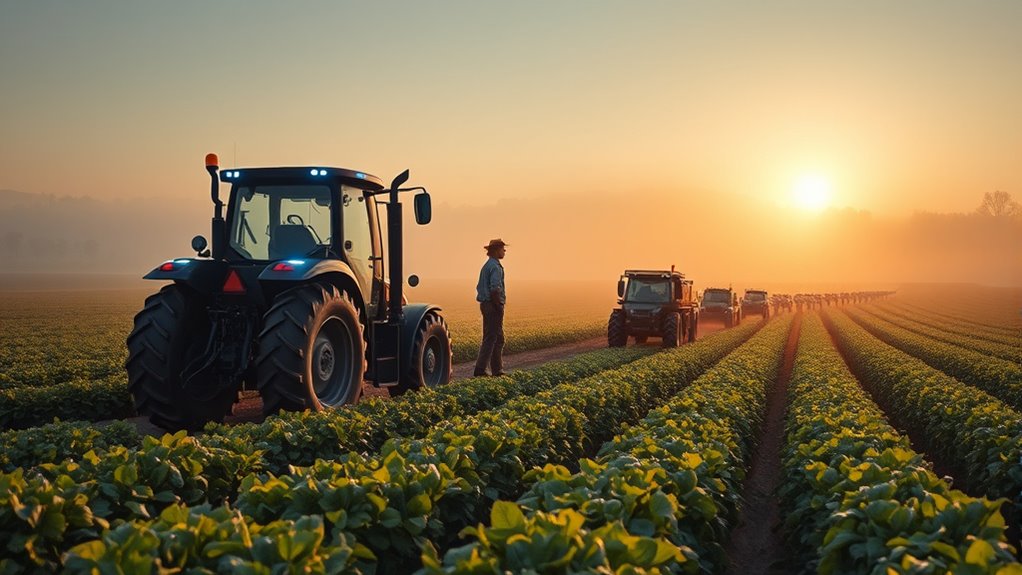
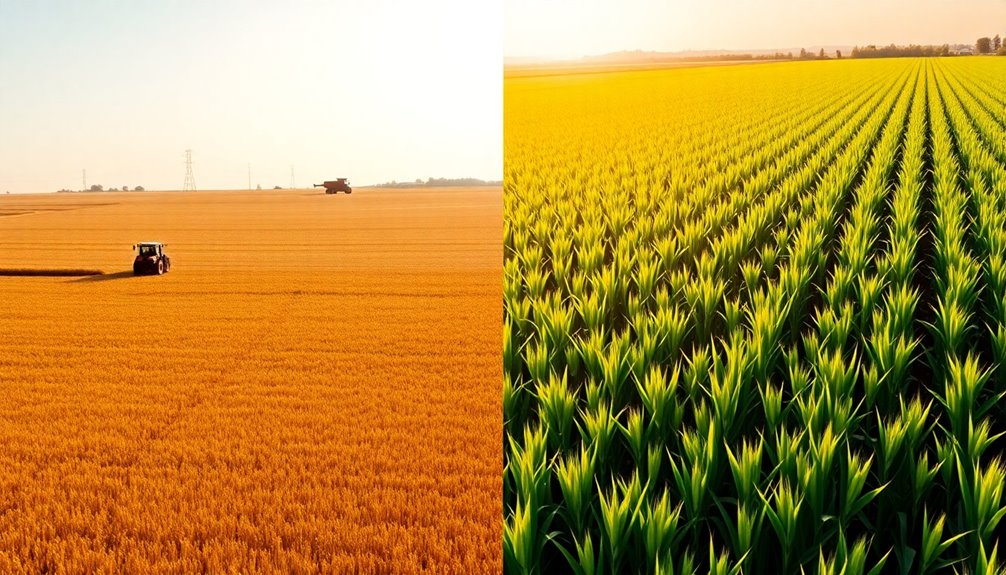
Are farm labor shortages becoming an unavoidable challenge? It’s a question many farmers are asking as they face increasing difficulties in hiring enough workers to manage their land and harvest crops on time. With fewer laborers available, you might worry about maintaining productivity and profitability. To address this, many are turning to automation solutions that can help fill the gap, but it’s also worth considering how strategic changes like crop diversification can play a role in easing labor pressures. When you diversify your crops, you reduce reliance on labor-intensive varieties and create a more flexible, resilient farming system that’s better suited for automation. For example, planting a mix of crops that require different harvest times or methods allows for more efficient scheduling and resource allocation, making it easier to deploy machinery and reduce manual labor needs.
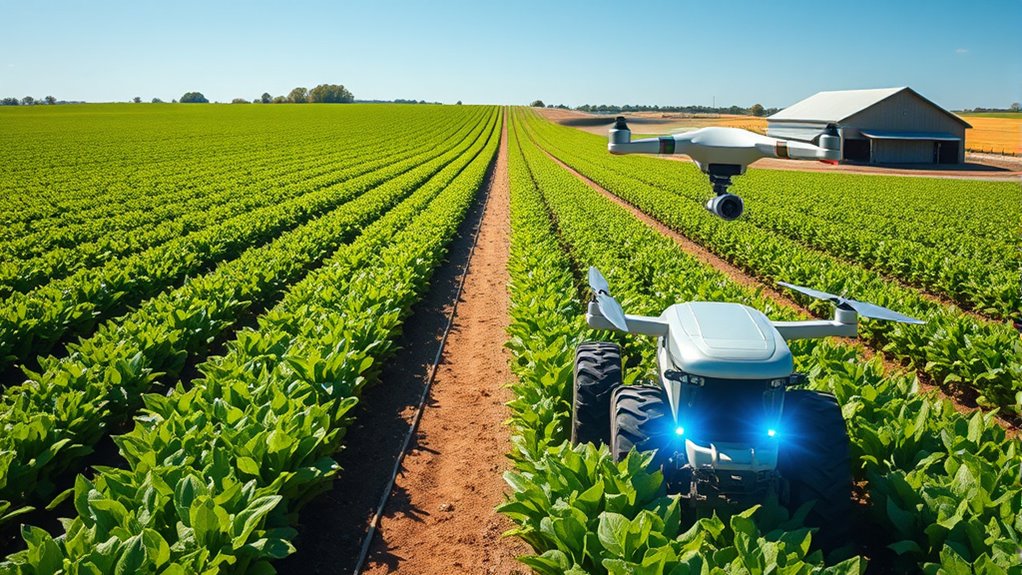
Machinery innovation is at the forefront of tackling labor shortages. Modern farm equipment, such as autonomous tractors, harvesters, and drones, can perform tasks that once demanded a team of workers. These technological advances are not just about replacing human labor but also about increasing efficiency and precision. You can now program machinery to perform specific tasks with minimal supervision, which saves time and reduces the physical strain on workers. This shift enables you to manage larger areas or more diverse crops without needing to hire additional staff. As these machines become more affordable and user-friendly, integrating them into your operation is becoming a practical solution to ongoing labor issues.
However, adopting such innovations requires a strategic approach. You need to evaluate your farm’s specific needs and consider how machinery innovation can complement other practices like crop diversification. For instance, choosing crops that are compatible with automated harvesting equipment can streamline your operations further. Furthermore, investing in technology often means training yourself or your staff to operate new machinery effectively, but the long-term benefits often outweigh the initial learning curve. As you explore these options, keep in mind that automation isn’t just about replacing labor; it’s about creating a more adaptable and sustainable farm system that can withstand labor shortages and market fluctuations.
In the end, addressing farm labor shortages isn’t about relying solely on one solution. Combining crop diversification strategies with innovative machinery allows you to build a more resilient farm that can thrive despite labor challenges. By embracing these changes, you position yourself to meet future demands more efficiently, ensuring your farm remains productive and profitable even when traditional labor sources become scarce.
Frequently Asked Questions
What Are the Costs of Implementing Automation on Farms?
Implementing automation on your farm involves costs that vary depending on technology and scale. You should conduct a thorough cost analysis to understand initial investments, ongoing maintenance, and training expenses. Additionally, perform ROI estimation to determine how quickly you’ll recoup your investment through increased efficiency and reduced labor costs. While upfront costs can be high, automation often leads to long-term savings and productivity gains, making it a worthwhile consideration.
How Do Automation Solutions Impact Farm Worker Employment?
Automation solutions can reduce farm worker employment by shifting the labor market, as machines replace manual jobs. You might see fewer seasonal workers, but new roles in technology management could emerge. However, you’ll face technology adoption barriers, like high costs and skill gaps. These shifts may challenge your workforce, but they also offer opportunities for increased efficiency and innovation on your farm.
Are There Government Incentives for Adopting Agricultural Automation?
Yes, government grants and policy incentives are available to encourage agricultural automation. Think of these programs as a helping hand guiding you through the maze of modern farming. They provide financial support and incentives to adopt new technology, making it easier to implement automation solutions. By taking advantage of government grants and policy incentives, you can boost efficiency, reduce labor costs, and stay competitive in today’s evolving agricultural landscape.
What Types of Crops Benefit Most From Automation Technologies?
You’ll find that crops like strawberries, lettuce, and tomatoes benefit most from automation technologies. These crops often require precise crop specialization, which automation enhances by improving harvest efficiency. Automated systems can quickly pick, sort, and pack these delicate produce types, reducing labor costs and increasing yield quality. If you focus on these crops, automation can substantially boost your productivity and help you stay competitive in the market.
How Quickly Can Automation Solutions Be Integrated Into Existing Farms?
You can typically see automation solutions integrated into your farm within months, depending on your farm’s infrastructure and the technology deployment process. Remarkably, a study shows that farms with modern infrastructure adopt new technologies 30% faster. To speed up integration, you’ll want to assess your current setup, upgrade necessary systems, and work with providers to ensure smooth installation. With proper planning, automation can transform your farm efficiently and effectively.
Conclusion
So, as you scramble to find workers, you might just invent your own robot farmhands instead. Ironically, in trying to fix the labor shortage, you could end up replacing humans with machines that never call in sick or ask for a raise. While automation promises a future of efficiency, it’s amusing to think that the very solution to a labor crisis might turn your farm into a high-tech ghost town—empty of people, full of robots.