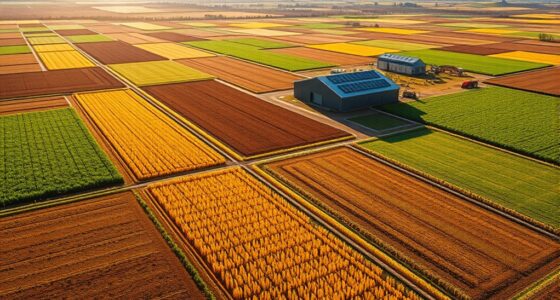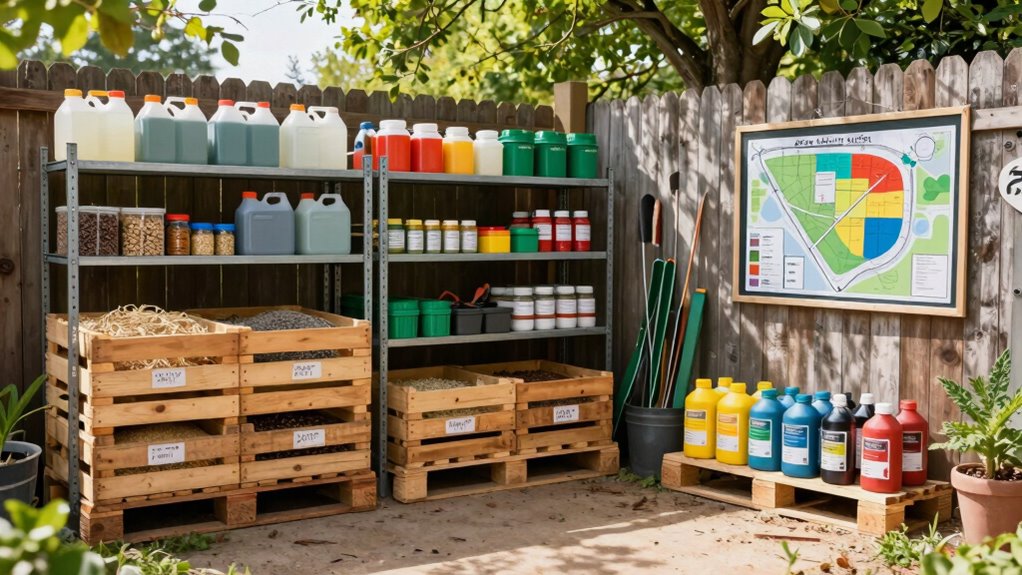

To create a better supply storage map for your farmstead, start by conducting a thorough inventory, categorizing supplies like tools, feed, and fertilizers. Use clear bins and labels to keep items visible and organized, and plan your layout so high-use supplies are near the entrance. Group related items together and map out designated zones. Regularly review and update your storage system to adapt as your farm grows. Keep exploring for more tips to maximize efficiency.

Get garden gear delivered free with Prime
- Fast, free delivery on millions of items
- Prime Video, Amazon Music and more included
- Member-only deals all year
Key Takeaways
- Conduct a detailed inventory by category to understand storage needs and prevent overcrowding.
- Designate specific zones for each supply category, grouping related items together for efficiency.
- Use clear labels and visual cues to enhance quick identification and easy access to supplies.
- Prioritize frequently used items near entrances or central areas for streamlined workflow.
- Regularly review and update the storage map to adapt to changing farm needs and improve organization.
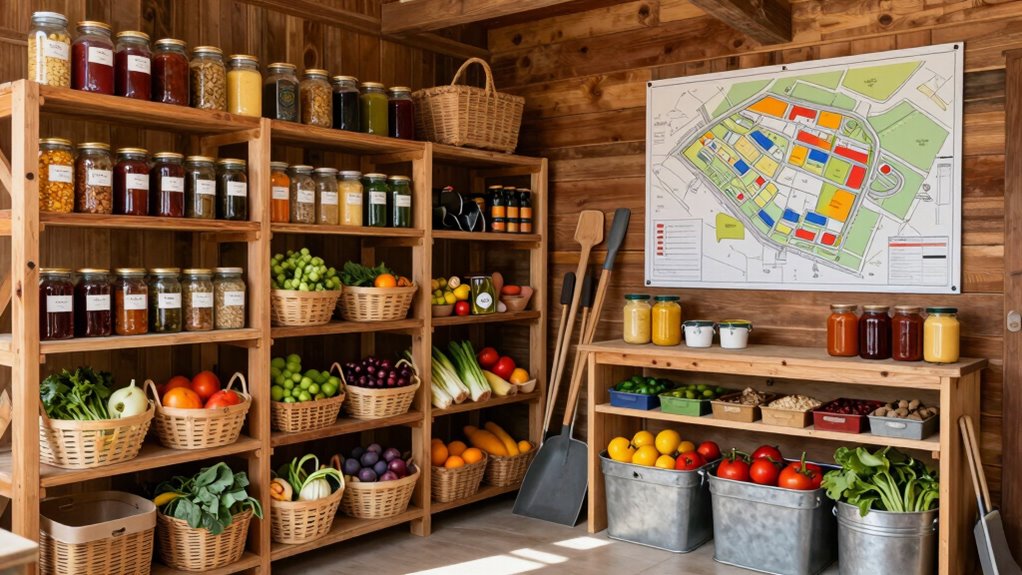
Have you ever struggled to find supplies quickly during busy farm days? If so, you’re not alone. A disorganized supply storage can slow you down when time matters most. The key to avoiding this frustration is creating an effective storage map that emphasizes inventory organization and storage optimization. When you plan out your storage space thoughtfully, you make it easier to locate what you need, save time, and keep your farm running smoothly.
Start by taking a thorough inventory of everything you store on your farm. Break down your supplies into categories such as tools, feed, seeds, fertilizers, and maintenance items. With this clear inventory, you can identify what belongs together and how much space each category requires. This step is crucial because it helps you visualize your storage needs and prevents overcrowding or wasted space. Once you know what you have, you can focus on organizing items in a way that makes sense for your workflow.
Next, prioritize storage optimization by choosing the right containers, shelves, and labels. Use clear bins or containers for small items, so you see what’s inside at a glance. Install sturdy shelving units to keep frequently used supplies within easy reach, and reserve lower shelves or bins for items used less often. Label everything clearly, using waterproof labels that won’t fade or peel. When your supplies are properly labeled and stored in designated spots, you eliminate guesswork and reduce the risk of misplacing important items. This way, when a tool or feed bag is needed, you know exactly where to find it, streamlining your work process.
Another important aspect is creating a logical layout for your storage map. Think about your daily routines—place the most frequently used supplies near the entrance or in a central location for quick access. Group related items together to minimize the time spent searching. For example, keep all your fencing supplies in one section and irrigation tools in another. Use floor markings or designated zones to clearly delineate different storage areas. This visual organization simplifies navigation through your storage space, especially when you’re in a hurry. Additionally, effective storage solutions can help maximize your space and improve accessibility.
Finally, review and update your storage map regularly. As your farm evolves, so do your needs. Reassess what’s working and what isn’t, and make adjustments accordingly. Keeping your inventory organized and storage optimized isn’t a one-time task but an ongoing process that pays off by saving you time and reducing stress during your busiest days. With a well-designed supply storage map, you’ll find everything you need instantly, making your farm chores more efficient and less chaotic.
As an affiliate, we earn on qualifying purchases.
Frequently Asked Questions
What Tools Are Best for Mapping Storage Areas?
You should use digital tools like Excel or specialized inventory management software for mapping storage areas. These tools help with storage organization by visualizing space allocation and tracking inventory levels. You can also consider mapping apps or simple diagrams to enhance clarity. By combining these tools, you streamline inventory management, improve storage efficiency, and guarantee easy access to supplies, making your farmstead’s storage system more effective and organized.
How Often Should the Storage Map Be Updated?
You should update your storage map at least quarterly to stay on top of inventory management and space optimization. Regular updates help you identify unused or overcrowded areas, guaranteeing efficient use of space and accurate stock levels. Frequent revisions also allow you to adapt to seasonal changes or new supplies, minimizing waste and maximizing storage capacity. Staying proactive keeps your farmstead organized and ensures smooth operations.
How Can I Prioritize Storage Space for Seasonal Items?
You should prioritize storage space for seasonal items by implementing seasonal rotation strategies, ensuring you allocate space based on upcoming needs. Use storage optimization techniques to keep frequently used items accessible, and designate specific zones for seasonal supplies that can be easily updated. Regularly review your layout, adjusting as seasons change, to maximize efficiency and prevent clutter. This approach keeps your storage organized and ready for each season’s demands.
What Safety Considerations Should Be Included in the Map?
Safety isn’t just a label; it’s the foundation of your storage map. You should include hazard identification to spot potential risks like spills or sharp objects, and emphasize storage safety by placing hazardous materials away from high-traffic areas. Clearly mark emergency exits and fire safety equipment, ensuring easy access. Regularly review and update these safety features, so your farmstead remains secure, calm, and resilient amid any unforeseen challenges.
How Do I Involve Family Members in the Mapping Process?
You involve family members in the mapping process through family participation and collaborative planning. Encourage everyone to share their ideas and insights about storage needs and safety concerns. You can hold a family meeting, assign specific areas to each person, and use visual aids like sketches or maps. This approach guarantees everyone feels valued, and the map becomes an all-encompassing tool reflecting the collective knowledge and priorities of your farmstead family.
Conclusion
By thoughtfully designing your supply storage map, you’re gently guiding your farmstead toward smoother days and brighter tomorrows. A well-planned layout guarantees that every item finds its cozy corner, reducing stress and making your routines feel a little more comforting. Remember, the effort you put into organizing today plants seeds of ease and peace for tomorrow’s busy moments. Embrace the process, knowing that a harmonious storage space nurtures both your farm and your spirit.
Columbus Day / Indigenous Peoples' Day Picks
long weekend sales
As an affiliate, we earn on qualifying purchases.