
To secure your farm’s water rights, you need to understand local laws, obtain proper permits, and manage your water use carefully. Keeping detailed records of your water extraction and staying compliant with legal requirements helps prevent disputes and penalties. Building good relationships with neighbors and authorities can also protect your rights. If you’re unsure about the rules, there are important legal strategies that could safeguard your water access—continue to explore to learn more.
Key Takeaways
- Obtain proper permits to legally divert and use water, ensuring compliance with local water rights laws.
- Maintain detailed records of water use and permits to support legal protection and dispute resolution.
- Understand whether your region follows prior appropriation or riparian rights to determine water priority.
- Engage with legal experts to navigate water rights laws and resolve disputes effectively.
- Stay informed about legal regulations to prevent penalties and safeguard ongoing access to farm water resources.
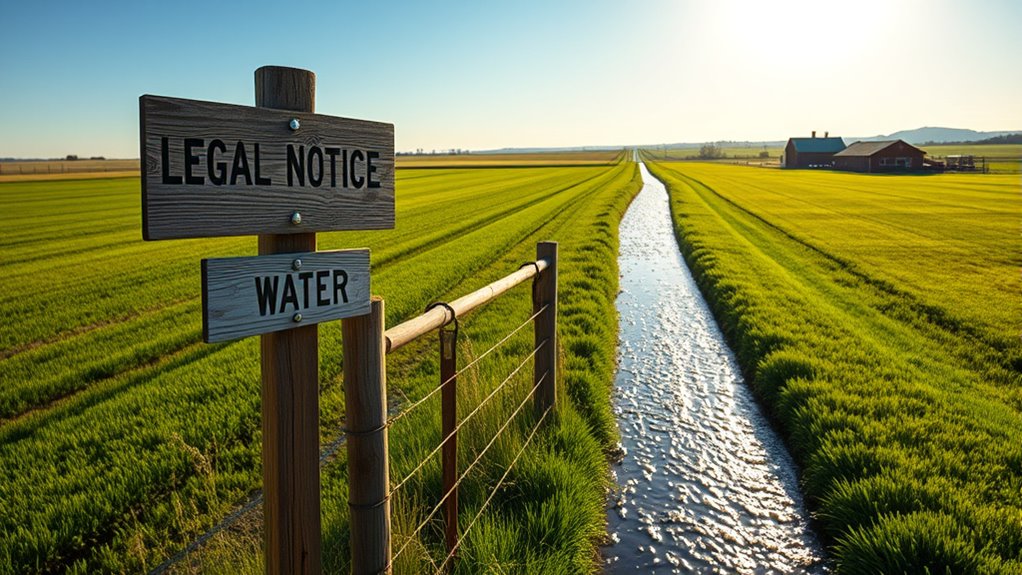
Have you ever wondered how farmers secure the water they need to grow crops and sustain livestock? It all starts with understanding the legal framework behind farm water rights. Securing water isn’t as simple as turning on a tap; it involves charting a complex system of laws, permits, and rights that vary by location. One of the first steps you’ll need to take is obtaining the proper irrigation permits. These permits give you legal permission to divert and use water from local sources, whether it’s a river, stream, or groundwater. Applying for these permits involves demonstrating your intended use, making sure that your water extraction doesn’t harm other users or the environment. Without the right permits, you risk legal penalties, which can disrupt your farm operations and lead to costly disputes.
Securing water rights requires proper permits, understanding local laws, and careful management to prevent costly disputes.
Water rights disputes are a common challenge in the agricultural sector. These disputes often arise when multiple farmers or entities claim rights to the same water source. For example, if you rely on a stream that several neighbors also use, conflicts can quickly escalate, especially during droughts or periods of low rainfall. Water rights laws are designed to allocate water fairly, but understanding who has priority can be complicated. Some regions follow a “prior appropriation” system, meaning the first person to use water for beneficial purposes has senior rights. Others operate under a “riparian” system, where landowners bordering water sources have rights. Knowing which system applies to your farm helps you understand your legal standing and how disputes might be resolved. Being aware of water rights legal frameworks can help you better navigate potential conflicts.
To protect yourself, it’s essential to keep thorough records of your water use and permits. This documentation can prove your legal rights if disputes arise. It’s also wise to maintain open communication with neighbors and local authorities, fostering cooperative relationships that can prevent conflicts from escalating. Sometimes, disputes are settled through negotiations, but others may require legal intervention. Engaging with legal experts familiar with water law can help you chart these issues more effectively.
In short, securing farm water rights involves obtaining the right permits, understanding local water laws, and carefully managing your water use. Being proactive about legal compliance and staying informed about potential disputes helps you avoid interruptions to your farm’s productivity. Water is a crucial resource, and safeguarding your rights ensures you can continue growing crops and raising livestock without unnecessary legal complications. By understanding the legal landscape surrounding irrigation permits and water rights disputes, you set yourself up for a more secure and sustainable farming operation.
Frequently Asked Questions
How Do I Transfer Water Rights Between Farms?
To transfer water rights between farms, you need to initiate a water transfer process and follow legal procedures set by your state. Start by submitting an application to the relevant water authority, detailing your transfer plan. Make certain you comply with all regulations and obtain necessary approvals. It’s important to document the transfer properly to avoid future legal issues and secure your rights. Consulting a water law expert can streamline this process.
What Are the Penalties for Water Rights Violations?
If you violate water rights regulations, you could face penalties such as fines or legal enforcement actions. Penalty enforcement varies depending on the severity of the violation and local laws. The violation consequences might include water use restrictions, license revocation, or even criminal charges. To avoid these issues, guarantee you fully understand and comply with all water rights laws, and address any violations promptly to minimize penalties.
Can Water Rights Be Sold Separately From Land?
Can water rights be sold separately from land? Absolutely. You can transfer water rights independently through legal processes, allowing for water rights transfer without land ownership change. This flexibility helps landowners optimize resource use and financial gains. Imagine owning land but choosing to sell or lease the water rights separately—that’s a strategic move. Just remember, water rights and land ownership are distinct, so confirm proper legal steps for a smooth transfer.
How Are Water Rights Prioritized During Shortages?
During shortages, water rights are prioritized based on the water rights hierarchy and priority determination. You’ll find that senior water rights, established earlier, get precedence over newer ones, ensuring those with older rights receive water first. This system helps manage limited supplies fairly, so you can expect your access to be reduced or cut if you hold a junior right during severe shortages. Understanding this hierarchy is vital for managing your water use effectively.
What Legal Steps Are Required to Challenge a Water Rights Claim?
If you believe a water rights claim is invalid, you must file a legal challenge. Start by reviewing legal documentation and gathering evidence to support your case. For example, in a hypothetical dispute, you might argue that the claim lacks proper historical use. Then, pursue water rights enforcement through court proceedings, making sure you follow local regulations and deadlines. Consulting an attorney ensures you meet all legal steps.
Conclusion
Understanding farm water rights is like tending a delicate garden—you need to know when to water, how much, and where. I once met a farmer who lost access to crucial water, and his crops withered like neglected plants. Don’t let legal uncertainties dry up your future—stay informed, protect your rights, and navigate the laws wisely. With careful planning, your farm can flourish, just like a well-watered field bursting with life and promise.