

Joining a farmer cooperative boosts your bargaining power by enabling collective marketing, which gives you access to larger and more profitable markets. It helps stabilize prices and income by coordinating sales and avoiding market flooding. Shared resources lower costs on transportation, storage, and processing, increasing your competitiveness. Cooperatives also open doors to premium markets and certifications, helping you fetch higher prices. To discover how these benefits can transform your farming experience, keep exploring the key strategies involved.
Key Takeaways
- Farmer cooperatives enhance bargaining power and access to larger, more profitable markets through collective marketing.
- They help stabilize prices and income by coordinating sales during peak harvests to prevent oversupply.
- Cooperatives reduce individual costs by negotiating bulk transportation, storage, and processing services.
- They enable entry into premium markets by establishing brand recognition and meeting quality standards collectively.
- Collective marketing improves market reach, price stability, and competitiveness for farmers, fostering a more profitable agricultural sector.
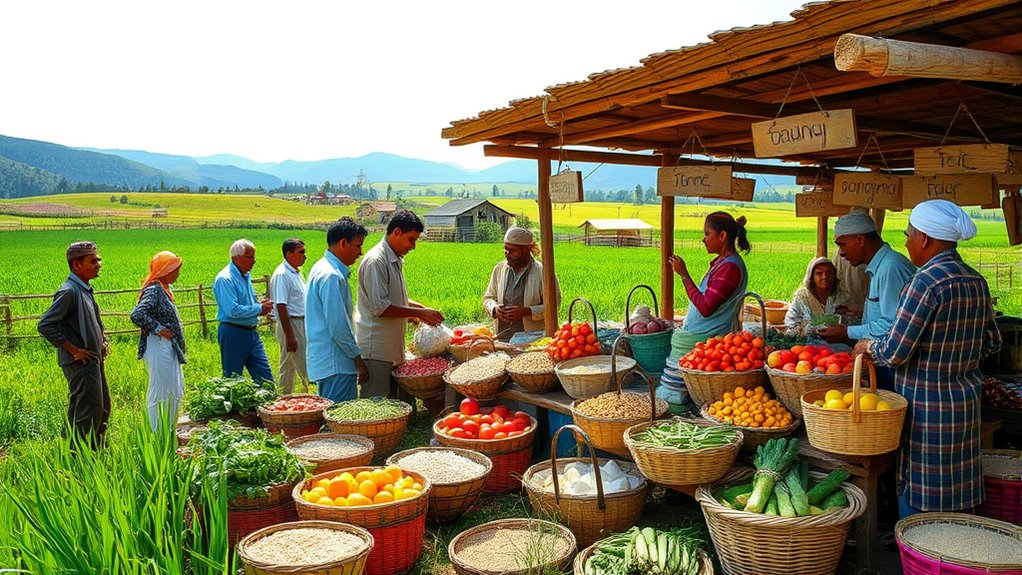
Farmer cooperatives and collective marketing strategies play a crucial role in helping farmers increase their bargaining power and access better markets. When you join a cooperative, you gain a stronger voice in negotiations, making it easier to secure fair prices for your produce. Collective marketing enables you to reach larger, more profitable markets that might be out of reach when selling alone. This increased market access means you can sell your crops directly to wholesalers, retailers, or processing companies, reducing dependence on middlemen who often squeeze your margins. As a result, you’re better positioned to get competitive prices and expand your sales channels.
Joining cooperatives boosts farmers’ bargaining power and opens access to larger, more profitable markets.
One of the key advantages of cooperative efforts is price stabilization. When farmers work together, they can coordinate sales to avoid flooding the market during peak harvest times, which often leads to price drops. By managing the timing and volume of their sales, cooperatives help smooth out price fluctuations, ensuring you receive more predictable income. Price stabilization not only benefits individual farmers but also fosters a more stable agricultural economy within your community. With better control over pricing, you can plan your expenses and investments confidently, knowing that extreme price swings will have less impact on your livelihood.
Furthermore, cooperative organizations often provide shared resources that improve your market access. For example, they might negotiate bulk transportation, storage facilities, or processing services, reducing your costs and making your products more attractive to buyers. These arrangements can also help you meet quality standards required by larger markets, increasing your competitiveness. By pooling resources, you and other farmers gain economies of scale, which translate into better prices and more reliable market access for everyone involved.
In addition, collective marketing often involves establishing brand recognition or certification, which can open doors to premium markets. When you market your produce under a cooperative’s brand, you appeal to consumers seeking high-quality or organic products, often commanding higher prices. This strategy enhances your market access beyond local markets and into national or even international ones. Plus, the collective approach helps you navigate complex regulations and standards, which can be intimidating for individual farmers. The cooperative’s expertise and collective negotiation power make it easier to access lucrative markets that would otherwise be difficult to penetrate.
Frequently Asked Questions
How Do Cooperatives Handle Disputes Among Members?
You handle disputes among members by implementing mediation strategies and effective dispute resolution processes. First, you encourage open communication to identify issues early. If needed, you bring in neutral mediators to facilitate discussions and find common ground. Clear rules and policies help guide the resolution process, ensuring fairness. By addressing conflicts promptly and constructively, you maintain harmony within the cooperative and support collaborative success.
What Are the Initial Costs to Start a Cooperative?
Starting a cooperative typically costs around $1,500 to $3,000, depending on your location and size. You’ll need to cover membership fees, which foster commitment, and invest in training programs to learn the necessary skills. Notably, cooperatives see a 15% higher success rate when members participate in training early. These initial costs help ensure you’re well-prepared to manage and grow your collective effectively.
How Do Cooperatives Ensure Fair Profit Distribution?
You guarantee fair profit distribution through clear profit sharing mechanisms and member compensation strategies. You can implement policies that allocate profits based on each member’s contribution, such as volume sold or investment made. Regularly communicate these strategies to members, and use transparent accounting practices. By doing so, you promote trust and fairness, making sure everyone feels fairly rewarded for their efforts and investments in the cooperative.
What Legal Requirements Exist for Forming a Cooperative?
Getting your cooperative off the ground is no small feat, but the law’s got your back. You need to register legally, which involves filing specific documents and meeting state or national requirements. Plus, you’ll draft clear membership agreements that outline rights and responsibilities. These legal steps *guarantee* everything’s above board, so you can focus on growing together without stepping on toes. It’s a process, but it’s worth the effort to keep things running smoothly.
How Do Cooperatives Adapt to Market Changes?
You adapt to market changes by embracing market diversification and technological integration. You explore new markets and products to stay competitive, reducing reliance on a single source. Additionally, you incorporate new technologies to improve efficiency, communication, and data analysis. By staying flexible and innovative, you can quickly respond to shifts in demand, consumer preferences, and industry trends, ensuring your cooperative remains resilient and profitable in an evolving market landscape.
Conclusion
Think of farmer cooperatives and collective marketing as a mighty river, where individual drops combine to create unstoppable strength. By working together, you harness shared resources, reduce costs, and boost your bargaining power. This unity transforms small efforts into a powerful current, pushing you toward better prices and sustainable growth. Embrace cooperation, and watch your collective efforts flow into a future of greater success and resilience. Together, you’re unstoppable.