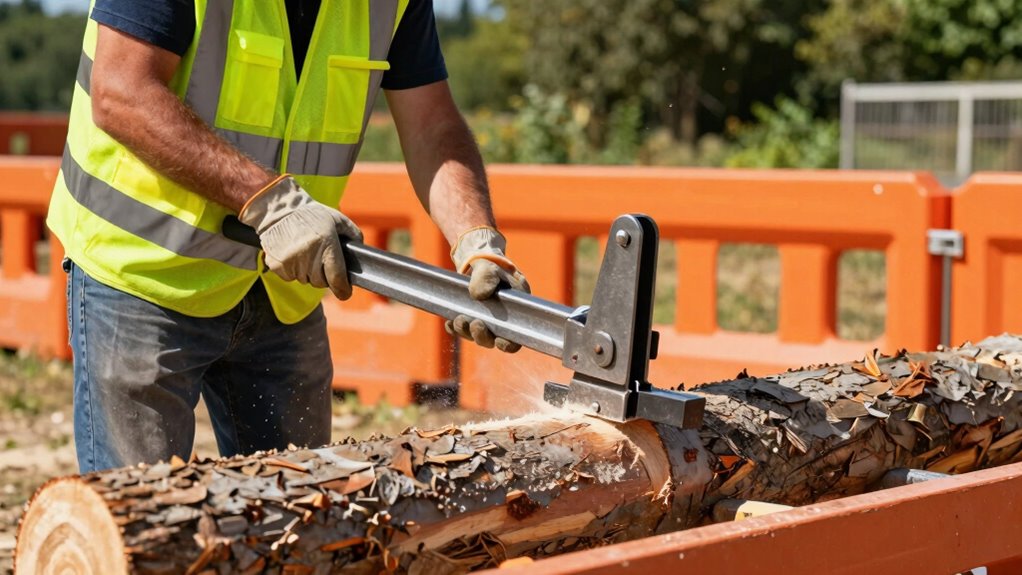
The key rule to avoid ER visits when using a log splitter is to always keep your hands and body completely clear of moving parts. Never reach near the wedge or hydraulic arms while the machine is running, and use proper PPE like gloves and safety goggles. Staying alert and following safety guidelines reduces accidents caused by shifting logs or equipment malfunctions. To guarantee safe operation and protect yourself, learn more about the best practices for handling logs and safety precautions.
Key Takeaways
- Always follow the fundamental safety rule: keep hands and body parts clear of the splitting zone during operation.
- Properly position and stabilize logs to prevent shifting or kickbacks that could cause injury.
- Wear appropriate PPE, including safety glasses, gloves, and steel-toed boots, to protect against debris and accidents.
- Regularly inspect and maintain the splitter to ensure all safety features are functional and equipment operates smoothly.
- Stay focused, avoid distractions, and never rush the process to reduce the risk of mistakes leading to ER visits.
Why Safety Is Critical When Using a Log Splitter

Using a log splitter can be efficient, but it’s also dangerous if you don’t prioritize safety. Many people fall for log splitter myths, thinking they can bypass safety gear or rush through the task. These myths can lead to serious injuries. Safety humor might make light of accidents, but in reality, a split second of distraction or negligence can cause a trip to the ER. Proper safety measures protect you from cuts, flying wood, or even more severe injuries. Never underestimate the importance of following safety guidelines, regardless of how experienced you are. Staying alert and cautious isn’t just smart—it’s essential to prevent accidents and ensure you enjoy the job without regrets. Safety isn’t a joke; it’s your best tool. Understanding equipment operation and adhering to safety protocols is crucial for avoiding preventable accidents. Being familiar with safe operating procedures can make all the difference in protecting yourself while working. Additionally, recognizing common hazards around log splitting can help you stay vigilant and prevent potential injuries. Knowing how to identify and mitigate potential risks can further enhance your safety while operating the equipment, especially when considering the proper use of safety gear.
Identifying the Biggest Danger in Log Splitting
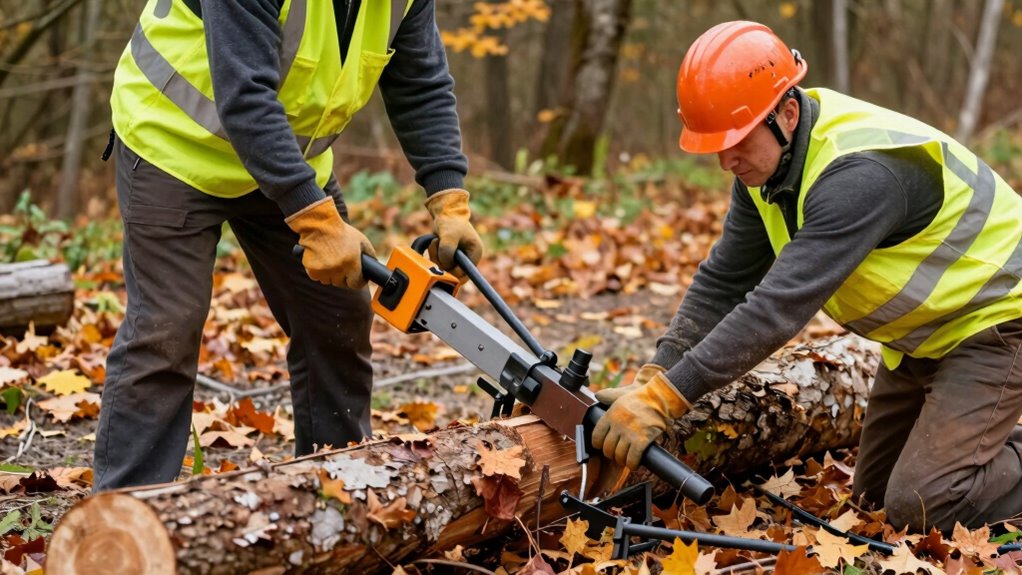
The biggest danger in log splitting often comes from improper log placement and handling. If logs aren’t positioned correctly or are handled carelessly, accidents can happen quickly. Paying close attention to proper techniques helps keep you safe during every split. Additionally, using appropriate safety gear and protective equipment can significantly reduce the risk of injury. Implementing project management support and adhering to safety protocols can further enhance safety during log splitting activities. Regular training on safety procedures can also prepare you to respond effectively in case of emergencies. Incorporating proper technique helps prevent logs from shifting unexpectedly and causing injuries. Being aware of tool safety features can also provide an extra layer of protection during operation.
Proper Log Placement
Proper log placement is crucial for safe splitting, as improper positioning can turn the task into a serious hazard. You must ensure logs are stable and aligned correctly before splitting. Avoid placing logs on uneven surfaces or stacking them insecurely, which increases the risk of logs rolling or shifting unexpectedly. Proper log storage involves stacking logs neatly, keeping the pile stable, and preventing falls. Consider the following:
| Safe Practice | Risk if Ignored |
|---|---|
| Stack logs securely | Logs may roll or collapse |
| Place logs on level ground | Increased risk of slipping or shifting |
| Keep logs separated | Easier to control and avoid mishaps |
| Use appropriate spacing | Prevents logs from pinching or binding |
Focusing on proper log placement minimizes hazards and keeps your workspace safe.
Safe Handling Techniques
One of the biggest dangers in log splitting is accidental injury caused by logs or equipment unexpectedly shifting or rebounding. To prevent this, follow safe handling techniques. Always wear gloves and eye protection to avoid splinters and debris. Keep your hands clear of the splitting zone and never lean over the log splitter during operation. Store logs properly to prevent accidental falls or shifting, supporting fire prevention and storage safety. Make certain your workspace is clear of clutter, reducing trip hazards and allowing quick access in emergencies. Additionally, understanding the importance of proper equipment maintenance can help prevent accidents during operation. Regularly inspecting your equipment for hydraulic system issues ensures it functions safely and reliably.
How to Prepare Your Log Splitter and Work Area Safely
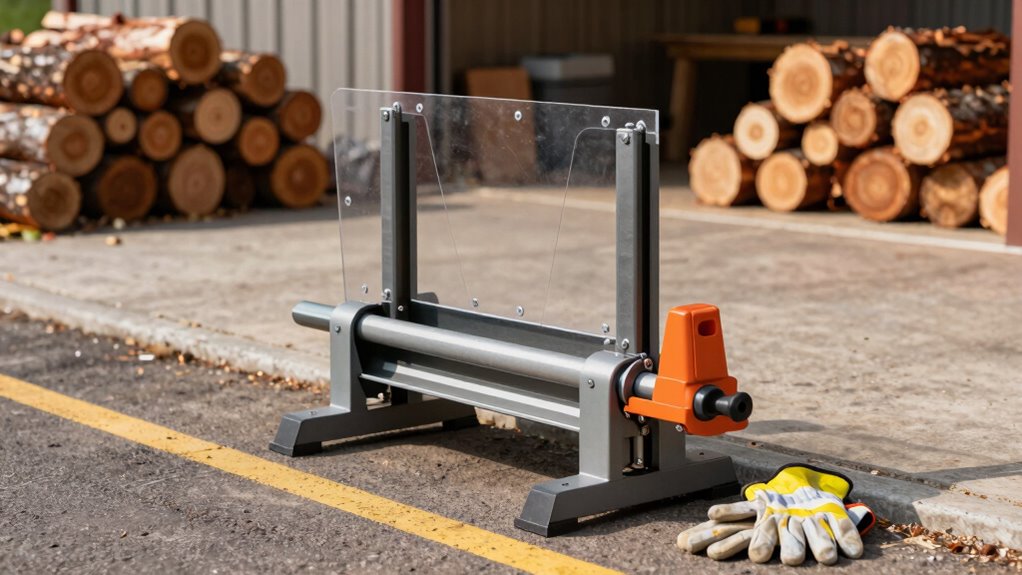
Before you start splitting wood, make sure to examine your log splitter for any damage or loose parts. Clear your work area of debris and obstacles to prevent accidents. Taking these steps helps ensure your safety and keeps your equipment in good working condition. Additionally, understanding proper equipment setup can help prevent mishaps during operation, especially when dealing with power tools that require proper safety precautions. Proper maintenance checks are also essential to identify potential issues before use, and regularly inspecting your equipment can help maintain vehicle performance and power, reducing the risk of failures during operation. Incorporating connected safety features can further enhance your safety during use by providing real-time alerts and monitoring.
Inspect Equipment Regularly
Regularly inspecting your log splitter guarantees it’s in safe working condition and helps prevent accidents. Proper equipment maintenance allows you to identify hazards early and keep the machine running smoothly. Here are four tips to guarantee safety:
- Check hydraulic hoses for leaks or cracks.
- Inspect the splitting wedge and ram for damage or wear.
- Tighten loose bolts and fittings.
- Test safety features like emergency stops and guards.
Consistent inspections help you spot potential issues before they become hazards. By maintaining your equipment properly, you reduce the risk of malfunctions that could cause injuries. Remember, hazard identification through regular checks is key to safe operation. Taking these simple steps keeps your work area safe and your log splitter functioning at its best.
Clear Work Area
Clearing and organizing your work area is essential for safe log splitting. A tidy space helps prevent accidents caused by tripping or misplaced tools. Make sure the area is free of debris, branches, and other obstructions. Keep a safe distance from flammable materials to enhance fire safety, especially when dealing with sparks or heat. Remove any clutter that could interfere with your movement or the operation of the splitter. Additionally, consider noise reduction by positioning your splitter away from living areas or using barriers if needed. A well-maintained, clutter-free work zone not only improves safety but also makes your task more efficient. Taking these steps guarantees you can focus on splitting logs safely while minimizing risks. Drone safety tips can also be applied to ensure your work area remains secure and hazard-free. Regularly inspecting your equipment and surroundings is crucial for maintaining a safe environment and preventing accidents and injuries. Incorporating work area organization into your routine can further reduce hazards and streamline your workflow, ensuring you maintain a safe environment at all times. Ensuring proper tool maintenance is a critical part of this process, as well-maintained equipment helps prevent malfunctions that could lead to accidents.
The Right Way to Position Logs for Safe Splitting
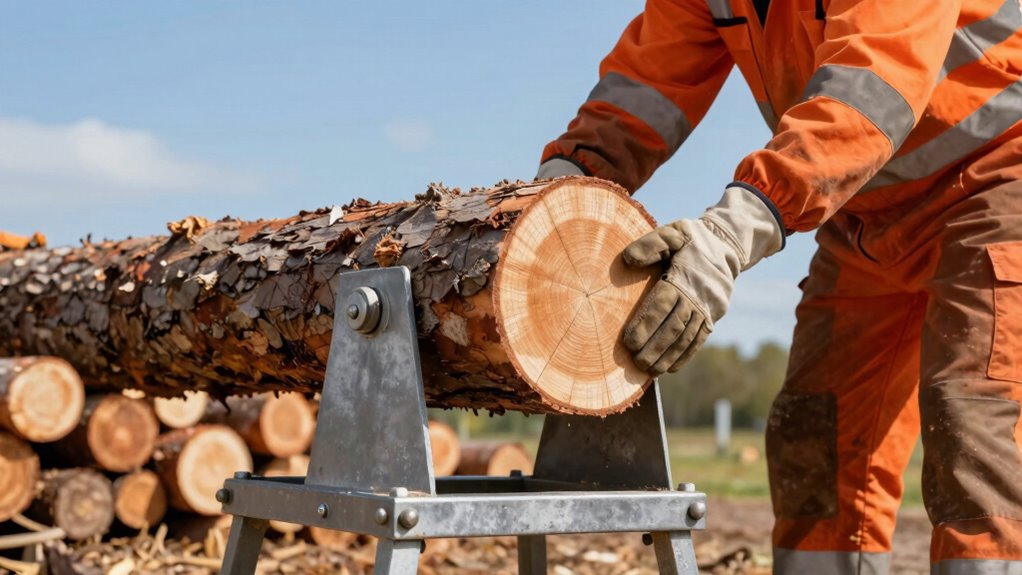
To guarantee safe and effective log splitting, you need to position each log properly on the splitter. Proper log placement ensures stability and reduces the risk of accidents. Focus on maintaining good log balance and correct log orientation to keep the log steady during splitting. Here are key tips:
Ensure logs are balanced and properly aligned for safe, effective splitting.
- Check that the log is centered and balanced on the splitter to prevent wobbling.
- Position the log with the grain running perpendicular to the splitting wedge for cleaner cuts.
- Avoid overhanging sections that could cause imbalance or kickbacks.
- Ensure the log’s largest surface rests flat against the splitter’s table for stability.
- Always inspect the stability of the log before applying force to avoid unexpected shifts during splitting.
Keep Your Hands and Body Clear of Moving Parts
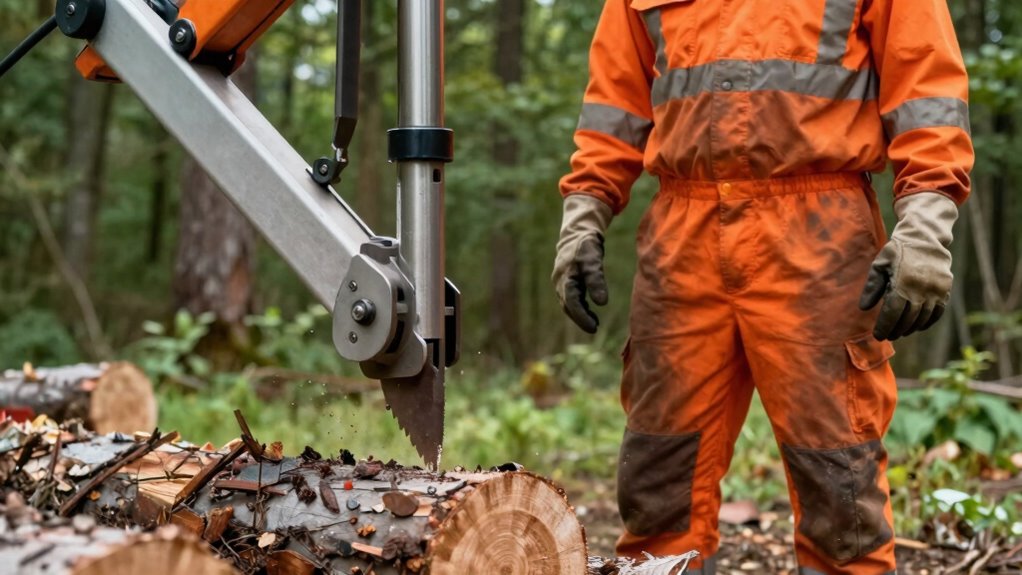
Once your logs are properly positioned, it’s essential to stay alert and keep your hands and body away from moving parts. Proper hand positioning is vital to avoid accidental injury. Always keep your hands well clear of the splitter’s ram and splitting wedge during operation. Never reach into the splitting area while the machine is running, even if you think it’s safe. Emergency preparedness means knowing how to shut off the splitter quickly if something goes wrong. Maintain focus, and don’t distract yourself or others nearby. Use both hands to control the machine, but keep them at a safe distance from moving components. Staying vigilant and respecting the splitter’s moving parts helps prevent injuries, ensuring you stay safe and avoid unnecessary trips to the ER.
What PPE Should You Wear When Using a Log Splitter?
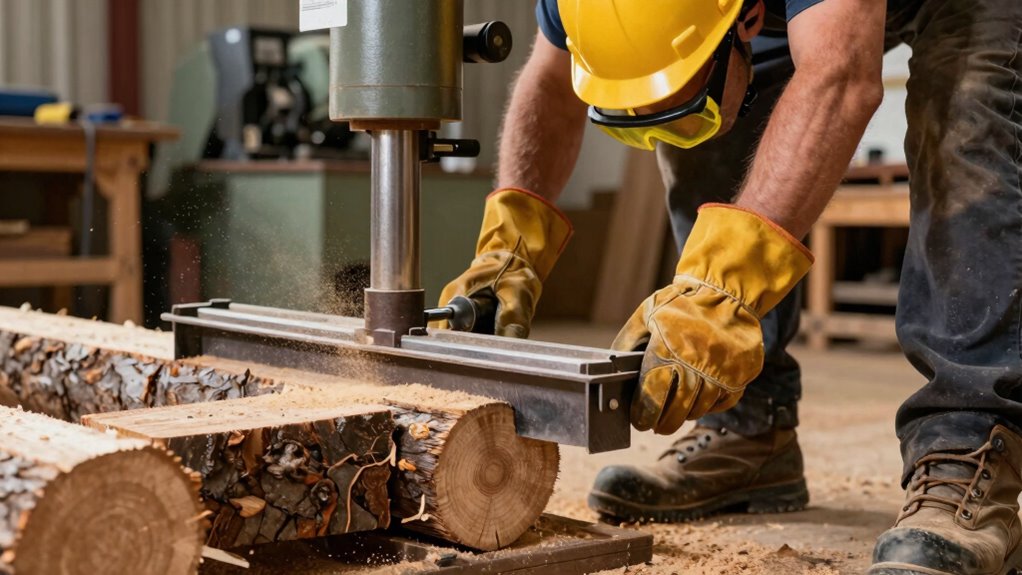
Wearing the right personal protective equipment (PPE) is essential for safety when operating a log splitter. Proper PPE helps you identify hazards and protect against injuries. Here are four key items to wear:
- Safety glasses or goggles to shield your eyes from flying debris and wood chips.
- Ear protection like earplugs or earmuffs to prevent hearing damage from loud machinery.
- Steel-toed boots to protect your feet if logs or tools drop.
- Heavy-duty gloves to improve grip and shield your hands from splinters and sharp edges.
Always assess your environment for additional hazards and select PPE accordingly. Using proper personal protective equipment ensures you stay safe and reduces the risk of accidents while operating a log splitter.
Common Mistakes That Lead to Log Splitter Accidents and How to Avoid Them
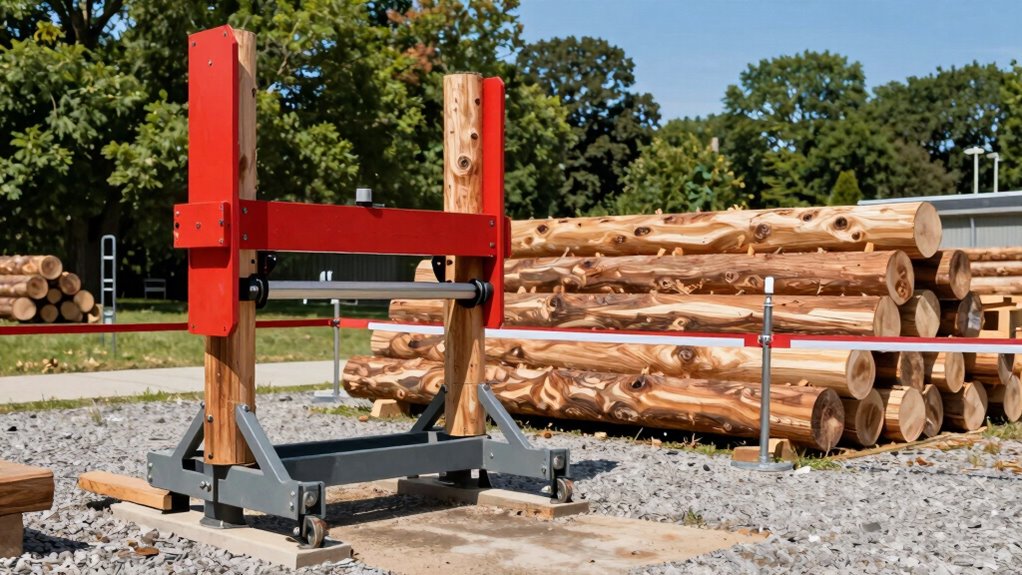
Many accidents happen because operators overlook simple safety practices or rush through tasks. Common mistakes include ignoring proper log splitter ergonomics, which can cause strain or loss of control. Skipping safety training courses leaves you unprepared for safe operation, increasing the risk of mishaps. Never force a log or rush the process; patience is key. Always inspect your equipment before use.
| Mistake | How to Avoid It |
|---|---|
| Poor ergonomics | Adjust splitter height, use proper posture |
| Rushing tasks | Follow safety procedures, take your time |
| Lack of safety training | Enroll in certified safety courses |
| Ignoring maintenance | Regularly service your splitter |
| Neglecting safety gear | Wear PPE and follow safety guidelines |
What to Do Immediately If an Accident Happens
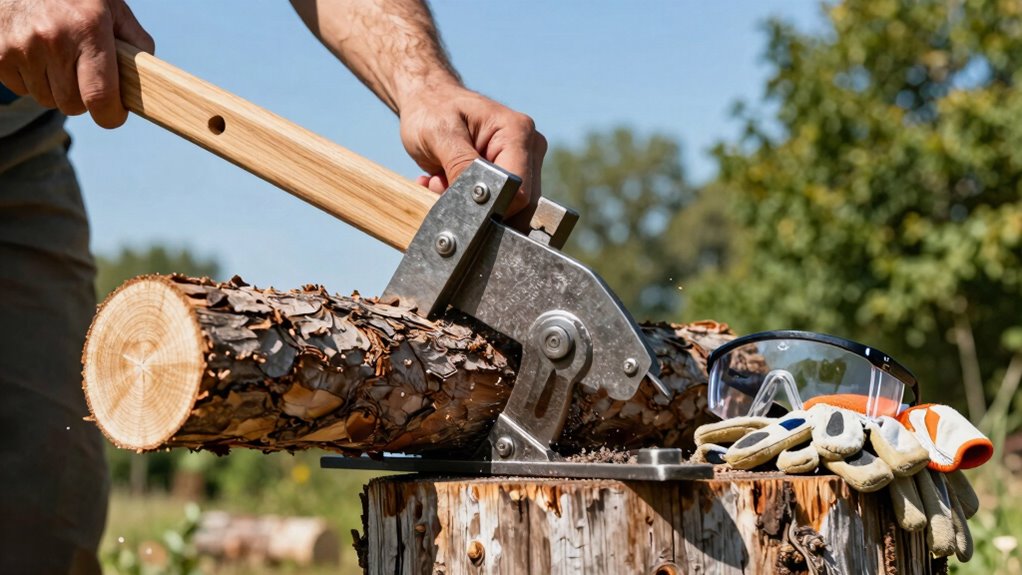
If an accident occurs while operating a log splitter, your first priority is to stay calm and assess the situation quickly. Your immediate focus should be on ensuring safety and initiating emergency response steps.
Here’s what to do:
- Call emergency services if needed, especially if there’s severe injury or bleeding.
- Administer first aid—apply pressure to stop bleeding or immobilize injuries.
- Turn off the log splitter to prevent further harm.
- Keep the injured person still and comfortable until help arrives.
Regular Maintenance and Safety Checks to Prevent Risks
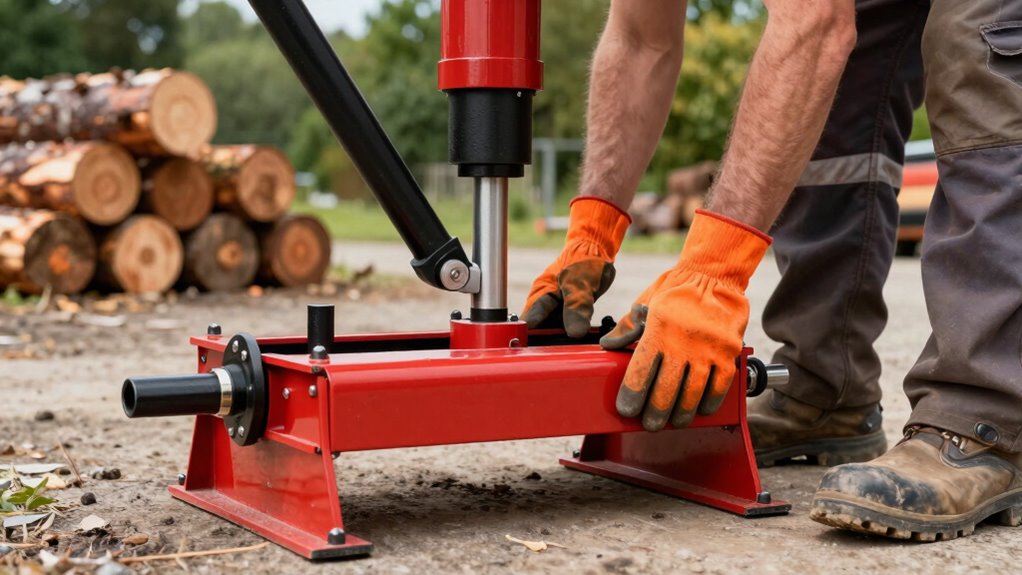
Regular maintenance and safety checks are your best tools for preventing accidents before they happen. Keep your log splitter in top shape by inspecting the blade regularly for dullness or damage, which can cause uneven cuts or kickbacks. Ensure the blade is sharp and properly aligned. Conduct routine fuel safety checks by refueling in well-ventilated areas, avoiding spills, and sealing fuel containers tightly. Always verify that safety features, like emergency stops and guards, are functional. Use the table below to guide your maintenance routine:
| Maintenance Area | Key Actions | Safety Focus |
|---|---|---|
| Blade Maintenance | Sharpen and inspect for damage | Prevent kickbacks |
| Fuel Safety | Check for leaks, secure containers | Avoid fires and spills |
| Mechanical Checks | Tighten bolts, inspect hoses | Avoid malfunctions |
| Lubrication | Regularly oil moving parts | Ensure smooth operation |
| Safety Equipment | Test emergency stops, guards | Protect yourself |
Frequently Asked Questions
What Is the One Rule That Can Prevent Most Log Splitter Injuries?
Always follow the one key rule: never operate a log splitter without proper protective gear. Wearing safety glasses, gloves, and steel-toed boots keeps you safe from flying debris and accidental contact. If an injury occurs, know your emergency procedures so you can respond quickly. By sticking to this rule, you considerably reduce your risk of injury and avoid trips to the ER. Stay alert, stay protected, and prioritize safety at all times.
How Can I Tell if My Log Splitter Is Safe to Use?
You can tell if your log splitter is safe by inspecting it thoroughly before use. Make certain all safety features, like guards and emergency stop buttons, are in place. Always wear protective gear—gloves, eye protection, and sturdy boots—and review emergency preparedness procedures. If anything looks damaged or missing, don’t operate it until repairs are made. Staying vigilant and prepared helps prevent accidents and keeps you safe while working.
Are There Specific Safety Features to Look for in a Log Splitter?
You should look for safety features like an emergency stop button on your log splitter, which allows you to quickly shut it down if needed. Always wear safety gear such as gloves and eye protection before operating. Additionally, check for safety shields and automatic shut-off mechanisms that prevent accidental activation. These features help keep you safe and reduce the risk of injury during use.
How Often Should I Inspect My Log Splitter for Safety Issues?
Think of your log splitter as a trusted partner; neglecting it can lead to accidents. You should inspect your splitter before each use, focusing on maintenance routines like checking hydraulic hoses and safety features. Regularly examine for wear and tear, and always wear personal protective equipment. A quick, thorough inspection keeps your equipment safe and reliable, preventing mishaps and ensuring you enjoy safe, efficient splitting every time.
What Should I Do if I See Someone Operating a Log Splitter Unsafely?
If you see someone operating a log splitter unsafely, immediately step in to stop them. Call for emergency response if needed and make sure they’re wearing safety gear like gloves and eye protection. Stay calm, explain the risks, and encourage proper safety procedures. Your quick action can prevent accidents, injuries, or even an ER visit. Always prioritize safety and never hesitate to intervene when someone’s actions could cause harm.
Conclusion
By following that one simple rule, you turn safety into your strongest tool, like a shield guarding you from harm. Stay alert, respect the machine, and keep your focus sharp. Remember, a moment of carelessness can turn a routine job into a dangerous ordeal. Prioritize safety every time, and your log splitter will work for you, not against you—keeping accidents at bay and your hands and body safe.