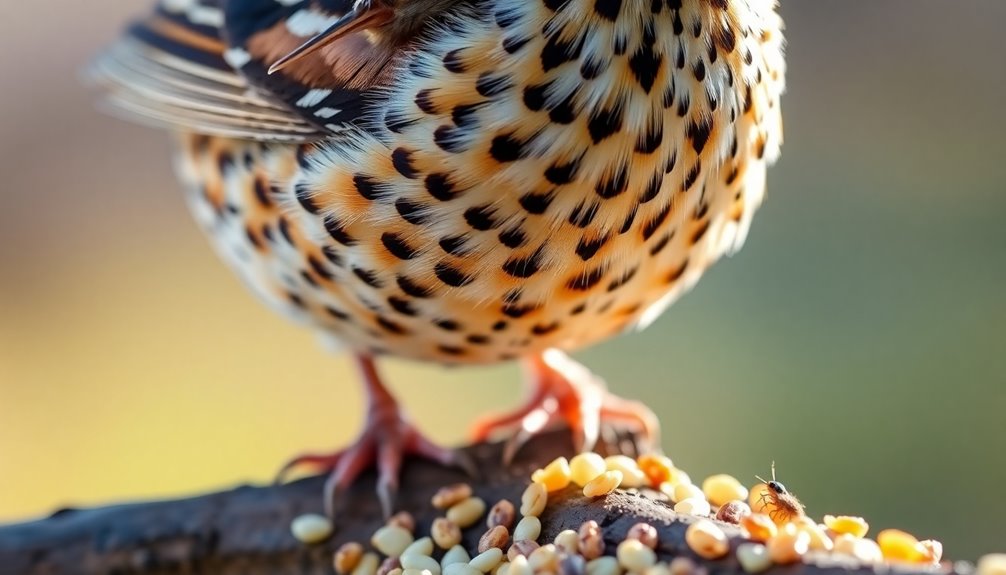

Identifying quail mites is essential for your flock's health. These tiny pests, often reddish after feeding, can cause excessive scratching, feather loss, and skin irritation. For treatment, consider incorporating dust baths with diatomaceous earth and isolate affected birds to prevent spread. Regularly sanitize the coop and monitor for reinfestation. Prevention is key: clean coops often, quarantine new birds, and provide good dust bathing areas. Maintain a balanced diet to strengthen your birds' immune systems. Keeping a close eye on your flock will help catch issues early, and there's more to learn about managing these pests effectively.
Key Takeaways
- Quail mites are small (0.5 mm to 1 mm), reddish after feeding, causing excessive scratching and feather loss in birds.
- Treat infestations with permethrin and implement dust baths using diatomaceous earth for natural control.
- Regularly clean coops and replace bedding to reduce mite habitats and prevent reinfestation.
- Quarantine new birds for 2-3 weeks to check for mites before introducing them to the flock.
- Conduct weekly health checks to identify signs of mites early and maintain flock resilience.

House Naturals 5 Gallon Plastic Bucket Pail Food Grade with Blue Screw on Lid(Pack of 3) Made in USA
Pack of 3 White Buckets with Blue double gasket screw on Lids
As an affiliate, we earn on qualifying purchases.
Identifying Quail Mites
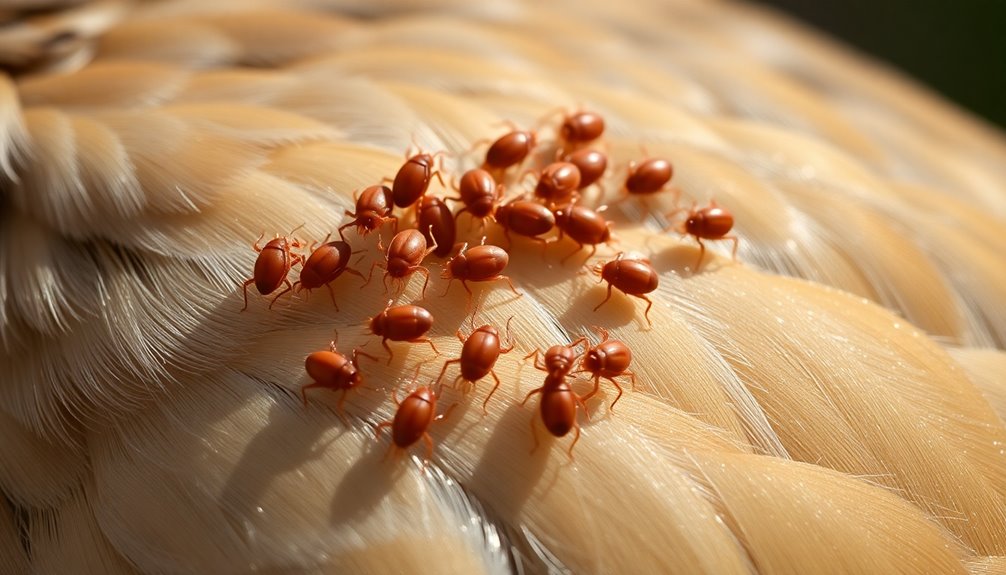
Identifying quail mites is vital for maintaining the health of your birds. These tiny ectoparasites, measuring between 0.5 mm to 1 mm, often appear reddish after feeding on your quail's blood.
Look for key signs of infestation, such as excessive scratching, feather loss, and visible skin irritation like redness or scabs, especially around the vent and wings. The Northern fowl mite and red mite are common culprits that cause discomfort and stress, potentially reducing egg production.
At night, use a flashlight to spot their movement in cracks or crevices, as they're more active in low light.
Regular health checks are vital for early identification and management of mite infestations to keep your quail healthy and thriving.

10pcs 5 Gallon Mylar Bags for Food Storage - 10 Mil Thick - Extra large bags 5 Gallon with Oxygen Absorbers 2500cc - Zipper Resealable Milar Bags - Bolsas Mylar 5 Galones
[SIZE & QUANTITY] 10 extra large 5 gallon mylar bags for food storage. Includes 2500 cc. oxygen absorbers...
As an affiliate, we earn on qualifying purchases.
Effective Treatment Options
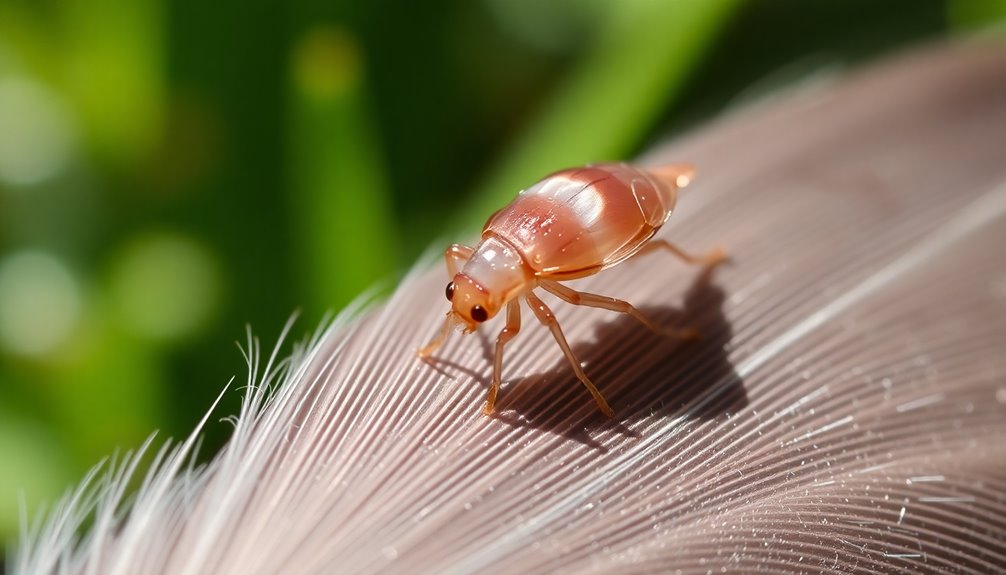
When it comes to tackling quail mite infestations, effective treatment options are critical for restoring your flock's health.
Start by incorporating dust baths with diatomaceous earth; this natural remedy helps dehydrate and control both lice and mites. For more severe cases, consider using permethrin, diluted to one ounce per five gallons of water, and apply it throughout the coop.
Regularly isolate and monitor affected birds to prevent the spread of mite infestations and guarantee treatments are working.
Don't forget to thoroughly clean and disinfect the coop, paying special attention to wooden surfaces.
After treatment, keep a close eye on your flock for any signs of reinfestation to maintain a healthy environment.
Your proactive measures will pay off!

Legacy Food Storage Emergency Water Storage Containers, Long Term 5 Gallon Water Tank - 4 Stackable Food Grade Tanks Included, for Camping, Prepping, Survival - 20 Gallon Total Capacity
INCLUDED WATER TREATMENT DROPS - Comes complete with water treatment drops that keep your water clean for up...
As an affiliate, we earn on qualifying purchases.
Preventive Measures
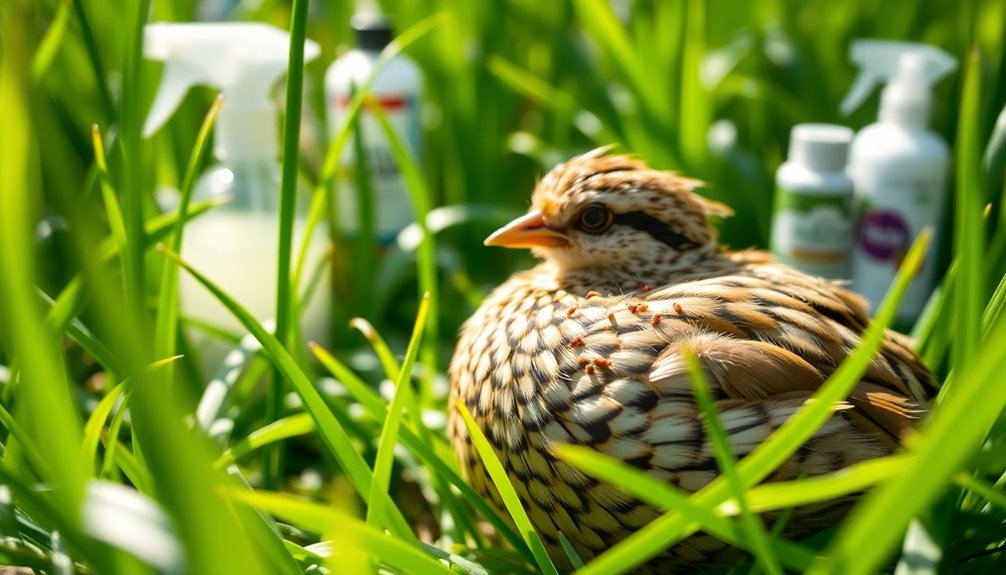
Keeping your quail healthy starts with effective preventive measures that minimize the risk of mite infestations. Regularly clean and sanitize coops and aviaries, replacing bedding with straw or wood shavings to reduce mite habitats.
Quarantine new birds for 2-3 weeks to watch for signs of mites and other parasites before introducing them to your flock. Provide shallow dust baths filled with sand or food-grade diatomaceous earth, encouraging quail to engage in natural mite control behaviors.
Additionally, use netting or barriers to limit contact between your quail and wild birds, which helps reduce external parasite risks. Finally, maintain a balanced diet and create a stress-free environment, as healthy quail are less susceptible to infestations.

28 Pieces Food Storage Containers with Lids EXTRA LARGE Freezer Containers for Food BPA-Free Meat Fruit Vegetables Plastic Containers with lids Storage Airtight Leak-Proof Food Boxes for Kitchen
EXTRA LARGE CAPACITY: KITHELP 28 pieces food storage containers capacity is much larger than its competitors.Include 14 containers...
As an affiliate, we earn on qualifying purchases.
Long-Term Care Strategies
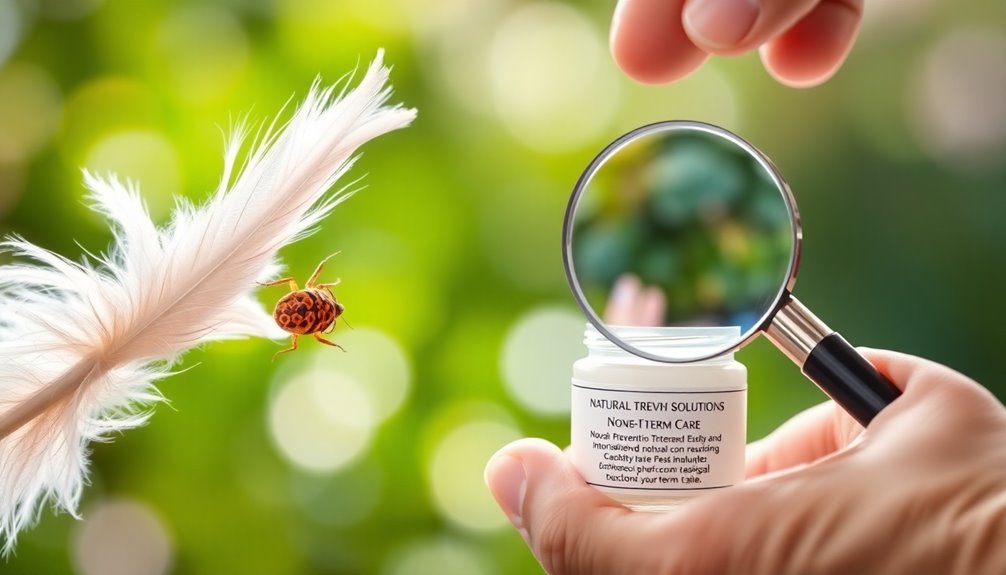
After implementing effective preventive measures, it's important to focus on long-term care strategies that keep your quail healthy and resilient against mite infestations.
Conduct regular health checks at least once a week to catch any signs of mite infestations or other health issues early.
Maintaining a clean living environment is vital; thoroughly clean and disinfect coops monthly while replacing bedding frequently.
Provide access to dust bathing areas filled with sand or food-grade diatomaceous earth, which helps Coturnix Quail naturally control mite populations.
Rotate bedding areas and limit wild bird contact to create a parasite-resistant environment.
Finally, offer a balanced diet high in protein and guarantee constant access to clean water, strengthening their immune system against mites and other health concerns.
Common Misconceptions
Misunderstandings about quail mites can lead to inadequate care and treatment. Many believe mites only thrive in dirty enclosures, but even clean coops can harbor these resilient pests.
You need to know that not all mites are the same; different types, like the Northern fowl mite and red mite, require tailored treatment strategies.
It's also a myth that mites are easily visible; they're often microscopic and can hide well, especially at night.
Treating for mites just once won't cut it; ongoing monitoring and repeated treatments are essential for complete eradication.
Finally, while diatomaceous earth can help manage mites, relying on it alone isn't enough. Combining it with other treatments is vital for effective management in your Backyard Poultry setup.
Frequently Asked Questions
How to Prevent Mites in Quail?
To prevent mites in your quail, keep their coop clean and sanitized, replacing bedding regularly.
Quarantine new birds for a couple of weeks to watch for any signs of infestation before introducing them to your flock.
Provide dust baths with sand or diatomaceous earth, and use netting to minimize contact with wild birds.
Finally, conduct regular health checks to catch any problems early and guarantee your birds stay mite-free.
How to Tell if Quail Has Mites?
To tell if your quail has mites, watch for excessive scratching and frayed feathers, especially around the vent and wings.
You might notice swollen eyelids or crusty skin under the wings. If your quail shakes its head or avoids nesting areas, it could be a sign of discomfort.
Lethargy and a drop in egg production are also indicators.
Finally, check for small brown specks in bedding, especially during the evening.
How to Prevent Quail Disease?
To prevent quail disease, you need to maintain a clean environment. Regularly clean and sanitize coops, and replace bedding to minimize disease risks.
Quarantine new birds for 2-3 weeks to monitor their health before introducing them to your flock.
Provide dust baths with sand or diatomaceous earth to promote natural grooming.
Additionally, guarantee your quail have a balanced diet and access to clean water, and conduct weekly health checks for early detection of issues.
What Are the Symptoms of Bird Mites?
When bird mites invade, it's like a tiny army attacking your feathered friends!
You'll notice excessive scratching and frayed feathers, signaling their discomfort. Watch for restlessness and irritation, especially around the vent and wings, where redness or scabs might appear.
Your quail may become lethargic and produce fewer eggs. Signs like head shaking and avoiding nesting areas indicate they're feeling the stress, so keep an eye out for these symptoms early on!
Conclusion
To sum up, tackling quail mites doesn't have to feel like climbing Mount Everest. By identifying these pests early, using effective treatments, and implementing preventive measures, you can keep your quail healthy and mite-free. Remember, long-term care strategies are key to ensuring your flock thrives, while debunking common misconceptions will empower you as a caretaker. With the right approach, you'll create a sanctuary where your quail can live happily and comfortably, free from the clutches of these tiny invaders.