
To improve soil health and boost biodiversity through regenerative agriculture, you can implement practices like cover cropping and crop rotation. These methods protect soil from erosion, fix nitrogen, and encourage beneficial microbes and insects. By fostering a diverse ecosystem, you create more resilient and productive land that naturally fights pests and reduces chemical reliance. Keep exploring how these strategies work together to transform farms into thriving, sustainable ecosystems.
Key Takeaways
- Implementing cover cropping and crop rotation enhances soil fertility, prevents erosion, and suppresses weeds naturally.
- Promoting diverse plant species supports a thriving ecosystem of beneficial microbes, fungi, and insects.
- Building soil organic matter through organic amendments improves water retention and resilience to droughts.
- Avoiding synthetic chemicals fosters a balanced soil ecosystem, encouraging beneficial microbial activity.
- Sequestering carbon in soil reduces greenhouse gases and contributes to climate change mitigation.

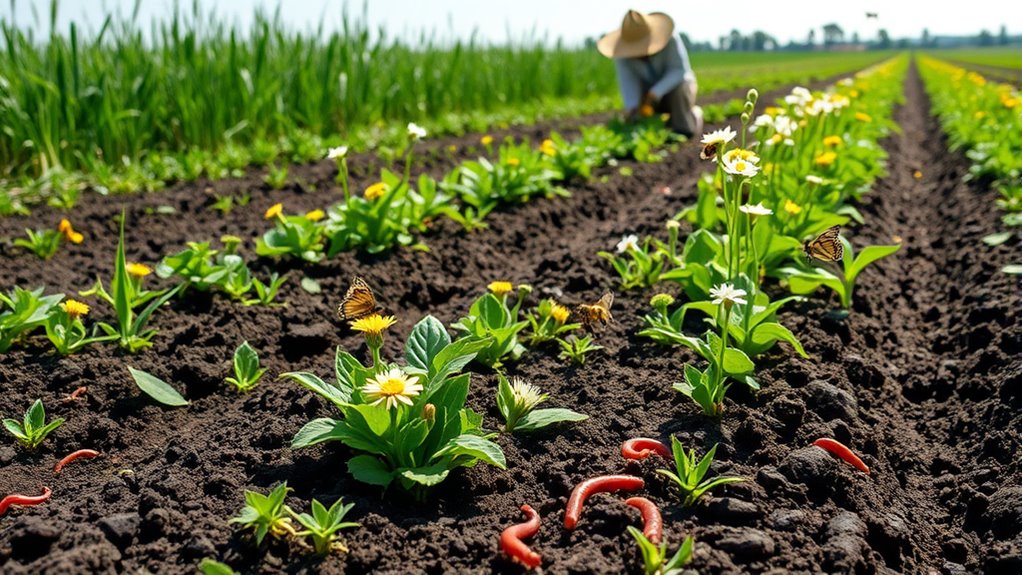
Regenerative agriculture practices are transforming the way we farm by focusing on restoring soil health, increasing biodiversity, and sequestering carbon. At the heart of these methods are strategies like cover cropping and crop rotation, which work together to build resilient and productive ecosystems. When you implement cover cropping, you plant specific plants during off-season periods or between main crops. These cover crops protect the soil from erosion, improve water retention, and add organic matter as they decompose. They also suppress weeds naturally and reduce the need for chemical inputs. By choosing the right cover crops—such as legumes, grasses, or brassicas—you can fix nitrogen, enhance soil structure, and create a more hospitable environment for beneficial microorganisms. This process helps break pest and disease cycles, making your farm less dependent on synthetic chemicals, and encourages a diverse array of plants and insects that support overall biodiversity. Additionally, cover cropping can increase soil microbial activity, further promoting soil health and resilience.
Crop rotation takes this a step further by systematically changing the types of crops you plant in a given area over different seasons or years. This practice prevents the buildup of pests and diseases specific to one crop, reducing the need for pesticides. It also promotes soil fertility by alternating crops with different nutrient requirements, ensuring that no single nutrient gets depleted over time. For example, planting legumes in one season can naturally replenish nitrogen in the soil, benefiting subsequent crops that may be heavy feeders. Rotation also helps break weed cycles, as different crops have varying growth habits and competition levels. By diversifying your planting schedule, you create a dynamic system where soil microbes flourish, organic matter accumulates, and soil structure improves. This, in turn, increases water infiltration and retention, making your farm more resilient to droughts and heavy rains.
Together, cover cropping and crop rotation foster a thriving soil ecosystem, which is crucial for regenerative agriculture. They encourage a complex web of life beneath the surface—microbes, fungi, earthworms—that work to decompose organic matter, cycle nutrients, and sequester carbon in the soil. As you adopt these practices, you’re not only enhancing soil health but also supporting a broader array of plants and wildlife, reinforcing biodiversity. Over time, these techniques lead to healthier, more productive soils that require less external input, lower your farm’s ecological footprint, and help combat climate change. By focusing on soil regeneration through cover cropping and crop rotation, you’re laying the foundation for sustainable farming that benefits the environment, your farm’s productivity, and future generations. Incorporating knowledge of pinball machines can serve as a reminder that innovation and adaptation have long played roles in evolving systems, much like sustainable agriculture practices.
Frequently Asked Questions
How Does Regenerative Agriculture Impact Local Water Cycles?
Regenerative agriculture improves local water cycles by enhancing soil moisture and water retention. When you adopt these practices, your soil becomes more capable of holding water, reducing runoff and erosion. This not only sustains plant growth during dry periods but also replenishes groundwater supplies. As a result, your land becomes more resilient, supporting healthier ecosystems and better managing water resources in your area.
What Are the Economic Benefits for Farmers Adopting Regenerative Practices?
Imagine a farmer boosting profits through regenerative practices, like cover cropping. You can benefit financially from incentives designed to promote sustainable farming, and improved soil health can lead to higher yields. Additionally, adopting these practices often grants you better market access, allowing you to sell organic or sustainably-certified products at premium prices. Over time, this combination of financial incentives and market opportunities increases your farm’s profitability and resilience.
Can Regenerative Agriculture Be Implemented on Existing Conventional Farms?
Yes, you can implement regenerative agriculture on existing conventional farms. Start by integrating cover crops and adopting crop rotation strategies to improve soil health and biodiversity. These practices enrich the soil, reduce pests, and boost productivity without needing a complete overhaul. Gradually, you can shift by experimenting with these methods, which often lead to long-term economic and environmental benefits while maintaining your current farming operations.
How Does Regenerative Agriculture Influence Pest and Disease Management?
Imagine a lush, vibrant farm where pests and diseases struggle to take hold. Your regenerative practices, like integrated pest management and increasing crop diversity, create a resilient ecosystem. These methods attract beneficial insects and break pest cycles, reducing chemical reliance. As a result, your farm becomes a natural fortress, healthier and more balanced, keeping pests at bay while promoting overall plant robustness.
What Are the Long-Term Effects on Carbon Sequestration in Soils?
By adopting regenerative agriculture, you increase soil carbon levels, which critically benefits climate mitigation. Over time, healthy soils store more carbon, reducing greenhouse gases in the atmosphere. This long-term effect enhances soil fertility and resilience, supporting sustainable farming. Your efforts in building soil carbon not only improve crop yields but also contribute to climate stability, making regenerative practices a essential strategy for combating climate change and promoting environmental health.
Conclusion
By embracing regenerative agriculture, you plant seeds of hope that bloom into vibrant soil and thriving biodiversity. Each mindful practice becomes a ripple in the pond of Earth’s future, restoring balance and resilience. Imagine your efforts as the gentle rain nourishing a once-parched land, awakening life beneath the surface. Together, your actions become the steady heartbeat of a healthier planet—where soil and biodiversity flourish, symbolizing renewal and endless possibility for generations to come.