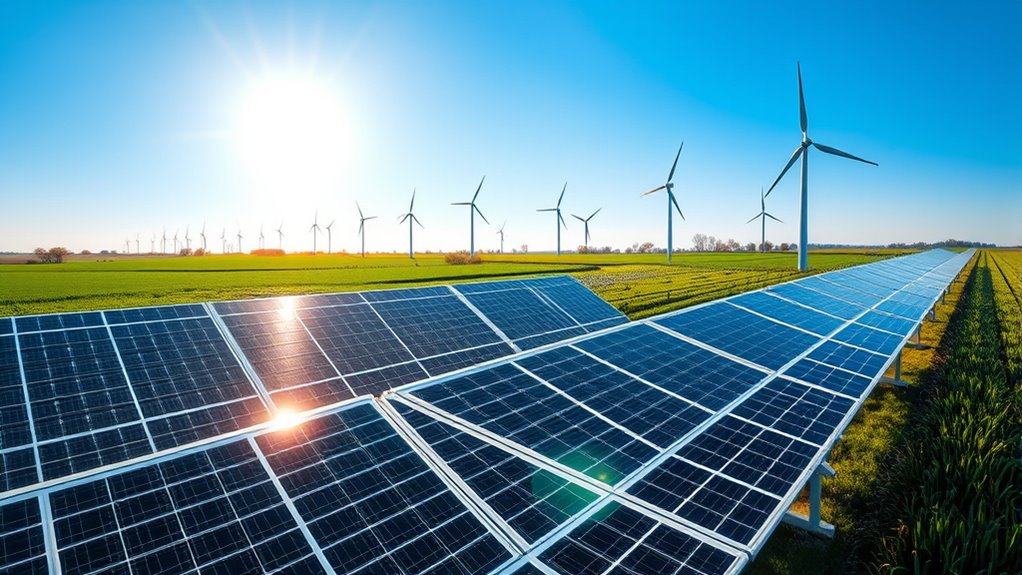

Implementing renewable energy like solar, wind, and bioenergy on your farm can cut costs, reduce reliance on fossil fuels, and improve sustainability. Solar panels and wind turbines generate clean power, while bioenergy from crops or manure offers a renewable backup. Energy storage guarantees a steady supply during low production times, making your farm more resilient. To discover how these technologies can help optimize your farm’s efficiency and open new opportunities, keep exploring the options available.
Key Takeaways
- Solar, wind, and bioenergy technologies reduce fossil fuel dependence and lower operational costs on farms.
- Solar-powered irrigation systems and wind turbines generate on-site renewable energy for farm needs.
- Bioenergy from crop residues and manure offers sustainable alternatives for farm power and waste management.
- Energy storage systems ensure continuous farm operations by balancing supply and demand.
- Integrating renewable energy enhances farm resilience, sustainability, and market competitiveness through eco-friendly practices.

Have you ever wondered how farms can become more sustainable and cost-effective? One of the key strategies is integrating renewable energy sources such as solar, wind, and bioenergy into your farming operations. These sources not only reduce reliance on fossil fuels but also help cut operational costs over time. To maximize the benefits, investing in farm energy storage becomes vital. By storing excess energy generated during peak times, you can ensure a steady power supply for essential farm activities, even when the sun isn’t shining or the wind isn’t blowing. This approach helps smooth out energy consumption, minimizes waste, and increases overall efficiency.
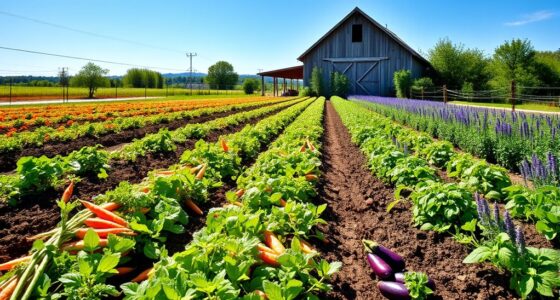
Implementing renewable energy on your farm goes hand in hand with adopting sustainable crop practices. For example, using solar-powered irrigation systems can reduce energy costs and limit environmental impact. Wind turbines installed on your property can generate electricity to run equipment, light barns, or even power processing facilities. Bioenergy, derived from organic materials like crop residues or manure, offers an additional renewable source. Not only does this help in managing waste effectively, but it also produces energy that can be used on-site or fed back into the grid, creating potential income streams.
Using solar, wind, and bioenergy reduces costs and environmental impact on farms.
Sustainable crop practices are vital when integrating renewable energy into your farm operations. These practices focus on minimizing environmental impact, conserving resources, and improving soil health. When combined with renewable energy, they create a symbiotic system that enhances sustainability. For instance, crop rotation and cover cropping reduce the need for synthetic inputs, while renewable energy reduces greenhouse gas emissions. Using renewable energy to power machinery and irrigation supports these practices by lowering operational costs and reducing dependence on external energy sources. Additionally, wind energy can be harnessed to generate power in locations with favorable wind conditions, maximizing energy efficiency wind energy efficiency.
Moreover, renewable energy systems often require an upfront investment, but the long-term savings can be significant. The combination of farm energy storage and sustainable crop practices ensures that your farm remains productive and resilient. You’ll be able to operate efficiently regardless of fluctuating energy prices or weather conditions. Plus, adopting renewable energy enhances your farm’s reputation, appealing to eco-conscious consumers and opening up new market opportunities.
Frequently Asked Questions
What Are the Initial Costs of Installing Farm Renewable Energy Systems?
The initial investment for farm renewable energy systems varies, but generally, you’ll face costs like equipment, installation, and permits. A thorough cost analysis helps you understand these expenses and plan accordingly. Expect solar panel setups to start around $10,000, while wind turbines may cost $30,000 or more, depending on size. Bioenergy systems also require significant upfront spending. These costs can be offset by incentives and long-term savings.
How Do Renewable Energy Projects Impact Local Wildlife and Ecosystems?
You might find that renewable energy projects can influence local wildlife and ecosystems. They can create wildlife corridors, helping animals move safely and maintain biodiversity. However, if not carefully planned, they may disrupt ecosystem balance, affecting plant and animal habitats. By designing projects thoughtfully, you can minimize negative impacts, promoting coexistence and supporting healthy ecosystems alongside renewable energy development.
Are There Government Incentives or Subsidies for Farm Renewable Energy?
Yes, you can access government grants and subsidy programs to support your farm’s renewable energy projects. These incentives often include financial assistance, tax credits, and rebates that make adopting solar, wind, or bioenergy more affordable. By taking advantage of these programs, you reduce upfront costs and boost your farm’s sustainability. Be sure to check local and federal resources to find the most current grants and subsidies available for your specific renewable energy initiatives.
What Maintenance Is Required for Solar, Wind, and Bioenergy Systems?
You need to regularly check your solar panels, wind turbines, and bioenergy systems to guarantee system reliability. Maintenance scheduling includes cleaning panels, inspecting for damage, lubricating moving parts, and replacing worn components. Keep an eye on performance data to spot issues early. Routine maintenance helps maximize energy output and extends system lifespan, so stay proactive and follow manufacturer recommendations to keep your renewable energy systems running smoothly.
How Can Farms Connect Renewable Energy to Existing Grid Infrastructure?
Think of connecting your farm’s renewable energy as fitting puzzle pieces into a larger picture. You’ll need to work with utility companies for grid connection, guaranteeing your system talks smoothly with existing infrastructure. Sometimes, infrastructure upgrades are necessary to handle your energy flow. Start by evaluating your farm’s current setup, then coordinate with local grid operators to ensure a seamless integration that energizes your farm and benefits the grid.
Conclusion
Imagine your farm as a thriving engine powered by nature’s own fuel. By embracing solar, wind, and bioenergy, you’re not just cutting costs—you’re planting seeds for a sustainable future. Just like a farmer tending to crops, you nurture these renewable sources to grow your farm’s resilience. Studies show farms that adopt renewable energy cut energy costs by up to 50%. So, harness these natural forces, and watch your farm flourish like a well-tended field in full bloom.