TL;DR

Get garden gear delivered free with Prime
- Fast, free delivery on millions of items
- Prime Video, Amazon Music and more included
- Member-only deals all year
A headline-only report describes a Rwandan farm expert trying to help families become self-sufficient. No details are available about the expert, the farming methods, the families involved, or any results, so the scale and impact of the effort cannot be assessed.
A Rwandan farm expert is trying to help families become self-sufficient, according to a headline about the effort. The available information does not identify the expert or explain what farming support is being offered, leaving the program’s reach and results unconfirmed.
The headline describes an effort centered on family self-sufficiency and farming expertise in Rwanda. It does not specify whether the work involves training, access to land or equipment, crop advice, livestock, or another form of assistance. No location within Rwanda, start date, or participating organization is provided.
There are also no reported figures for how many families are involved, what outcomes they have achieved, or how success is being measured. The available account does not include comments from the expert, participating households, local officials, or independent specialists. It is consequently not possible to verify the program’s methods or assess its effects from the headline alone.
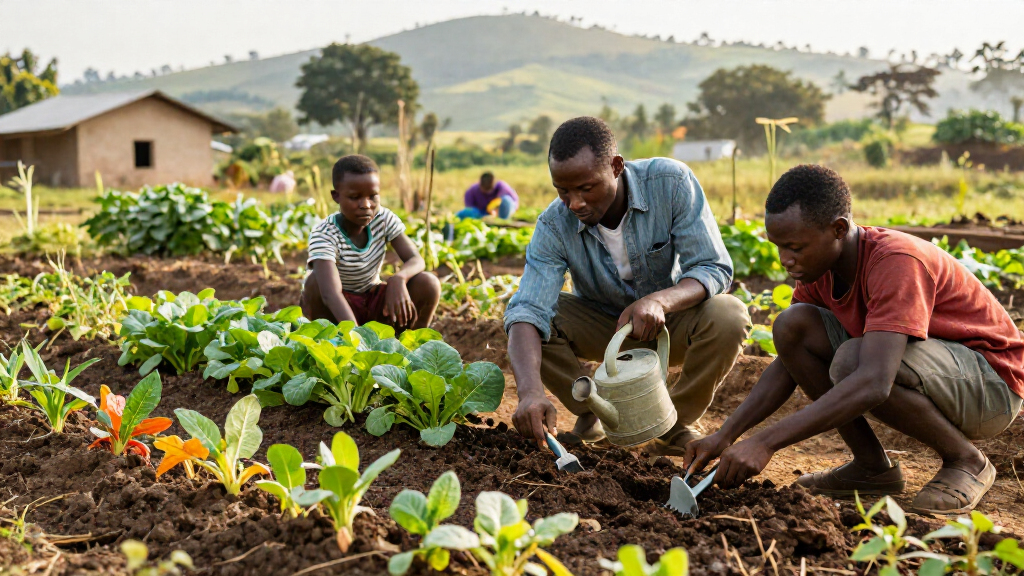
Rwandan Farm Expert Trying To Help Families Become Self-sufficient
A reported effort aims to help families become self-sufficient through farming expertise. The available account offers no program details or results, so its reach and impact remain unassessed.
“A farm expert is trying to help families become self-sufficient.”
The headline states an aim. It does not establish what support is provided or whether families have achieved that aim.
A stated aim, with few specifics
The confirmed information is limited to the headline’s description of an effort in Rwanda.
Family self-sufficiency
The reported effort connects farming expertise with a goal of helping families rely more on their own resources.
What help looks like
No details say whether support involves training, land, equipment, crop advice, livestock, or another resource.
Whether the goal was reached
No reported evidence shows changes in food production, household income, or independence.
Self-sufficiency can mean different things
It could mean producing more food for household use or earning income through farming. The available account does not say which meaning applies, or describe local conditions where the effort is taking place.
Potential benefits are not confirmed outcomes
Helping households produce more of what they need could affect food access and reliance on outside support. The headline alone cannot show that these effects have happened.
Costs, yields, household participation, and the length of support would help readers judge the effort’s practical value and whether it can continue over time.
From reported aim to assessable results
Each link would help establish how the effort works and what it has achieved.
Identify the expert
Provide a name, relevant experience, and any partners.
Describe the support
Explain the methods, resources, location, and timeline.
Show the reach
Report how many households participate and how they are selected.
Document outcomes
Include measurable results and accounts from participating families.
The effort’s scale and impact remain unverified.
The available information confirms a reported aim, not its methods or results. Independent assessment would require details from the expert and families, alongside evidence of outcomes over time.
What we still do not know
The headline leaves the central program details unanswered.
Who is the farm expert?
The available headline does not name the expert or provide biographical details.
How are families being helped?
No methods are described, including training, supplies, crops, or livestock support.
Where in Rwanda is the effort taking place?
The location and participating organization are not specified.
Have families become self-sufficient?
No results are reported. The headline describes an aim, not a confirmed outcome.
What Family Self-Sufficiency Could Mean
Helping households produce more of what they need could affect their access to food and their reliance on outside support, but the headline does not establish that these outcomes have occurred. The effort matters as a reported attempt to connect farm expertise with household needs; its practical importance depends on the assistance provided and whether families can sustain it over time.
Without information about costs, yields, household participation, or the length of support, claims about broader benefits would be premature. Any assessment of impact would need details from the families involved and evidence of results, rather than the stated aim alone.
Popular right now

Dyson Car+Boat Cordless Handheld Vacuum

Shark PowerDetect Corded Stick Vacuum, Self-Cleaning (Eggplant, HZ4002)

Vitamix Propel Series 750 Professional-Grade Blender, 4 Programs, Black
As an affiliate, we earn on qualifying purchases.
What the Report Establishes
The confirmed information is limited to the headline’s description: a Rwandan farm expert is trying to help families become self-sufficient. It does not provide a biography, explain the expert’s qualifications, or name a program or partner. No specific agricultural practice or advice is described.
That distinction matters because self-sufficiency can refer to different goals, from producing more food for household use to earning income through farming. The available information does not say which meaning applies here. It also gives no account of Rwanda’s local conditions in the area where the effort is taking place, so broader national context would not clarify the project itself.
Key Program Details Remain Unknown
The expert’s identity, the families’ location, the project’s timeline, and the type of farming assistance are all not specified in the available report. It is unclear whether the initiative is a formal program, an individual effort, or part of a larger organization. There is no information about funding, eligibility, or how families are selected.
No outcomes are reported, and the headline does not establish whether participating families have increased food production, income, or independence. The account also provides no direct testimony from households or other parties who could confirm how the work operates. These gaps prevent an independent assessment of the effort’s scale, results, or durability.
Further Reporting Needed on Results
A fuller account would need to identify the expert and explain what support families receive, where the work is happening, and how long it has been underway. Details on the number of households involved and the resources available would help readers understand the program’s scope.
To assess whether the effort is helping families become self-sufficient, follow-up reporting would also need measurable outcomes and accounts from participants. Until those details are available, the confirmed development remains the reported aim of the effort, rather than evidence that self-sufficiency has been achieved.
Source: rss
Key Questions
Who is the farm expert?
The available headline does not name the expert or provide biographical details.
How is the expert helping families?
The methods are not described. No details are available about training, supplies, crops, livestock, or other forms of support.
Where in Rwanda is the effort taking place?
The location is not specified in the available information.
Has the effort made families self-sufficient?
No results are reported. The headline describes an aim to help families, not a confirmed outcome.
Source: news.google.com