
During peak farm season, prioritize tasks by evaluating their urgency and impact, focusing on critical activities like pest management, crop rotation, and equipment maintenance early on. Use tools like farm management apps and weather forecasts to stay flexible and adapt plans as conditions change. Delegate responsibilities to your team to help distribute workload evenly. By staying organized and focusing on essentials, you’ll work smarter and reduce stress throughout the busy season—more tips to improve your planning await you.

Get garden gear delivered free with Prime
- Fast, free delivery on millions of items
- Prime Video, Amazon Music and more included
- Member-only deals all year
Key Takeaways
- Use weather forecasts to adjust task schedules and prioritize activities accordingly.
- Focus on critical tasks like pest management and crop rotation early in the day.
- Delegate responsibilities to team members to ensure essential activities are consistently managed.
- Maintain a daily to-do list and break tasks into manageable blocks for better focus.
- Leverage technology tools for planning, tracking, and optimizing resource allocation efficiently.
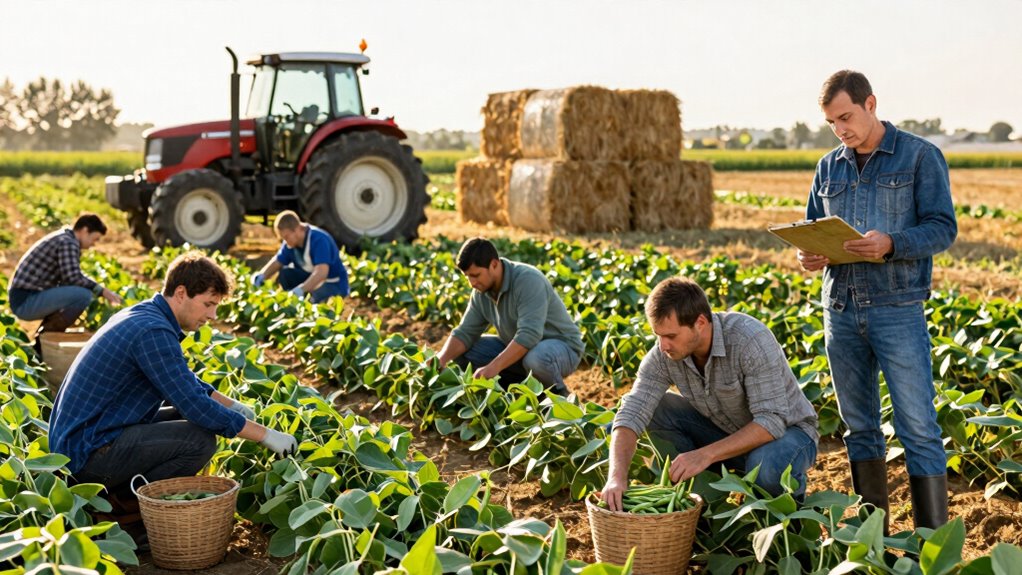
During peak farm season, setting clear priorities is fundamental to manage your workload effectively and reduce stress. With so many tasks demanding your attention—planting, harvesting, maintaining equipment—it’s easy to feel overwhelmed. To stay focused, you need a strategic approach that helps you identify what’s most important each day. One effective way is to map out your tasks based on urgency and impact, guaranteeing that critical activities like pest management and crop rotation are not overlooked. Pest management, for example, requires timely action to prevent infestations from spiraling out of control. Prioritizing it early in your schedule can save you time and resources later, reducing the risk of crop loss. Similarly, crop rotation isn’t just about maintaining soil health; it’s a strategic decision that influences your entire season. Planning your crop rotation schedule early helps you allocate resources efficiently and avoid unnecessary delays. Incorporating technology tools like farm management apps can further streamline your planning process and improve task tracking. Staying informed about latest agricultural practices can also help you implement more efficient and sustainable strategies throughout the season. Additionally, understanding soil health management can enhance your ability to make informed decisions that benefit your crops and overall farm productivity. Recognizing the importance of weather forecasting allows you to better anticipate shifts and adapt your plan proactively. Using weather data effectively helps you optimize your daily activities and avoid potential setbacks.
You should also consider the weather forecast when setting your priorities. Weather conditions can shift rapidly during peak season, affecting everything from planting to pest outbreaks. If rain is expected, you might want to focus on tasks that can be completed indoors or in less muddy conditions, like equipment maintenance or record-keeping. If the weather is dry, prioritize irrigation and pest scouting. Staying flexible and adjusting your plans based on real-time conditions ensures you’re addressing the most pressing needs without wasting effort on less significant tasks. It’s equally important to delegate when possible. If you have team members or seasonal workers, assign specific responsibilities so everyone is clear about their roles. For instance, if pest management is a priority, designate someone to monitor pest levels regularly, freeing you to focus on other essential activities like crop rotation planning or machinery repairs.
Maintaining a daily to-do list can help you stay on track. Break your day into manageable blocks, and check off tasks as you complete them. This keeps your focus sharp and provides a sense of accomplishment. Remember, not everything can be done at once, and some tasks will need to wait. Recognize your limits and avoid overloading yourself. This not only prevents burnout but also ensures you’re making thoughtful decisions about what needs immediate attention. By setting clear priorities each day, especially around critical activities like pest management and crop rotation, you’ll keep your farm running smoothly during the busiest times. Ultimately, a well-structured plan helps you work smarter, not harder, making peak season more manageable and less stressful.
farm management app for crop planning
As an affiliate, we earn on qualifying purchases.
As an affiliate, we earn on qualifying purchases.
Frequently Asked Questions
How Do I Handle Unexpected Emergencies During Peak Season?
When unexpected emergencies strike during peak season, you need to stay calm and rely on your emergency preparedness and contingency planning. Quickly assess the situation, prioritize safety, and activate your emergency plan. Keep essential contacts handy, communicate clearly with your team, and delegate tasks efficiently. Being prepared with a well-thought-out plan allows you to respond swiftly, minimizing disruption and ensuring safety for everyone involved.
What Tools Can Help Me Organize Farm Tasks Effectively?
Think of farm management tools as your trusty compass in a vast, busy field. Apps like Trello or Asana help you visually map out tasks, making task delegation clear and straightforward. Digital calendars or planning software keep your schedule in sync, so nothing slips through the cracks. These tools act as your organizational scaffolding, helping you juggle and prioritize farm tasks efficiently during peak season, ensuring everything runs smoothly.
How Can I Balance Work and Personal Life During Busy Times?
To balance work and personal life during busy times, prioritize effective time management by scheduling both work tasks and personal activities. Set clear boundaries to prevent work from spilling into personal time, and don’t hesitate to delegate when possible. Incorporate short breaks to reduce stress, and guarantee you carve out moments for family and self-care. This approach helps you stay productive while maintaining your well-being, even in peak farm season.
What Are Signs of Burnout to Watch for in Farm Workers?
You should watch for signs of burnout like worker fatigue and mental exhaustion. If workers seem unusually irritable, lose focus, or show decreased productivity, these are red flags. You might notice physical symptoms such as headaches or sleep issues. Keep an eye on emotional signs too, like apathy or increased stress. Address these early by encouraging rest, offering support, and adjusting workloads to prevent serious health issues and maintain farm productivity.
How Should I Prioritize When Weather Disrupts Plans?
When weather throws a wrench in your plans, think of adaptation as your guiding star. Prioritize tasks based on urgency and impact, and develop a solid contingency plan for weather disruptions. Focus on flexible, essential activities first, and reschedule non-critical work. Keep communication open with your team, and stay ready to shift gears quickly. Weather adaptation isn’t just reactive; it’s about proactively safeguarding your farm’s progress amid unpredictable skies.
Conclusion
As the sun dips low over your bustling farm, you’ll feel the satisfaction of a day well spent. With clear priorities guiding your every task, the fields thrive under your careful watch, and your efforts bloom into a bountiful harvest. Remember, during peak season, focus sharpens like the horizon at dusk—bright and unwavering. Keep your goals in sight, breathe in the fresh air, and trust your plan to nurture both your crops and peace of mind.
Fall yard work Picks
leaf blowers
As an affiliate, we earn on qualifying purchases.