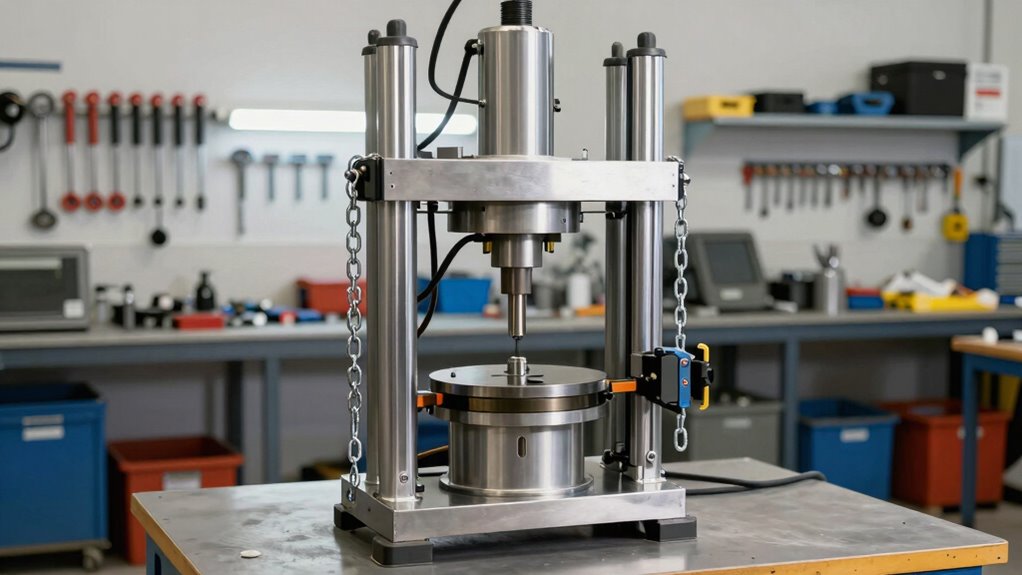

You should keep your hydraulic shop press in a well-organized, accessible workspace to guarantee safety and efficiency. Avoid placing it in cluttered corners where it can cause trip hazards or be hard to reach during emergencies. Proper positioning makes maintenance easier and helps prevent accidents caused by blocked safety features or uneven surfaces. Maintaining a tidy workshop not only protects workers but also prolongs your equipment’s lifespan. To discover how proper setup keeps everyone safe, continue exploring these important safety practices.

Get garden gear delivered free — and shop member deals
- Fast, free delivery on millions of items
- Access to Prime Big Deal Days deals on October 6–7
- Prime Video, Amazon Music and more included
Key Takeaways
- Position hydraulic presses in designated, clear areas to ensure easy access and quick emergency response.
- Avoid cluttered corners to reduce trip hazards and facilitate routine inspections and maintenance.
- Proper placement supports safe material handling and prevents accidental contact with moving parts.
- Organized workflow chains improve safety by ensuring all safety equipment is accessible and functional.
- Clear workspace design enhances visibility, reducing operator errors and promoting a safety-conscious environment.
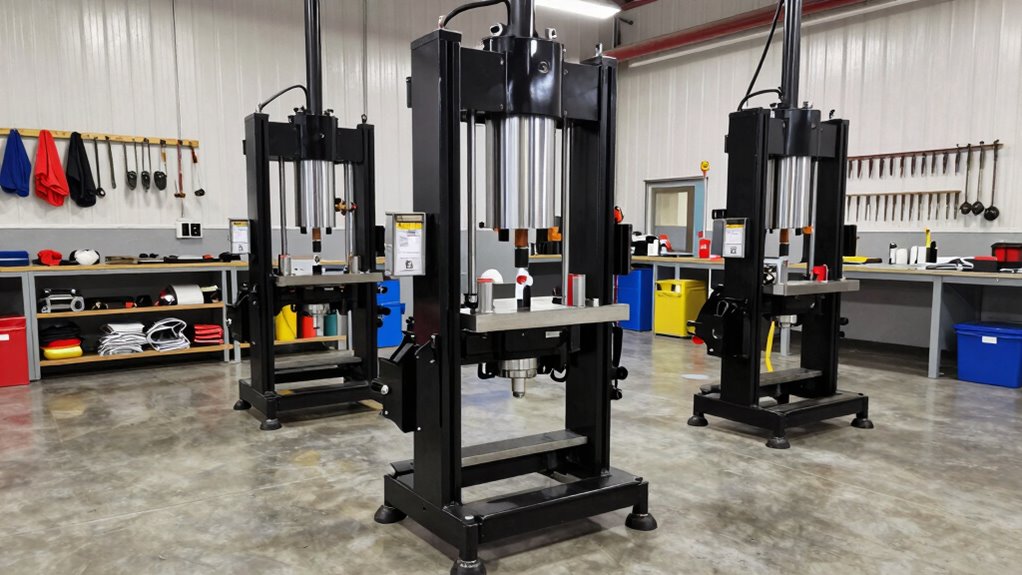
Hydraulic shop presses play an essential role in ensuring safer workflow chains by providing reliable force for pressing, shaping, and assembly tasks. When you place your press in a cluttered corner or an unsafe location, you risk accidents, damage, and inefficient work. Properly installing and maintaining your hydraulic press is fundamental to keep operations safe and effective. Regular press maintenance isn’t just about extending the equipment’s lifespan; it’s about guaranteeing safety for everyone in the workshop. You should routinely check hydraulic fluid levels, inspect hoses for leaks or wear, and verify that all safety features are functioning properly. Neglecting these steps can lead to sudden failures or dangerous malfunctions that could hurt someone or damage parts. Additionally, integrating safe workspace organization practices ensures that your hydraulic press remains accessible and reduces hazards. Safety training plays a pivotal role in integrating hydraulic shop presses into your workflow safely. When you and your team understand the correct operation procedures, potential hazards, and emergency protocols, you create a safer environment. Proper training ensures everyone knows how to position materials correctly, apply force evenly, and recognize warning signs of equipment issues. It also emphasizes the importance of regular inspections, which are crucial for maintaining a safe working environment. By emphasizing safety training, you minimize the risk of accidents caused by misuse or lack of knowledge. It also helps foster a safety-conscious culture where employees feel responsible for maintaining safe practices, which ultimately benefits the entire workflow. Positioning your hydraulic press in a designated, clear area is key to maintaining a safe workspace. When the press is tucked away in a cluttered corner, it becomes harder to access quickly in case of emergency, and the risk of tripping or accidental contact increases. An organized workspace makes it easier to perform press maintenance regularly and identify potential issues early. It also encourages preventive maintenance to be a routine part of your safety protocol. It also ensures that safety equipment like emergency stop buttons and safety shields are accessible and functional. Keeping the press in an open, well-lit area not only enhances safety but also improves efficiency, allowing you to work faster and more confidently. Incorporating the right safety protocols and consistent press maintenance into your workflow isn’t just about compliance—it’s about protecting your team and ensuring quality results. When you treat your hydraulic shop press as a critical piece of equipment, giving it proper care and positioning, you cultivate a safer, more productive environment. Remember, safety training isn’t a one-time event; it’s an ongoing process that keeps everyone informed and vigilant. Properly maintaining equipment is vital for preventing malfunctions and ensuring long-term safety. Incorporating cloud-based monitoring systems can also help track maintenance schedules and safety compliance more efficiently. By prioritizing these practices, you turn your workspace into a place where safety and efficiency go hand in hand, rather than risking cluttered corners and avoidable accidents.
hydraulic shop press safety stand
As an affiliate, we earn on qualifying purchases.
As an affiliate, we earn on qualifying purchases.
Frequently Asked Questions
What Are the Main Safety Features of Hydraulic Shop Presses?
The main safety features of hydraulic shop presses include built-in pressure relief valves, which prevent overloading, and safety guards that shield operators. Regular press maintenance guarantees ideal performance and safety. Using safety accessories like adjustable work supports and protective shields minimizes risks. Always check the safety features before use, and never bypass safety devices, to keep yourself safe during operation.
How Often Should Hydraulic Presses Be Inspected for Safety?
You should inspect your hydraulic presses at least monthly, following your maintenance schedules and inspection checklists. Regular inspections help you identify wear, leaks, or damage early, ensuring safe operation. Pay close attention to hydraulic hoses, pressure gauges, and safety features. Consistent checks prevent accidents, extend equipment lifespan, and maintain safety standards. Incorporate these inspections into your routine to keep your workspace safe and your equipment functioning properly.
Can Portable Hydraulic Presses Be Integrated Into Workflow Chains?
Imagine a seamless river flowing steadily—your workflow, optimized with portable hydraulic presses. Yes, you can integrate portable hydraulic presses into your workflow chains, enhancing flexibility and efficiency. Portable integration allows you to move presses to where they’re needed most, reducing clutter and downtime. This setup streamlines operations, keeping your workspace safe and organized while ensuring your pressing tasks are completed swiftly and effectively.
What Training Is Recommended for Safe Hydraulic Press Operation?
You should receive thorough training on safe hydraulic press operation, focusing on operator ergonomics and proper maintenance procedures. This includes understanding how to position yourself correctly, avoid strain, and guarantee the press functions properly to prevent accidents. Regularly review safety protocols, perform routine maintenance checks, and stay updated on best practices. Proper training helps you operate the hydraulic press safely, reducing risk and promoting a safer work environment.
How Do Environmental Conditions Affect Hydraulic Press Safety?
Environmental hazards and weather impacts considerably influence hydraulic press safety, with studies showing 30% of accidents linked to poor conditions. You must monitor environmental factors like moisture, temperature, and dust, as they can cause equipment malfunctions or slips. Wet or icy surfaces increase slips, while extreme heat or cold can weaken hydraulic components. Stay alert to weather changes, maintain a clean work environment, and follow safety protocols to prevent accidents.
Conclusion
By integrating hydraulic shop presses into well-organized workflow chains, you reduce the risk of accidents and improve efficiency. Imagine cutting your workspace accident rate by nearly 30% just by redesigning your layout—it’s a game changer. When these powerful tools are placed thoughtfully, they become assets rather than hazards. Keep your workspace safe and streamlined, and you’ll see productivity soar while risks stay minimal. Safety and efficiency go hand in hand—don’t leave your presses cluttered in corners.
Halloween Picks
halloween
As an affiliate, we earn on qualifying purchases.