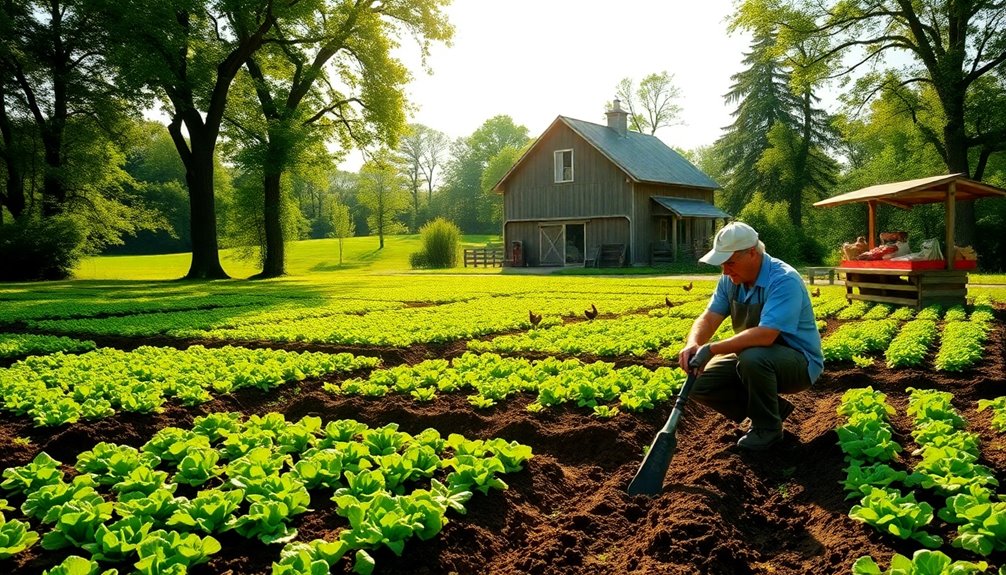
Soil mapping and variable rate technology help you optimize input application by highlighting soil nutrient variability across your field. By collecting soil samples and creating detailed maps, you can tailor fertilizer and other inputs to specific zones, improving crop yields and reducing waste. Proper equipment calibration guarantees accurate delivery, while VRT adjusts application rates in real-time. Keep exploring to discover how integrating these tools can boost your farm’s efficiency and sustainability.
Key Takeaways
- Soil mapping identifies nutrient variability, guiding precise input application for optimized crop growth.
- Collecting soil samples and generating detailed maps enables targeted land management strategies.
- Equipment calibration ensures accurate delivery of fertilizers based on soil map data.
- Variable Rate Technology adjusts input rates in real time, improving resource efficiency and crop yields.
- Implementing soil mapping and VRT promotes sustainable agriculture by reducing waste and environmental impact.

Have you ever wondered how farmers optimize their fields for better yields? The answer often lies in understanding soil nutrient variability and applying precise management techniques. Soil nutrient variability refers to the uneven distribution of nutrients across a field, making it challenging to provide plants with exactly what they need to thrive. Instead of treating the entire field uniformly, modern farmers use soil mapping to identify these differences. By collecting soil samples from various locations, you can create detailed maps that highlight nutrient levels, pH, and other essential factors. These maps act as a blueprint, guiding you to apply inputs more accurately and efficiently.
To get reliable results, equipment calibration techniques become crucial. Proper calibration ensures that the machinery you use for fertilizer, seed, or pesticide application delivers the right amount in each zone. If your equipment isn’t calibrated correctly, even the best soil maps can lead to over-application or under-application, wasting resources and risking crop health. Regular calibration checks, using precise reference standards, help you maintain consistency across different application runs. This way, you can confidently rely on your data to make informed decisions.
Once you’ve mapped the soil and calibrated your equipment, you can leverage variable rate technology (VRT). VRT allows you to adjust the rate of inputs in real time based on the specific needs of each zone within your field. Instead of applying a uniform amount, you target areas with low nutrients with more fertilizer, while reducing input in zones that already have sufficient levels. This precision not only enhances crop performance but also reduces waste and environmental impact. VRT systems often integrate GPS guidance and soil maps, creating a seamless process that automates variable application.
Implementing soil mapping and VRT requires an initial investment in equipment and data collection, but the benefits quickly become apparent. You’ll notice improved crop yields, better resource efficiency, and lower input costs over time. Plus, staying ahead with precise management practices positions you as a responsible farmer committed to sustainable agriculture. Overcoming soil nutrient variability and fine-tuning your equipment calibration techniques empowers you to optimize every acre of your land. With these tools, you’re not just reacting to soil conditions—you’re proactively managing them for maximum productivity and profitability.

Precision Agriculture Technology for Crop Farming
As an affiliate, we earn on qualifying purchases.
As an affiliate, we earn on qualifying purchases.
Frequently Asked Questions
How Accurate Are Soil Maps in Predicting Nutrient Levels?
Soil maps can be quite accurate in predicting nutrient levels, especially when soil variability is well understood. Mapping precision depends on the quality of data collected and the technology used. You’ll find that high-resolution maps offer better predictions, but some variability still exists due to natural differences. To improve accuracy, combine soil maps with on-site sampling and testing, ensuring your nutrient management is based on reliable, detailed information.
What Are the Initial Costs of Implementing Variable Rate Technology?
The initial costs of implementing variable rate technology can vary but typically include a thorough cost analysis of equipment investment. You’ll need to budget for advanced GPS-guided machinery, sensors, and mapping software. While the upfront investment might seem significant, it often pays off through increased efficiency and better crop yields. Be prepared for expenses related to equipment upgrades or new purchases, and consider long-term savings when evaluating overall costs.
How Do Weather Conditions Affect Soil Sampling Accuracy?
Weather variability considerably impacts soil sampling reliability, with studies showing that rain can alter nutrient levels in just 24 hours. You might notice sampling accuracy decreases during heavy rain or drought, as moisture levels affect nutrient movement and soil structure. To guarantee precise data, plan sampling during stable weather conditions, avoiding extreme rainfall or drought, so you can consistently get reliable results regardless of changing weather patterns.
Can Small Farms Benefit From Soil Mapping and Variable Rate Technology?
Yes, small farms can definitely benefit from soil mapping and variable rate technology. These tools enhance precision farming by providing detailed insights into your soil health, allowing you to tailor inputs more accurately. This not only boosts crop yields but also promotes sustainable practices. Implementing these technologies helps you optimize resources, reduce waste, and improve overall farm efficiency, making them a smart investment even on smaller scales.
What Training Is Required to Operate Variable Rate Equipment Effectively?
Like mastering a compass for navigation, operating variable rate equipment in precision farming requires targeted training. You’ll need to learn data analysis to interpret soil maps accurately and understand the technology’s mechanics. Hands-on instruction, perhaps through workshops or certification courses, helps you handle the equipment confidently. This training guarantees you optimize inputs, improve yields, and make precise decisions, turning data into actionable insights for more efficient, sustainable farming.

Fertileeze Fertilizer Applicator
PRECISE DOSE CONTROL – Adjustable twist-dose system delivers up to 35 g (7 teaspoons) per pump in convenient…
As an affiliate, we earn on qualifying purchases.
As an affiliate, we earn on qualifying purchases.
Conclusion
So, next time you think soil mapping and variable rate tech are just fancy buzzwords, remember—they might just be the secret to turning your field into a perfectly tailored, high-yield masterpiece. Ironically, while you chase precision, nature’s unpredictable whims still lurk in the shadows. But hey, with these tools, you might just outsmart the very earth you’re trying to tame—if only for a season. After all, even the smartest tech can’t control Mother Nature’s playful surprises.

SONKIR Soil pH Meter, MS02 3-in-1 Soil Moisture/Light/pH Tester Gardening Tool Kits for Plant Care, Great for Garden, Lawn, Farm, Indoor & Outdoor Use (Green)
Kindly NOTE: This soil tester can not be applied to test pH value of any other liquid. If…
As an affiliate, we earn on qualifying purchases.
As an affiliate, we earn on qualifying purchases.

SMA10 Tractor GPS Guidance System for Agriculture, Precision Farming Navigation System with PPP and SBAS, 10cm Accuracy by PPP, 2.5cm by RTK High Accuracy Anti-Interference GNSS Antenna
【High-Precision Positioning Technology】The SMA10 GPS for tractors for spraying integrates multiple positioning technologies including PPP,SBAS and RTK ensuring…
As an affiliate, we earn on qualifying purchases.
As an affiliate, we earn on qualifying purchases.