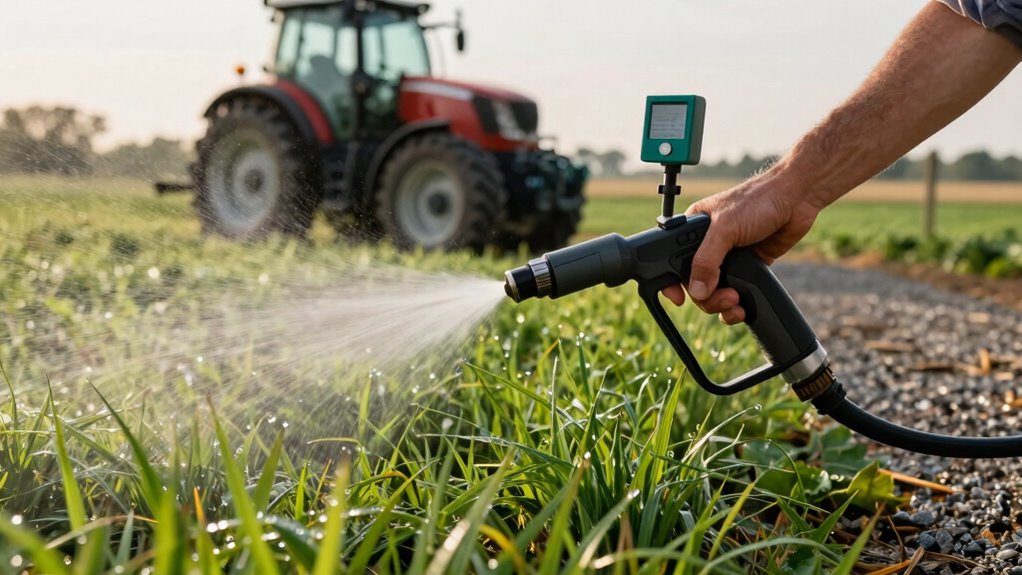

Proper sprayer calibration helps you apply chemicals evenly and accurately, protecting your pastures and saving your budget. It prevents wastage, reduces environmental impact, and keeps application rates consistent for healthy pasture growth. Regular checks and maintenance ensure your equipment stays reliable and performs at its best. By understanding how to calibrate correctly, you avoid over- or under-spraying. Keep exploring to learn the simple steps that make calibration a routine part of your pasture management.

Get garden gear delivered free with Prime
- Fast, free delivery on millions of items
- Prime Video, Amazon Music and more included
- Member-only deals all year
Key Takeaways
- Proper calibration ensures even chemical application, preventing pasture damage and optimizing resource use.
- Regular calibration maintains consistent application rates, safeguarding pasture health and reducing chemical waste.
- Proper nozzle selection and maintenance improve application accuracy, protecting pastures and avoiding costly mistakes.
- Frequent calibration checks detect issues early, ensuring efficient chemical use and budget savings.
- Accurate calibration minimizes environmental impact and prevents over- or under-spraying, supporting sustainable pasture management.
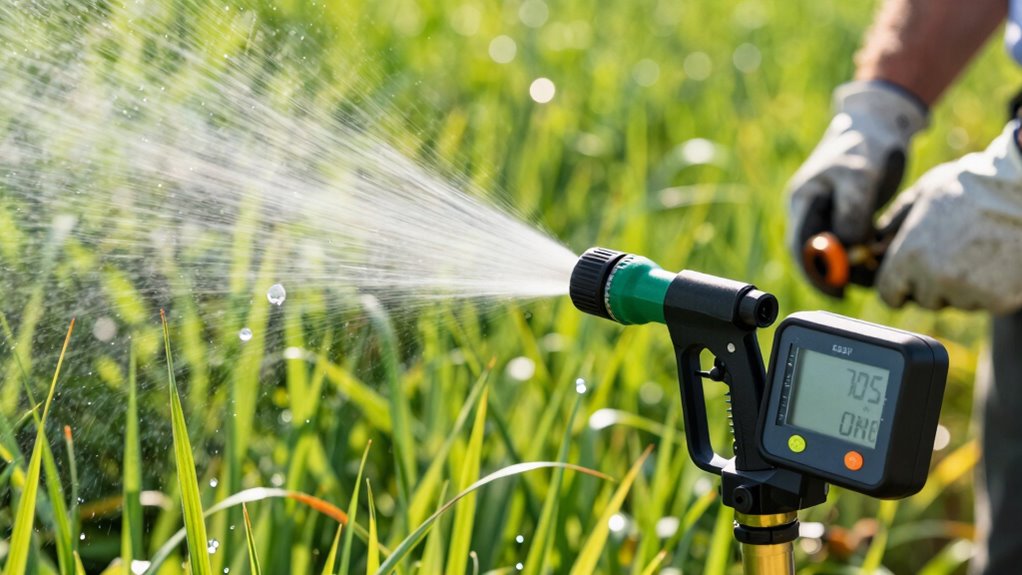
Have you ever wondered if your sprayer is applying chemicals evenly and accurately? If so, you’re not alone. Proper sprayer calibration is essential to ensure your pastures receive the right amount of treatment without wasting resources or risking damage. One key aspect of calibration is choosing the right nozzles, which directly impacts the effectiveness of your application. Effective nozzle selection involves considering spray pattern, droplet size, and flow rate to match your specific needs. For example, some nozzles produce larger droplets that reduce drift, making them ideal for windy conditions, while others create finer mist for thorough coverage. Getting this right helps you apply chemicals precisely where they’re needed, protecting your pasture health and preventing unnecessary chemical runoff.
In addition to selecting the right nozzles, following calibration frequency guidelines keeps your equipment in top shape. Regular calibration ensures your sprayer maintains consistent application rates, which is vital for both pasture health and your budget. How often should you calibrate? It depends on usage, but a good rule of thumb is to check your sprayer’s calibration before each spraying season and periodically during prolonged use. This way, you catch any issues early—clogged nozzles, worn parts, or pressure inconsistencies—that could lead to uneven application. Frequent calibration also helps you detect deviations from the intended application rate, allowing you to make adjustments before over- or under-spraying damages your pasture or wastes chemicals. Additionally, equipment maintenance plays a crucial role in maintaining calibration accuracy, as well-maintained equipment tends to perform more consistently. Regularly inspecting your nozzle wear ensures your spray pattern remains uniform and effective.
Calibration isn’t a complicated process, but neglecting it can have serious consequences. When you calibrate properly, you ensure the chemical volume dispensed matches your target rate, which means healthier pastures, fewer chemical costs, and minimized environmental impact. Remember, calibration involves measuring the output of your sprayer at a given pressure and speed, then adjusting your settings accordingly. It’s a simple step that can save you a lot of trouble down the line. Keep a record of your calibration results and schedule regular checks to stay consistent. Over time, equipment wear and changing weather conditions can affect spray patterns, so staying proactive is key. Understanding the science of spray patterns can help you optimize your application for various conditions and targets. Properly calibrated equipment also allows you to better understand the impact of spray droplet size, which influences coverage and drift.
As an affiliate, we earn on qualifying purchases.
Frequently Asked Questions
How Often Should Sprayers Be Calibrated During a Season?
You should calibrate your sprayer at least once every 10 to 15 acres or before each new chemical application to guarantee accurate dosage. Regular sprayer maintenance and calibration frequency help prevent overlaps, under-application, or wastage. Always check your equipment’s calibration if you notice uneven spray patterns, changes in pressure, or after long storage periods. Consistent calibration keeps your pastures healthy and your budget on track.
What Are Common Signs of a Poorly Calibrated Sprayer?
You’ll notice uneven spray patterns, which indicate issues with sprayer nozzle maintenance, and inconsistent application rates. You might also see drips or leaks, suggesting nozzle clogging or damage. Improper tank mixing procedures can cause uneven chemical distribution, leading to ineffective coverage. Regularly checking and cleaning nozzles, along with verifying your tank mixing procedures, guarantees your sprayer remains properly calibrated, protecting your pastures and budget.
Can Calibration Improve Pesticide Effectiveness?
Yes, calibration can greatly improve pesticide effectiveness. When you calibrate your sprayer, you guarantee proper application timing and chemical compatibility, reducing waste and enhancing results. Accurate calibration helps you deliver the right amount of pesticide precisely where needed, avoiding over-application or missed spots. This careful approach not only boosts pest control but also protects your pasture health, saving money and supporting sustainable practices.
What Tools Are Needed for Accurate Sprayer Calibration?
To calibrate your sprayer accurately, you need basic tools like a measuring cup, stopwatch, and a scale for precise measurements. Regular sprayer maintenance guarantees consistent performance. Use a calibration checklist to verify flow rates, pressure, and nozzle condition. These tools help you achieve even spray distribution, optimize pesticide use, and prevent waste. Proper calibration, combined with routine maintenance, ensures effective pest control and protects your pastures and budget.
How Does Calibration Impact Environmental Safety?
Calibration directly impacts environmental safety by ensuring you apply the correct amount of chemicals, reducing the risk of environmental contamination. When you calibrate your sprayer accurately, you protect wildlife by preventing excess runoff and drift that can harm ecosystems. Precise calibration helps you minimize unintended exposure, safeguarding both the environment and nearby habitats. This careful approach promotes sustainable farming practices and keeps wildlife safe from harmful chemical exposure.
Conclusion
By regularly calibrating your sprayer, you’re not only protecting your pastures from over-application but also saving money. Did you know that improper calibration can waste up to 30% of chemicals, costing you hundreds annually? Staying diligent with calibration guarantees you use only what’s needed, reducing waste and environmental impact. Make calibration a habit—your pastures and your budget will thank you for it. Consistent checks are the small step that makes a big difference.
Columbus Day / Indigenous Peoples' Day Picks
long weekend sales
As an affiliate, we earn on qualifying purchases.