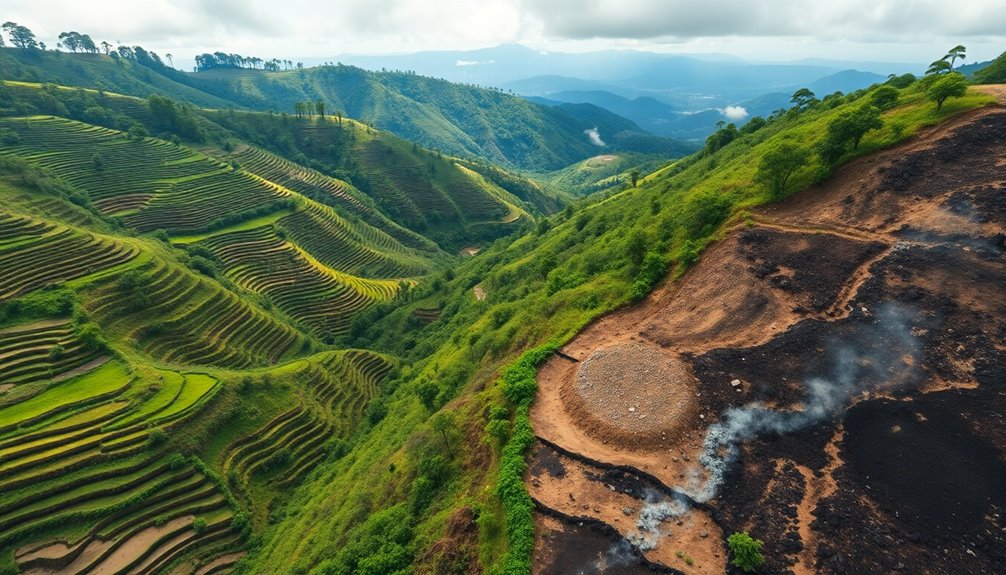
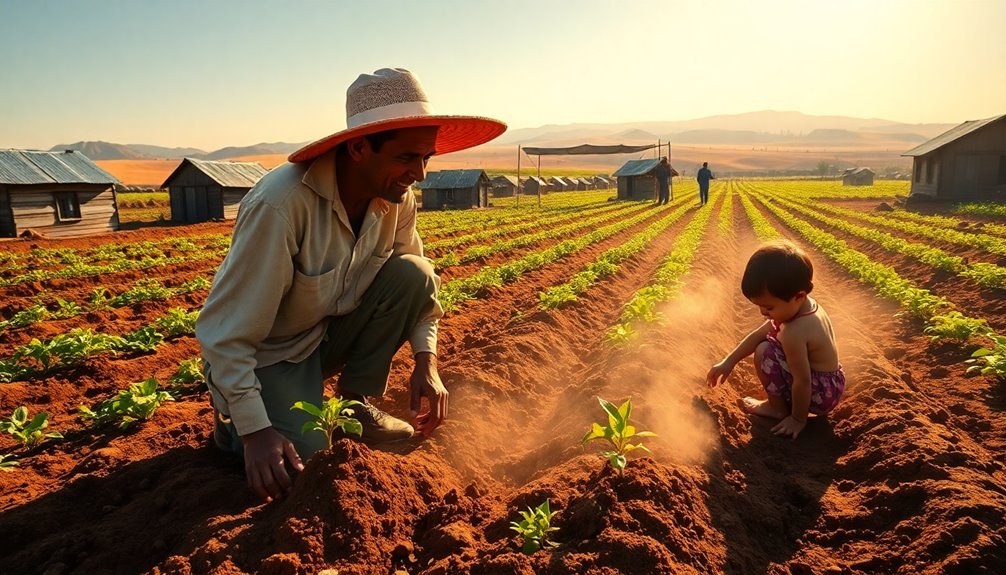
Terrace farming and slash-and-burn agriculture are quite different in their techniques and impacts. When you use terrace farming, you're creating stepped levels on slopes, which helps reduce soil erosion and supports diverse crops. In contrast, slash-and-burn involves cutting and burning vegetation, enriching the soil temporarily but leading to its rapid depletion. While terrace farming promotes sustainability and consistent yields, slash-and-burn requires frequent land rotation and can harm the environment. Each method adapts to specific landscapes, showcasing human ingenuity. Want to know more about how these practices shape agriculture? There's plenty more to explore!

Get garden gear delivered free with Prime
- Fast, free delivery on millions of items
- Prime Video, Amazon Music and more included
- Member-only deals all year
Key Takeaways
- Terrace farming involves creating stepped levels to reduce soil erosion, while slash-and-burn agriculture clears land by cutting and burning vegetation.
- Terrace farming supports diverse crops like grains and vegetables, whereas slash-and-burn primarily focuses on staple crops like corn.
- Terrace farming enhances soil quality and nutrient availability, while slash-and-burn leads to rapid soil depletion and degradation over time.
- Terrace farming is sustainable and promotes long-term agricultural viability, whereas slash-and-burn requires frequent land rotation and has diminishing yields.
- Terrace farming is commonly practiced in mountainous regions, while slash-and-burn is prevalent in tropical rainforests for quick land clearing.
Definitions of Farming Techniques
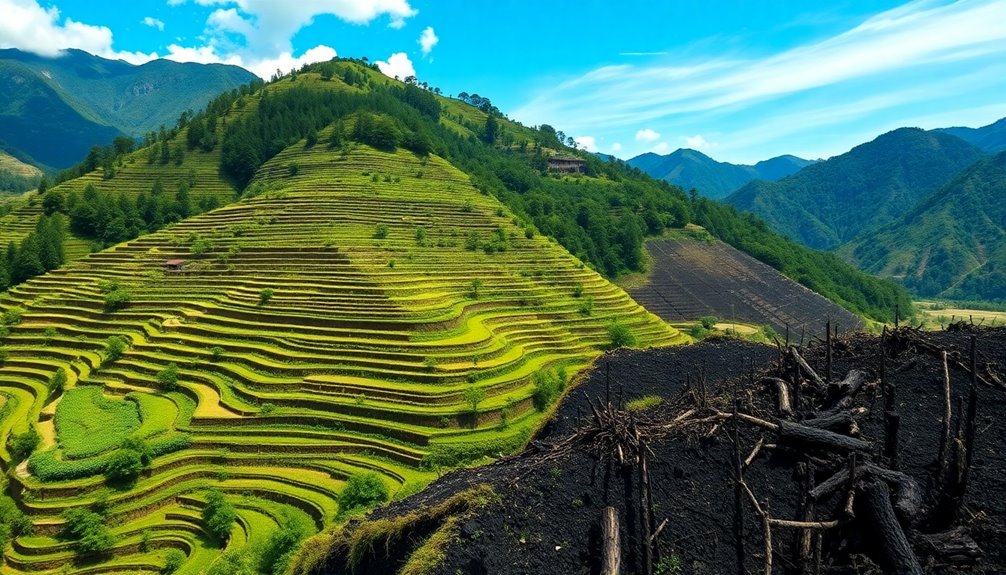
Farming techniques can vary considerably, each with its own unique approach and impact on the environment.
Terrace farming is a method that creates stepped levels on sloped land, effectively reducing soil erosion while maximizing arable land in mountainous regions. This technique promotes sustainable practices, allowing you to grow a diverse range of crops, including grains and vegetables.
On the other hand, slash-and-burn agriculture involves cutting down vegetation and burning it to clear land for cultivation. While it temporarily enriches the soil with nutrients from ash, it often leads to soil depletion and requires you to shift to new plots after a few years.
Geographic Applications
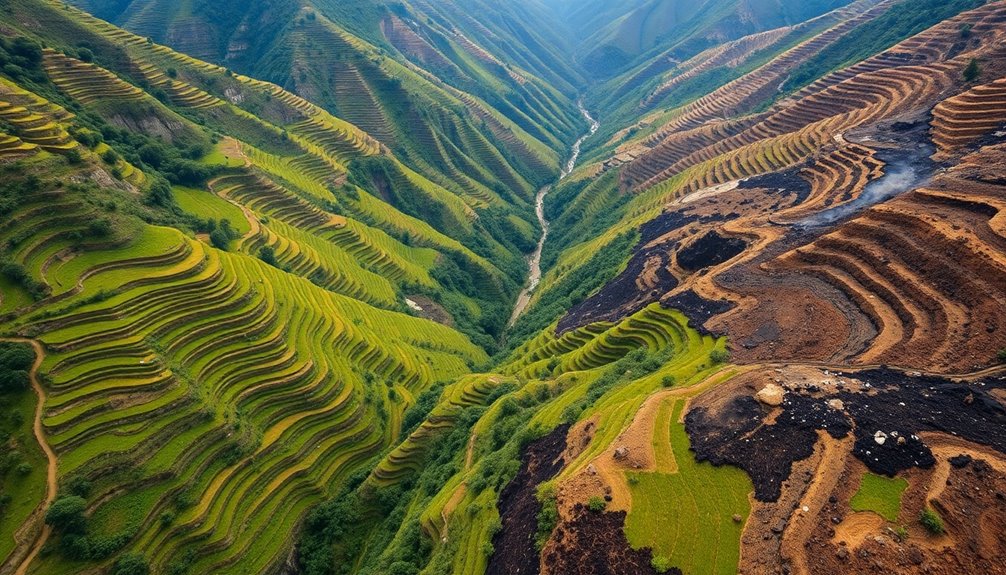
Understanding the geographic applications of terrace farming and slash-and-burn agriculture reveals how these techniques adapt to their environments.
Terrace farming differed greatly from slash-and-burn practices, as it's primarily used in mountainous regions like the Andes. Here, farmers create stepped levels to grow crops in mountain areas, maximizing arable land while reducing erosion.
In contrast, slash-and-burn agriculture allowed farmers to quickly clear tropical rainforest land for cultivation, typically focusing on staple crops like corn due to soil fertility limitations.
While terrace farming supports a variety of crops thanks to its diverse microclimates, slash-and-burn often leads to nutrient depletion, requiring farmers to relocate frequently to maintain productivity.
This geographic distinction highlights their differing environmental impacts and sustainability.
Crop Production Capabilities
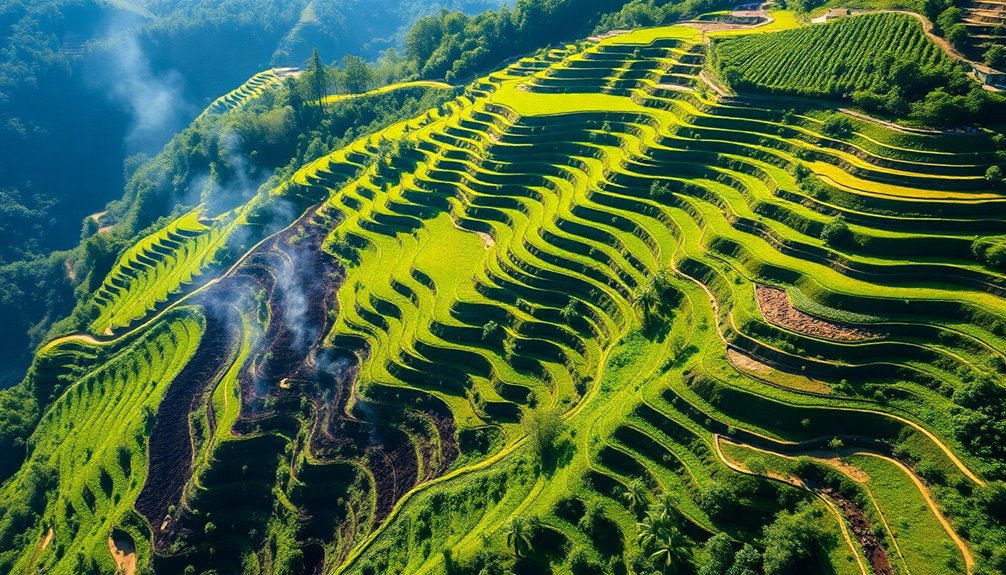
When it comes to crop production capabilities, terrace farming clearly outshines slash-and-burn agriculture. With its structured layout, terrace farming allows you to cultivate a diverse range of crops, including grains, vegetables, and fruits.
In contrast, slash-and-burn primarily focuses on staple crops like corn and cassava, which limits your crop variety. Terrace farming promotes better soil management and enhances nutrient cycling, leading to more stable yields and long-term agricultural productivity.
Unlike the rapidly depleting nutrients in slash-and-burn systems, terrace farms sustain nutrient availability over time, allowing you to reap consistent harvests. This long-term viability means you can rely on terrace farming for years, while slash-and-burn often requires frequent land rotation and yields diminishing returns.
Environmental Effects
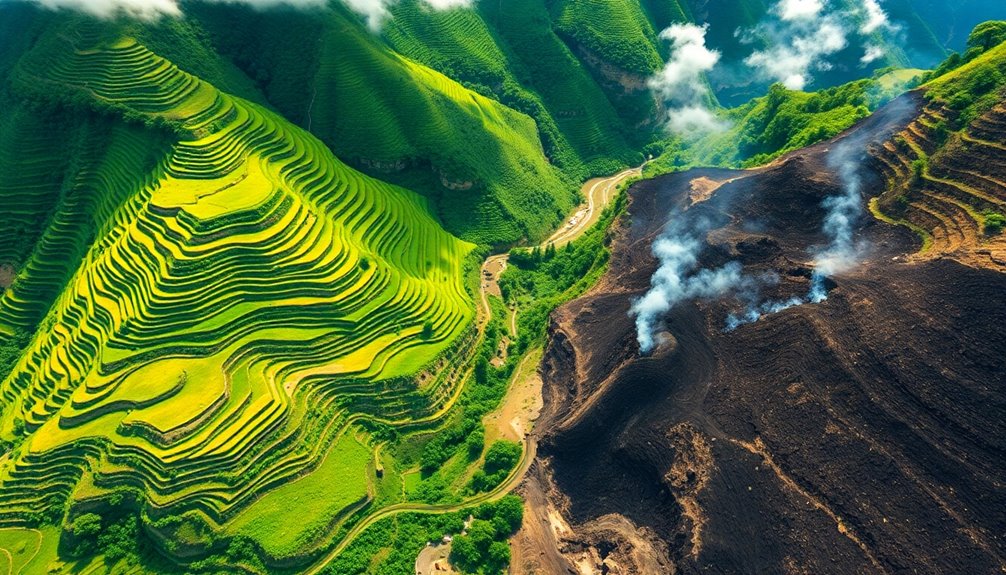
When you consider the environmental effects of terrace farming versus slash-and-burn agriculture, you'll notice a stark contrast in soil erosion control and biodiversity.
Terrace farming effectively reduces soil erosion, promoting healthier ecosystems, while slash-and-burn practices often lead to habitat destruction and loss of plant and animal diversity.
Understanding these impacts can help you appreciate the importance of sustainable agricultural methods.
Soil Erosion Control
Reducing soil erosion is essential for maintaining healthy ecosystems, and terrace farming stands out as an effective method for achieving this goal.
Unlike slash-and-burn agriculture, which often leads to significant soil degradation, terrace farming creates stepped levels that slow down water runoff, enhancing water retention and absorption.
Here are some key benefits of terrace farming in soil erosion control:
- Reduces soil loss by up to 80% compared to conventional farming.
- Maintains vegetation cover, promoting soil structure and health.
- Prevents topsoil exposure to wind and rain.
- Preserves soil quality over time, unlike slash-and-burn practices.
Biodiversity Impact Comparison
Terrace farming offers a remarkable advantage in promoting biodiversity compared to slash-and-burn agriculture. By creating varied microclimates, terrace farming supports a diverse range of crops, enhancing ecosystem resilience. In contrast, slash-and-burn practices lead to significant biodiversity loss due to habitat destruction and encourage monoculture. Studies show that terrace farming areas maintain higher species diversity, while slash-and-burn methods degrade soil health over time, harming both plant and animal species.
| Aspect | Terrace Farming | Slash-and-Burn |
|---|---|---|
| Biodiversity | High | Low |
| Soil Health | Improved | Degraded |
| Erosion | Reduced | Increased |
| Habitat Preservation | Yes | No |
| Ecosystem Resilience | Strong | Weak |
In essence, terrace farming is vital for maintaining a healthy ecosystem.
Historical and Cultural Context
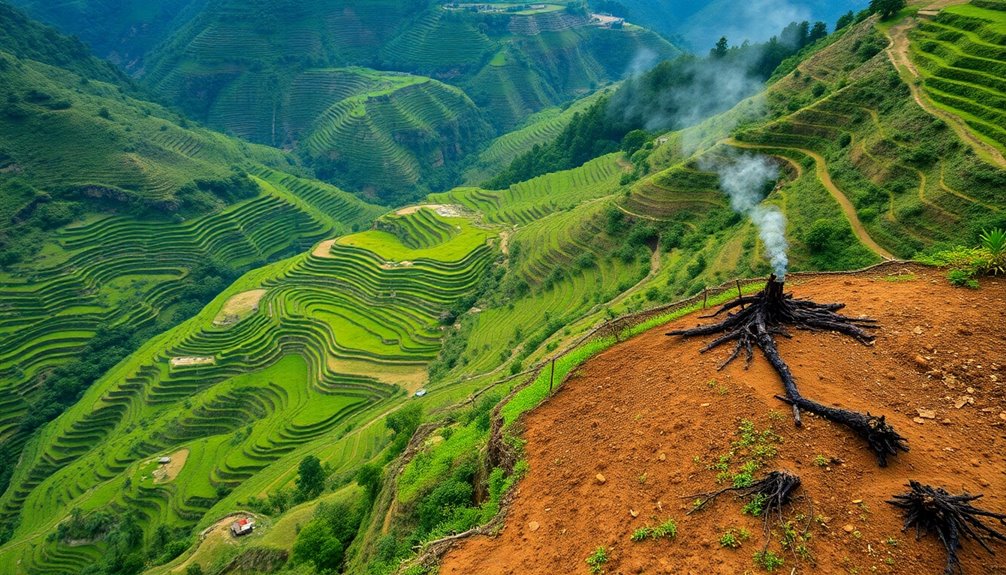
Agricultural practices like terrace farming and slash-and-burn have shaped human history and culture in profound ways.
These methods reflect how communities adapt to their environments, ensuring food security and cultural identity.
Here's how they've influenced societies:
- Cultural Roots: Terrace farming, seen in the Incas and Asian rice cultivators, showcases sustainable practices in mountainous terrains.
- Subsistence Living: Slash-and-burn agriculture supports indigenous communities by allowing them to cultivate diverse crops in tropical regions.
- Economic Impact: Terrace farming influences local economies by enhancing crop diversity and availability.
- Environmental Adaptation: Both practices highlight human ingenuity in responding to environmental challenges and resource limitations.
Understanding these cultural contexts is essential for appreciating the evolution of agricultural practices and their historical significance.
Key Differences
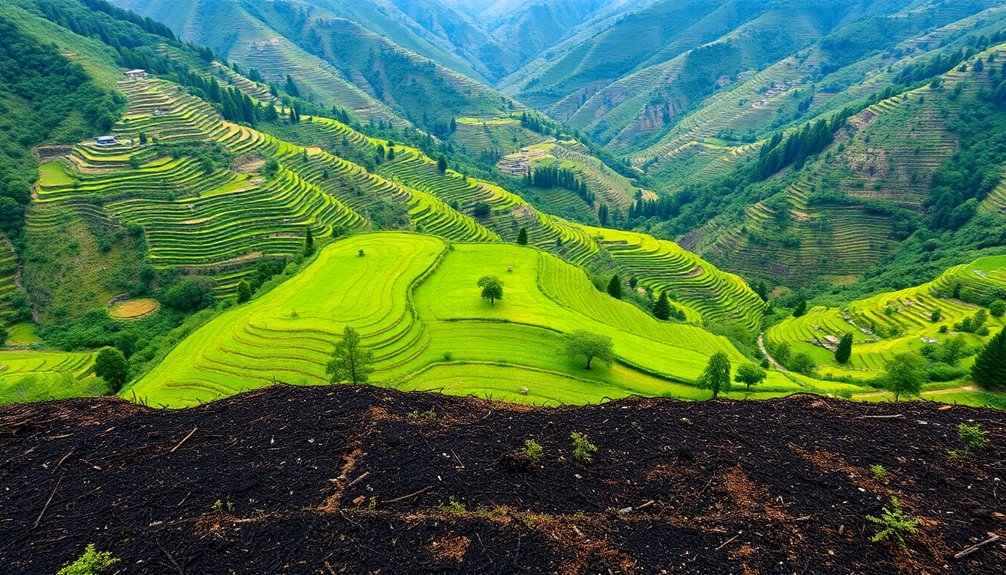
There are distinct differences between terrace farming and slash-and-burn agriculture that greatly impact their effectiveness and sustainability.
Terrace farming thrives in mountainous regions, allowing for a diverse range of crops due to stable microclimates. In contrast, slash-and-burn agriculture typically targets staple crops like corn in tropical rainforests.
When it comes to sustainability, terrace farming promotes long-term agricultural practices, while slash-and-burn depletes soil fertility over time. Additionally, terrace farming's stepped design effectively reduces soil erosion, whereas slash-and-burn contributes to soil degradation and nutrient loss.
Finally, you'll find that terrace farming requires more labor for construction and maintenance compared to the less labor-intensive slash-and-burn method.
These differences highlight the varying impacts on agriculture and the environment.
Long-Term Sustainability
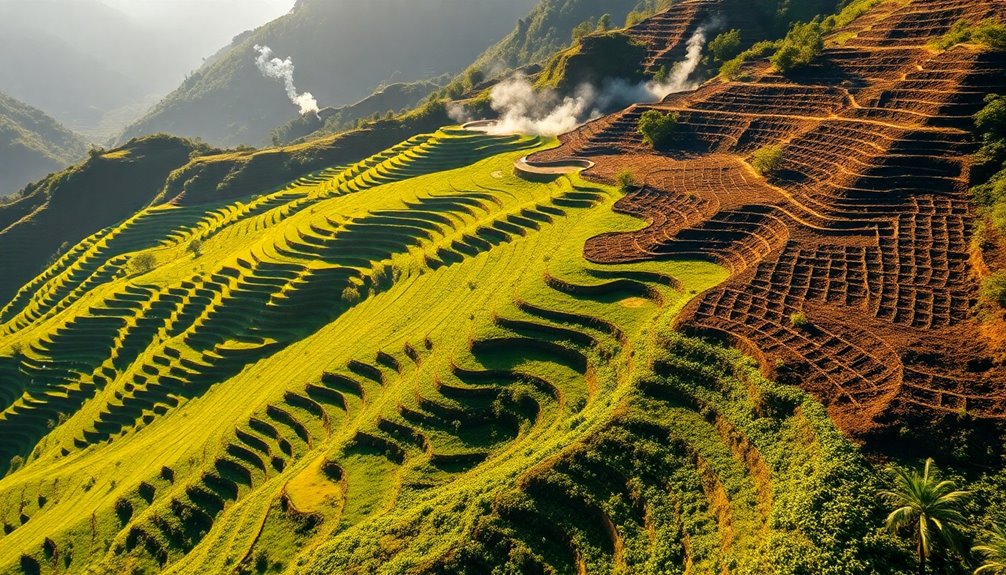
Understanding the long-term sustainability of farming methods reveals significant advantages for terrace farming over slash-and-burn practices.
Here's how terrace farming excels in maintaining sustainability:
- Soil Health: Terrace farming enhances soil retention, reducing erosion and promoting continuous cultivation.
- Nutrient Cycling: It supports efficient water management and nutrient cycling, further improving soil health.
- Stable Yields: Unlike slash-and-burn, which leads to declining yields due to nutrient depletion, terrace farming provides more consistent outputs over time.
- Environmental Impact: Terrace farming is more environmentally friendly, causing less deforestation and habitat loss compared to the extensive land clearing associated with slash-and-burn practices.
Frequently Asked Questions
What Is the Difference Between Slash-And-Burn Agriculture?
Slash-and-burn agriculture clears land by cutting down vegetation and burning it, creating temporary arable land.
You'll notice that it enriches the soil initially but degrades quickly, forcing you to move to new plots. This method's less labor-intensive, but it leads to significant environmental issues, like deforestation and loss of biodiversity.
Unlike sustainable practices, it creates a cycle of soil depletion and habitat destruction, impacting ecosystems and contributing to greenhouse gas emissions.
What Is the Difference Between Terrace Farming and Contour Farming?
Imagine transforming a steep mountain into a breathtaking staircase of crops! That's terrace farming for you.
In contrast, contour farming's like painting a landscape with your plow, following the land's natural curves.
While terrace farming creates stable, flat surfaces for diverse crops, contour farming embraces rolling hills, reducing erosion along the way.
Both methods champion water retention, but terrace farming's labor-intensive, requiring more effort to maintain those stunning, structured levels.
What Is Terrace Farming in Simple Terms?
Terrace farming's all about creating flat, stepped levels on sloped land to make farming possible where it usually isn't.
By shaping the land this way, you reduce soil erosion and can grow a variety of crops, like grains and veggies. It helps manage water better and keeps the soil rich in nutrients.
While it's hard work, terrace farming can lead to more stable yields over time, making it a smart choice for sustainable agriculture.
What Best Describes Terrace Farming?
Imagine walking through a breathtaking landscape of lush, green steps carved into the earth—this is terrace farming.
It's a method where you grow crops on stepped levels to combat soil erosion in hilly areas. By maximizing arable land, you create diverse microclimates that nurture various crops.
Though it takes effort to build and maintain, the rewards include better soil fertility and water retention, making it a sustainable choice for agriculture.
Conclusion
In summary, understanding the differences between terrace farming and slash-and-burn agriculture reveals much about sustainable practices. While terrace farming promotes long-term soil health and crop productivity, slash-and-burn can lead to environmental degradation if mismanaged. Isn't it essential for us to reflect on which methods will best support our food systems and ecosystems for future generations? By choosing sustainable practices, we can guarantee that our agricultural traditions evolve in harmony with nature.
Fall yard work Picks
leaf blowers
As an affiliate, we earn on qualifying purchases.