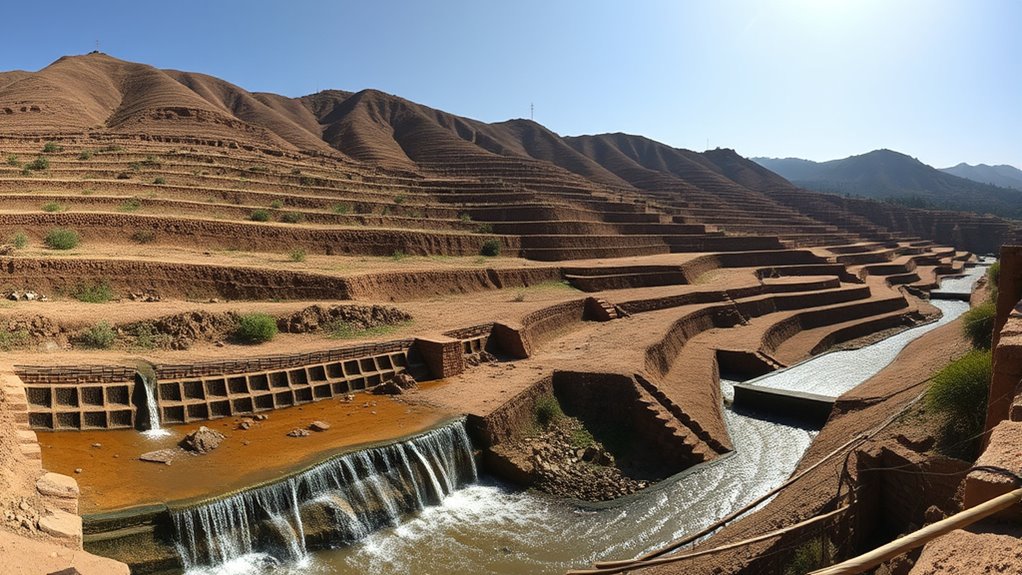

To improve water availability on your dryland farm, implement rainwater harvesting techniques like collecting runoff from rooftops or land surfaces into storage tanks. Combine this with contour bunding—earth embankments along natural land contours—to slow runoff, promote water infiltration, and reduce erosion. These methods, when used together, enhance groundwater recharge and soil moisture. By adopting these strategies, you can make your farm more resilient; continue exploring to discover how to optimize their effectiveness.
Key Takeaways
- Implement rooftop rainwater harvesting systems with gutters and storage tanks to capture seasonal runoff.
- Use contour bunding along natural land contours to slow runoff, promote infiltration, and prevent erosion.
- Combine rainwater harvesting with contour bunds to enhance soil moisture and groundwater recharge.
- Select local materials like soil, rocks, and grass to build effective earth embankments for contour bunds.
- Engage community members in planning, constructing, and maintaining integrated water conservation systems.
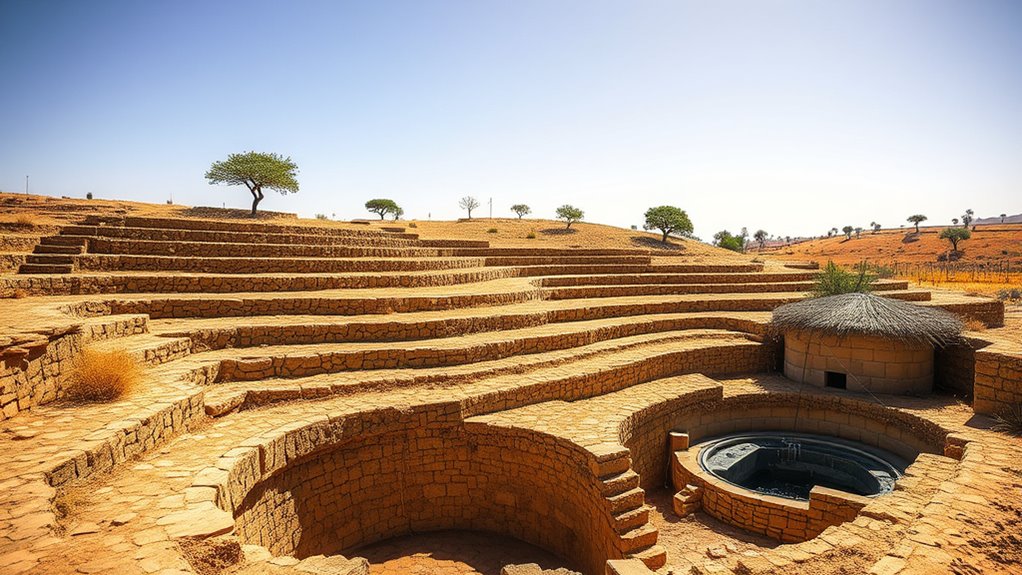
Have you ever wondered how to collect and conserve rainwater effectively? If you’re managing a dryland farm, implementing rainwater harvesting techniques can make a significant difference in your water availability throughout the year. One of the most practical methods is to design a system that captures runoff during rainy periods and stores it for future use. Rainwater harvesting involves collecting rainwater from rooftops or land surfaces and directing it into storage tanks or reservoirs. To maximize efficiency, you need to understand the importance of contour bunding, a technique that plays a critical role in rainwater management on hilly or uneven terrains. Contour bunding involves creating embankments along the natural contours of your land, which helps slow down water runoff, allowing it to seep into the soil instead of washing away valuable topsoil and water. These bunds act as barriers that intercept rainfall, promoting water infiltration and reducing erosion.
When implementing rainwater harvesting, start by evaluating your land’s topography. Mark the contours to identify the natural flow of water during rains. Building contour bunds along these lines ensures that water is captured and held back instead of rushing downhill, which minimizes soil erosion and encourages groundwater recharge. You can construct simple earth embankments using locally available materials like soil, rocks, or grass to create effective bunds. The key is to make them sturdy enough to withstand heavy rains while maintaining their shape over time. Position your rainwater harvesting systems at strategic points, such as rooftops, where gutters can direct water into storage tanks or into the land, following the contour lines. Incorporating community participation in the planning and maintenance of these systems can greatly enhance their effectiveness and sustainability.
Incorporating contour bunding into your water harvesting strategy helps in retaining water in the soil, which benefits crop growth and reduces dependence on external water sources. It also reduces surface runoff, which can carry away nutrients and organic matter essential for your farm’s productivity. To optimize the system, combine rainwater harvesting from rooftops with contour bunds on the land, creating a holistic approach to water conservation. This integrated method ensures that more rainfall is absorbed into the ground, recharging underground aquifers and maintaining soil moisture levels. Ultimately, these techniques help you build resilience against droughts and dry spells, allowing your farm to thrive even in challenging conditions. By adopting rainwater harvesting paired with contour bunding, you take control of your farm’s water resource management, ensuring a more sustainable and productive future.
Frequently Asked Questions
How Can I Measure the Effectiveness of Water Harvesting Techniques?
You can measure the effectiveness of your water harvesting techniques by tracking rainwater collection and analyzing soil moisture levels. Keep a record of how much rainwater you collect over time, and regularly test your soil moisture to see if it improves. If you notice increased soil moisture and higher rainwater collection, your techniques are working. Consistent monitoring helps you adjust methods for better water retention and farm productivity.
What Are the Initial Costs Involved in Implementing These Methods?
You’ll need to conduct a cost estimation to determine initial expenses, which include materials like catchment surfaces, storage tanks, and labor costs. An investment analysis helps you understand long-term benefits versus upfront costs. Typically, costs vary based on the size of your farm, chosen techniques, and local prices. Starting with a detailed budget guarantees you’re prepared financially, making it easier to plan and secure necessary resources for successful implementation.
Are There Specific Techniques Suitable for Particular Crops?
You can tailor water harvesting techniques to your crops by considering crop-specific strategies and soil compatibility. For example, shallow-rooted vegetables thrive with surface runoff collection, while deep-rooted grains benefit from underground reservoirs. Visualize your farm’s unique soil structure and moisture needs, then choose methods like contour harvesting or check dams accordingly. This targeted approach helps maximize water use efficiency, ensuring your crops stay healthy even in dry conditions.
How Do Water Harvesting Methods Impact Soil Health Long-Term?
Water harvesting methods improve soil health long-term by reducing soil erosion and increasing organic matter. When you implement these techniques, you help retain moisture, which prevents the soil from washing away during heavy rains. This encourages the buildup of organic matter, enriching the soil and promoting healthier crop growth. Over time, you’ll notice improved soil structure, better fertility, and more resilient dryland farms, making your land more productive and sustainable.
Can These Techniques Be Combined With Modern Irrigation Systems?
Yes, you can blend water harvesting techniques with modern irrigation systems. By integrating rainwater collection, you enhance soil moisture retention, making your irrigation more efficient. This combo conserves water, reduces runoff, and boosts crop health. Think of it as giving your farm a revitalizing boost, combining tradition with innovation. With careful planning, you’ll optimize water use and improve resilience against dry spells, ensuring sustainable productivity for years to come.
Conclusion
By implementing water harvesting techniques, you can greatly boost your dryland farm’s productivity. Did you know that properly designed rainwater harvesting systems can increase water availability by up to 50% during dry seasons? This means more reliable crops and better resilience against droughts. So, take action today—adopt these methods to conserve water, improve yields, and ensure your farm thrives even in challenging conditions. Your farm’s future depends on smart water management!