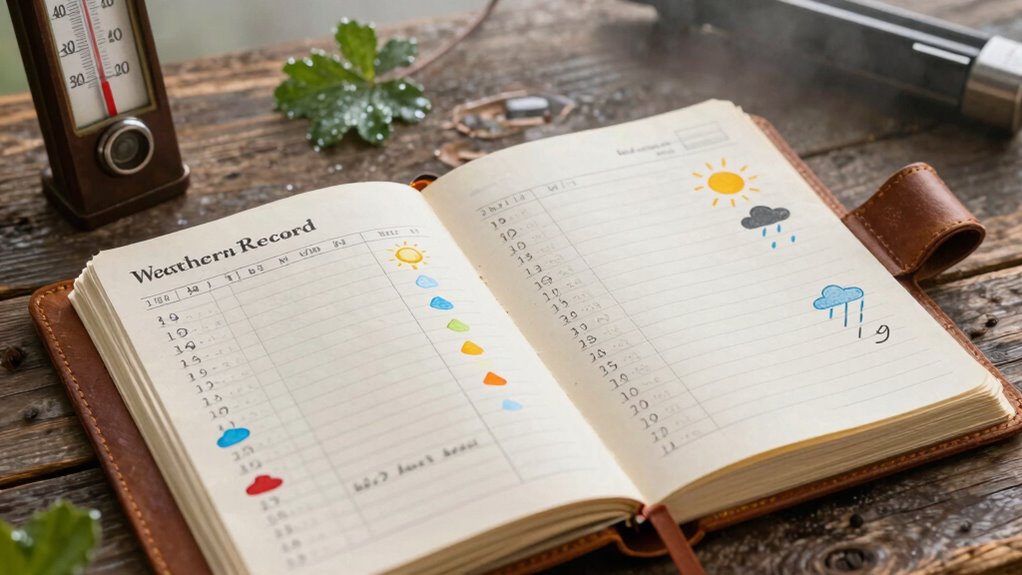

Including weather notes in your farm record book helps you track how environmental conditions affect your crops and livestock. By documenting temperature, rainfall, and other weather patterns, you can spot trends and adapt your practices proactively. This information allows you to make better decisions about planting, watering, and protecting your farm during extreme weather events. Keeping detailed records builds resilience and long-term success. Continue exploring to discover how to optimize your farm’s performance with weather data.

Get garden gear delivered free with Prime
- Fast, free delivery on millions of items
- Prime Video, Amazon Music and more included
- Member-only deals all year
Key Takeaways
- Weather notes help track climate patterns affecting crop growth and livestock health over time.
- They enable comparison between forecasted and actual conditions for better planning.
- Recording weather data optimizes seasonal farm activities like planting and irrigation.
- Weather notes provide crucial evidence for managing damage and insurance claims during adverse events.
- They support long-term climate adaptation strategies, improving farm resilience and productivity.

Keeping detailed weather notes in your farm records is essential for understanding how weather conditions impact your crops and livestock. As a farmer, you recognize that weather is unpredictable, but documenting it can reveal patterns that influence your farm’s success. Climate change has made weather more erratic, leading to unusual temperature swings, irregular rainfall, and extreme events. When you keep accurate weather notes, you can better recognize these shifts and adapt your practices accordingly. Over time, these records help you see how changing climate patterns affect your farm’s productivity, allowing you to make informed decisions. Incorporating local weather patterns into your records can further enhance your understanding of how specific conditions influence your farm, making your data even more valuable.
Keeping detailed weather records helps farmers adapt to climate change and improve farm productivity over time.
Weather forecasting is a valuable tool, but it’s not always precise enough to rely on solely. By maintaining your own detailed weather notes, you add a layer of local, real-time data that can complement forecasts. For example, if you notice a sudden drop in temperature or unexpected rainfall, your records will help you determine how it impacted your crops or animals. This insight enables you to refine your future planning, such as adjusting planting schedules or preparing livestock for extreme weather events. Your records serve as a practical reference, giving you a clearer understanding of how forecasted conditions align with actual weather patterns on your farm.
Recording weather conditions also helps you pinpoint the best times for planting, irrigation, fertilization, and harvest. When you note temperature highs and lows, humidity levels, wind speed, and precipitation, you create a detailed climate profile for your farm. This profile guides you through seasonal variations, ensuring you optimize your activities for maximum yield and animal health. Over time, you’ll notice trends—like how certain crops respond to specific weather patterns or how livestock fare during heat waves. This knowledge allows you to make proactive adjustments, reducing risks associated with unpredictable weather.
Moreover, detailed weather notes can be invaluable during adverse weather events. If a storm damages your crops or livestock, your records can help you identify the cause and evaluate the severity. They also serve as critical evidence if you need to file insurance claims or seek government assistance. Having an accurate history of weather conditions during extreme events strengthens your position and promotes better disaster preparedness.
Incorporating weather notes into your farm records isn’t just about tracking conditions; it’s about empowering yourself with knowledge. By understanding how climate change influences your local weather and integrating your own observations with weather forecasts, you can develop more resilient farming strategies. This proactive approach helps safeguard your livelihood, improve productivity, and adapt to an ever-changing climate landscape.
As an affiliate, we earn on qualifying purchases.
Frequently Asked Questions
How Detailed Should Weather Notes Be for Effective Farm Record-Keeping?
You should keep weather notes detailed enough to track weather patterns and improve data accuracy. Record daily conditions like temperature, rainfall, wind, and storms, including time of day if relevant. This level of detail helps you identify trends over time, aiding in decision-making for planting, harvesting, and livestock care. Precise, consistent notes guarantee your records are reliable, making your farm management more effective and responsive to changing weather conditions.
What Tools Are Best for Recording Weather Data on Farms?
You should use digital weather stations or smartphone apps for recording weather data, as they provide accurate, real-time updates that improve your weather forecasting. These tools help you track historical trends and anticipate future conditions, making your farm management more effective. By consistently recording weather with reliable tools, you create a valuable record that supports better decision-making and enhances your understanding of local climate patterns.
How Can Weather Notes Improve Crop Yield Management?
Weather notes help you manage crop yields better by tracking climate variability and spotting patterns that affect growth. When you record frost dates, rainfall, and temperature swings, you can time planting and harvesting more precisely. This also aids pest management, as you’ll recognize weather conditions that encourage pests or diseases. Ultimately, detailed weather notes enable you to adapt strategies quickly, optimizing yields despite unpredictable weather.
Are There Specific Weather Patterns Most Relevant to Farm Records?
Yes, certain weather patterns are most relevant to your farm records. You should track climate variability, such as changes in temperature and rainfall, which directly impact crop health. Seasonal trends are also vital, as they help you anticipate planting and harvesting times. Monitoring these patterns allows you to adapt your practices, optimize yields, and prepare for extreme weather events. Keeping detailed notes on these patterns enhances your overall farm management strategy.
How Often Should Weather Observations Be Recorded During the Day?
You should record weather observations at least three times a day—morning, midday, and evening—to capture rainfall frequency and wind speed accurately. This consistent recording helps identify patterns, such as heavy rainfall periods or high wind speeds, which are crucial for farm management. Regular notes ensure you notice changes that could affect crops or livestock, making your farm records more thorough and useful for future planning.
Conclusion
Including weather notes in your farm record book keeps you prepared, keeps you informed, and keeps your farm thriving. By tracking rainfall, temperature, and storms, you create a clear picture of your farm’s environment. This helps you plan planting, protect your crops, and anticipate challenges. Just as the weather shapes your days, your notes shape your farm’s success. Embrace weather notes as your farm’s story, guiding your decisions and securing your future.
Fall Picks
fall essentials
As an affiliate, we earn on qualifying purchases.