
TL;DR
Gardening Know How’s report says routine wound paint or sealant does not help trees recover after pruning or storm damage and may trap moisture or interfere with wound response. It identifies a narrow exception: protective treatment may be advised for certain oaks or elms in areas where oak wilt or Dutch elm disease is present.
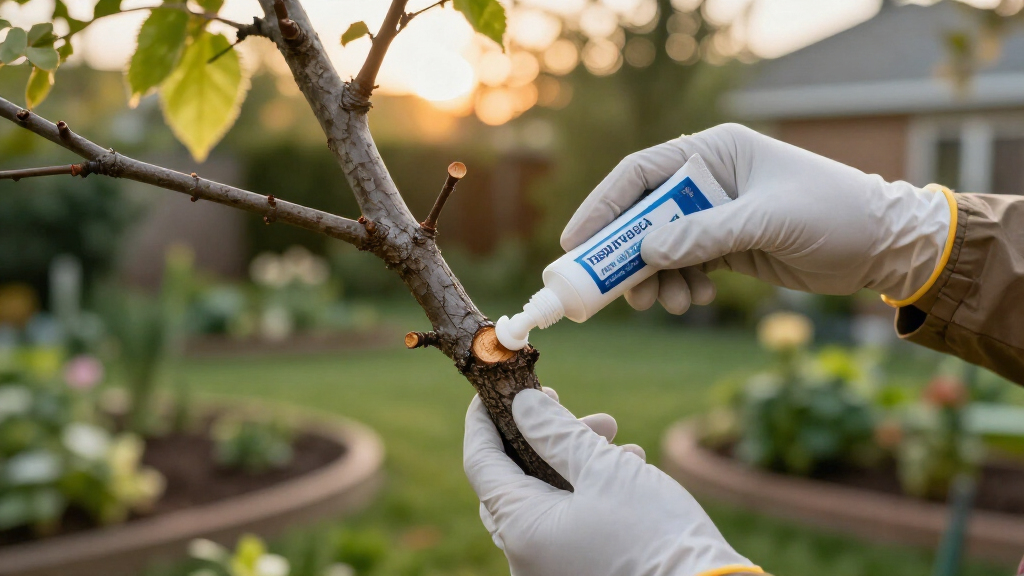
Gardening Know How’s latest Garden Mythbusters report says gardeners generally should not cover pruning cuts or storm-damaged tree wounds with paint, tar or other sealants. The report says routine dressings do not prevent decay and can retain moisture, while noting a limited disease-control exception for some oaks and elms in regions affected by oak wilt or Dutch elm disease.

Get garden gear delivered free with Prime
- Fast, free delivery on millions of items
- Prime Video, Amazon Music and more included
- Member-only deals all year
The report says the usual approach after pruning or storm damage should be to make a clean cut and leave it unsealed. It attributes the traditional practice to the assumption that trees heal like people: a coating might seem to keep germs out and sap in. But trees respond to injuries differently, and a wound dressing is not equivalent to a bandage or antiseptic treatment for human skin.
According to Gardening Know How, controlled trials discussed by arborists and tree scientists found that routine dressings did not prevent decay or provide added protection. The report says some treated wounds showed faster rotting and greater internal structural breakdown than wounds left exposed. It also describes how a dressing can crack as bark expands and contracts, allowing water to enter while slowing its evaporation. Trapped moisture can favor bacteria and fungi, and a thick coating may interfere with the tree’s formation of callus tissue at wound margins.
The report does not say sealants are never used. It describes a narrow exception involving fresh cuts on native oaks or elms where oak wilt or Dutch elm disease is a local threat. In those circumstances, a cut may release sap that attracts insects capable of spreading disease, and a dressing may serve as a barrier. The source’s excerpt ends before detailing the precise timing or application guidance, so the exception should not be treated as a general instruction to coat every damaged tree.
Why Routine Tree Dressings Can Backfire
The advice matters because tree sealants are widely sold as a way to protect a fresh cut, and a coating can feel like an immediate response to a broken limb or alarming sap flow. But the report’s central point is that covering a wound is not the same as helping it heal. Applying a product without a specific reason may retain moisture or obstruct the tree’s natural response instead of preventing infection.
For homeowners, the practical consequence is to avoid treating every pruning cut as an emergency that needs paint or tar. The report points toward sound pruning and species- and location-specific advice rather than routine dressing. That distinction also matters for disease control: where a local insect-spread tree disease makes a dressing appropriate, the purpose is to reduce transmission risk, not to speed healing. Local guidance can help determine whether that exception applies.
Popular right now

LG OLED evo C4 55-Inch 4K Smart OLED TV (OLED55C4PUA) with 144Hz Refresh Rate, HDMI Cable, 24-Month Protection Plan, and Streaming Bundle

Roborock Q7 M5+ Robot Vacuum and Mop with Self-Emptying Dock

Apple AirPods Pro (2nd Generation) Wireless Earbuds with USB-C MagSafe Charging Case
As an affiliate, we earn on qualifying purchases.
How the Sealant Advice Changed
Tree wound dressings became popular after gardeners drew a comparison with human cuts and worried that exposed wood would invite pests and disease. The report says petroleum-based asphalt paints, tar compounds and other thick sealants were marketed in the early 20th century as protective treatments. The exposed wood and visible sap made the idea intuitive, but that appearance did not establish that a coating improved the tree’s outcome.
Gardening Know How says evidence gathered later led arborists and tree scientists away from routine wound treatment. It reports that forestry institutions and the International Society of Arboriculture advise against routinely applying wound paints and sealants. The article frames this as a shift from treating wounds like human injuries to allowing trees’ own processes to respond to cuts.
““clean, unsealed tree cuts heal best on their own.””
— Gardening Know How
When Local Disease Changes the Advice
The source excerpt does not identify specific regions, seasons, products or application methods for the oak-wilt and Dutch-elm-disease exceptions. It also does not provide the names or full details of the trials it references. That means its general recommendation is clear, but whether an exception applies depends on local disease risk and the affected tree. The report’s truncated final passage does not supply the remaining qualifications, so readers should not infer a universal treatment rule from it.
It is also not clear from the report how its advice applies to every tree species or every kind of injury. The guidance discussed concerns routine dressings on pruning cuts and storm wounds; it is not a substitute for an arborist’s assessment of a large, dangerous or severely damaged tree.
Check Local Guidance Before Treating Cuts
For an ordinary pruning cut, the report’s advice is to leave it clean and unsealed, rather than applying paint or tar by default. If a tree is an oak or elm and local authorities identify a risk of oak wilt or Dutch elm disease, homeowners should check regional forestry or arboricultural guidance about whether a protective treatment is recommended and when it should be applied.
After substantial storm damage, the next step is to judge the damage and safety risk, not to cover the wound. A qualified arborist can advise on pruning and whether a tree needs further attention. The report offers no new trial results or scheduled follow-up; its main takeaway is a correction to common practice, with local disease conditions determining whether the narrow exception matters.
Key Questions
Should I put pruning paint on an ordinary tree cut?
Generally, no. The report says routine wound paints and sealants do not prevent decay or improve protection, and recommends leaving ordinary cuts unsealed.
Can sealant make a tree wound worse?
It may. Gardening Know How says dressings can crack, retain moisture and interfere with callus formation, conditions that may contribute to decay rather than prevent it.
Are there exceptions for oaks and elms?
The report identifies a limited disease-control exception for some oaks and elms in areas affected by oak wilt or Dutch elm disease. Check local guidance; the source excerpt does not give specific application instructions.
Does sap leaking from a cut mean the tree needs a sealant?
Not by itself. The report says visible sap can make a wound seem alarming, but routine sealing is not generally recommended. Local disease risk may affect advice for certain oaks and elms.
Source: gardeningknowhow.com