
TL;DR

Get garden gear delivered free with Prime
- Fast, free delivery on millions of items
- Prime Video, Amazon Music and more included
- Member-only deals all year
Homes & Gardens outlines five steps for preparing an outdoor drip irrigation system for winter: shut off water, drain the lines, remove the timer, protect exposed parts and store removable components. Irrigation specialists quoted in the report advise acting before the first hard freeze; the timing varies by location, and compressed-air blowouts should be handled by a professional.
Homes & Gardens has published five steps for preparing an outdoor drip irrigation system for winter, advising homeowners to shut off the water and drain the lines before a hard frost. The guidance matters because water left in pipes, valves or backflow equipment can freeze and expand, potentially causing damage and leaks, according to irrigation specialists quoted in the report.
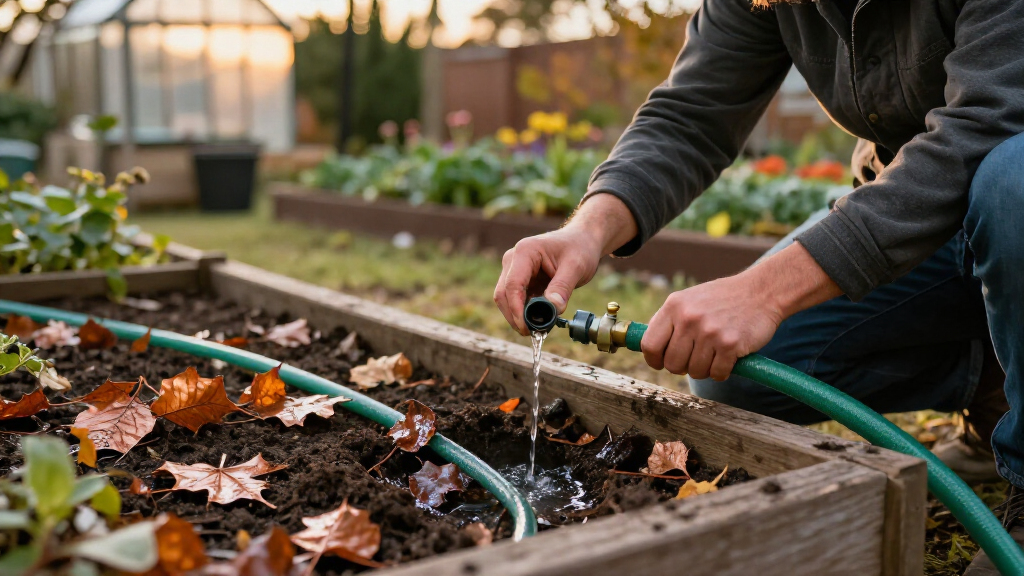
The recommended sequence begins by turning off the system’s water supply at its main source, tap or shut-off valve. Next, remove end caps or plugs and allow the lines to drain. Raising sections of tubing can help remaining water escape by gravity, though the report does not specify a single draining time that applies to every system.
For systems with a timer, the report advises disconnecting it, removing its batteries and storing it somewhere dry and protected. Homeowners should also drain and insulate exposed backflow preventers and valves. Foam pipe insulation or insulating tape can be used on exposed parts, while removal and warm storage may be an option if the system permits it.
The final step is to inspect and store removable parts, including tubing, drippers, control valves, fittings and controllers. The report recommends checking for cracks or other damage and keeping components in a dry, frost-free place such as a shed or garage. It says non-electrical parts can remain outside, but they may be at risk of winter damage.
Freeze Damage Can Reach Beyond Lines
Water expands as it freezes, and the report says that can crack irrigation pipes, damage valves or cause failures in backflow assemblies. Damage may also lead to water escaping into the garden or near the home. The report notes that a burst pipe or backflow preventer can require shutting off water to the entire house to stop a leak, according to irrigation repair specialist Justin Wilson.
Winterizing is also a way to protect equipment for the next growing season. Draining and storing components can reduce the chance that homeowners will face repairs or need to replace parts before restarting irrigation in spring. The report does not quantify likely repair costs or how often freeze damage occurs, so the financial risk will depend on the system and the extent of any damage.
Popular right now

Ninja Luxe Café Premier 3-in-1 Espresso Machine, Drip Coffee Maker, and Cold Brew Maker

Sony WH-1000XM6 Wireless Noise-Canceling Headphones, Black

De'Longhi La Specialista Opera Espresso Machine with Coffee Grinder
As an affiliate, we earn on qualifying purchases.
Timing Depends on Local Frosts
The report says the system should be drained and shut down before the first hard frost, rather than on one fixed calendar date. Depending on location, first frosts may arrive from early October through December. Local forecasts can help homeowners judge when to act.
Wilson, owner of American Irrigation Repair, says hard freezes in his Central Texas service area typically occur in January or February, though some years bring no frost there. His timing advice is tied to that region: watch the forecast and prepare ahead of a hard freeze. Heather Todd, brand president of Conserva Irrigation, recommends winterizing before the first freeze of the year.
“Water left in irrigation lines or backflow preventers can freeze and expand, potentially cracking pipes, damaging valves, or causing backflow assembly failures.”
— Heather Todd, brand president of Conserva Irrigation
System Designs And Local Conditions Vary
The report does not provide a universal schedule or procedure for every drip irrigation setup. Frost dates differ by location, and system layouts determine which components can be drained, removed or stored. It also does not establish how much water will remain after gravity draining in a particular system.
Pressurized-air blowouts can remove water from lines, but Todd warns that compressed air can damage pipes if used incorrectly. The report recommends having a professional perform that work. It does not give equipment-specific pressure settings, so homeowners should not infer a safe setting from this guidance.
Check Forecasts And Inspect Equipment
Homeowners should use local short- and long-range forecasts to plan winterization ahead of the first hard frost, then inspect stored parts for cracks or other damage when preparing the system for spring. If a line cannot be drained fully or the setup includes a backflow preventer that requires specialized handling, the report points to professional winterization as an option.
After freezing weather passes, the system’s condition will need to be checked before it is put back into service. The source report does not give a spring restart procedure or announce any new industry rules; its guidance is seasonal maintenance advice.
Key Questions
When should I winterize a drip irrigation system?
Complete winterization before the first hard frost in your area. The report says frost timing varies by location, so check local forecasts rather than relying on one calendar date.
What are the five winterization steps?
Shut off the water, drain the lines, remove and store the timer, protect exposed backflow preventers and valves, and store removable components in a dry, frost-free place.
Can I use compressed air to clear the lines?
The report says pressurized air can be used to evacuate water, but it can damage pipes if handled improperly. Heather Todd recommends having a professional winterization service do the work.
Which parts need protection from freezing?
Pay particular attention to water-filled lines, exposed valves and backflow preventers. Drain removable parts and store them indoors or in another dry, frost-free location where possible.
Source: homesandgardens.com