TL;DR

Get garden gear delivered free with Prime
- Fast, free delivery on millions of items
- Prime Video, Amazon Music and more included
- Member-only deals all year
An Amateur Gardening report features five plants recommended by horticulture expert Simon Wilkinson for adding colour and texture to gravel gardens: Mexican feathergrass, English lavender, catmint, Adam’s needle and creeping thyme. Wilkinson says choosing plants suited to free-draining conditions, planning drainage and avoiding overcrowding can help create a garden that needs less upkeep once established.
Horticulture expert Simon Wilkinson has recommended five plants for gardeners looking to add colour and texture to gravel gardens: Mexican feathergrass, English lavender, catmint, Adam’s needle and creeping thyme. In a report by Amateur Gardening, Wilkinson said that choosing plants suited to free-draining soil can help make a gravel garden visually varied while keeping its upkeep modest once plants are established.
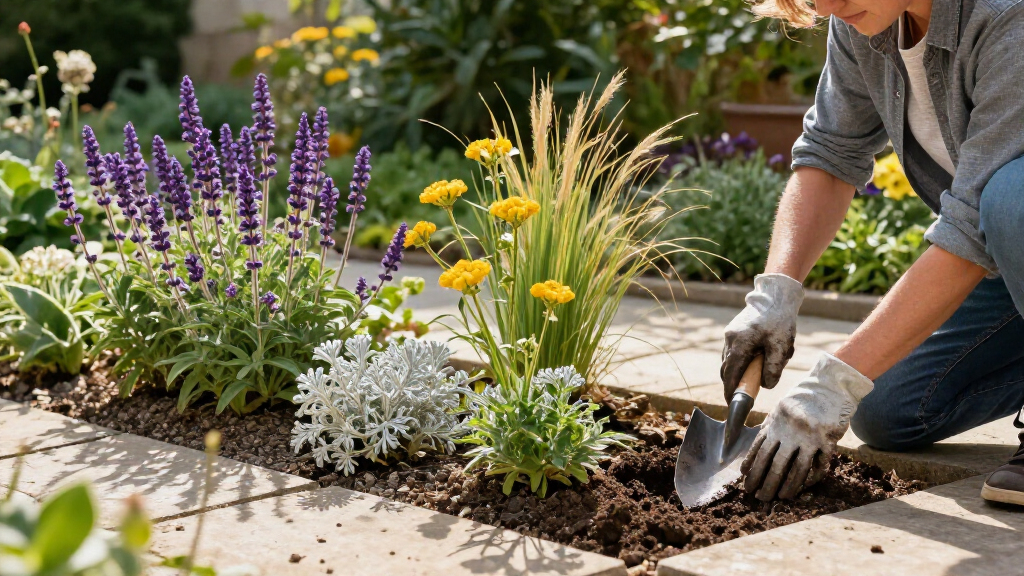
The five suggestions offer different forms and uses. Mexican feathergrass (Stipa tenuissima) brings movement, its fine leaves shifting in the breeze. English lavender adds purple flowers and fragrance; Wilkinson describes it as drought-tolerant and attractive to pollinators. The report advises pruning lavender after flowering to help keep it compact.
Catmint (Nepeta ‘Walker’s Low’) produces pale blue and purple flowers and is presented as a low-care companion to lavender. Adam’s needle (Yucca filamentosa) is evergreen and can send up tall white flower spikes, but needs good drainage and does not tolerate sitting in wet soil. Creeping thyme stays close to the ground and can be planted between stepping stones or among rocks, including in smaller spaces.
Wilkinson’s wider advice is to check the site’s drainage before planting, select a sunny, open area for plants that prefer dry conditions, and leave enough room for growth. He also recommends repeating varieties rather than packing in many different plants. The report says gravel gardens can support pollinators and insects when planted with wildlife in mind; it does not provide measured data on wildlife benefits or maintenance savings.
Plant Choices Shape Gravel Gardens
The recommendations address a common design concern: gravel does not have to mean a bare, uniform surface. Combining flower colour, evergreen structure and fine-textured foliage can create contrasts against stone, while plants with different heights and growth habits can make a small area feel more considered.
There is also a practical point for gardeners facing dry conditions: plants suited to free-draining soil may need less attention after they become established. That is not a guarantee of zero maintenance. Lavender needs pruning, and all plants require suitable conditions and care while establishing. The report offers expert guidance, not a trial comparing water use, upkeep or performance across different garden types.
Popular right now

Bose QuietComfort Wireless Noise-Cancelling Over-Ear Headphones, Black

Dyson Ball Animal Total Clean Upright Vacuum

iRobot Roomba Max 715 Pet Robot Vacuum with AutoEmpty Dock
As an affiliate, we earn on qualifying purchases.
Designing Around Drainage
The Amateur Gardening report frames gravel gardens as an option for gardeners responding to changing conditions and a period of unusually hot weather in the UK. Its core advice is to match planting to the site rather than assume gravel alone will solve problems with water or weeds.
Wilkinson suggests clearing weeds before laying gravel and says a weed membrane may be used if required. The report gives a guide of about 2 inches of gravel and suggests brick or wooden edging to keep it contained. It also cautions that low-lying or damp areas need a different approach: gardeners should work with those conditions and choose plants suited to them, rather than forcing dry-loving species into wet soil.
“The absolute key to a successful gravel garden is choosing plants that are happy in free-draining conditions.”
— Simon Wilkinson, quoted by Amateur Gardening
What the Plant Advice Cannot Guarantee
The source does not give a publication date, identify a specific garden site, or provide trial results comparing the five plants’ water needs, survival rates or maintenance requirements. Terms such as “low-maintenance” are guidance rather than a quantified promise, and performance will depend on local climate, soil and establishment care.
The report also does not specify whether Mexican feathergrass is suitable for every region or address local restrictions on planting it. Gardeners should check whether a species is appropriate for their location before buying it. Its general suggestions about sun and free-draining soil do not replace site-specific advice, especially in damp or low-lying gardens.
Check the Site Before Planting
For gardeners following the advice, the next step is to assess the intended area’s sun exposure, soil and drainage, then choose plants that suit those conditions. The report offers no announced follow-up study or scheduled development. Practical results will depend on how the plants perform after planting and establishment in each garden.
Before laying gravel, gardeners can clear existing weeds, consider whether membrane is appropriate, and plan edging and spacing. They should allow for plant growth, repeat varieties where that suits the design, and prune English lavender after flowering. In damp areas, Wilkinson’s advice is to select plants that tolerate moisture rather than relying on the five dry-condition recommendations.
Key Questions
Which five plants does Simon Wilkinson recommend?
He recommends Mexican feathergrass, English lavender, catmint, Adam’s needle and creeping thyme for their differing colours, textures and forms.
Do gravel gardens need full sun?
The report says many drought-tolerant plants suited to gravel gardens benefit from a sunny, open location. The right position depends on the plants selected and the conditions in the garden.
What is the most important condition for these plants?
Wilkinson stresses good drainage. Adam’s needle, in particular, dislikes sitting in wet soil; damp or low-lying areas may need plants suited to wetter conditions instead.
How can a gravel garden avoid looking sparse or disorganised?
The report recommends combining plants with different forms and repeating selected varieties for consistency. It also cautions against overcrowding the space with too many kinds of plants.
Are gravel gardens automatically beneficial for wildlife?
No automatic benefit is established in the report. Wilkinson says a well-planned gravel garden can provide a place for pollinators and insects, and the recommended lavender and catmint are described as attractive to pollinators. The source gives no measurements of wildlife impact.
Source: amateurgardening.com