
TL;DR

Get garden gear delivered free with Prime
- Fast, free delivery on millions of items
- Prime Video, Amazon Music and more included
- Member-only deals all year
A marionberry is a specific trailing blackberry cultivar developed through a USDA and Oregon State University breeding program and released in 1956. It is associated with Oregon’s Willamette Valley, where its soft, aromatic fruit is harvested in summer and used fresh or in products such as jam and pie.
Marionberries are a named type of blackberry, not a separate berry species, and the cultivar was developed in Oregon through a cooperative breeding program involving the U.S. Department of Agriculture and Oregon State University. Released in 1956, the fruit is closely associated with the Willamette Valley and is known for its aromatic, sweet-tart flavor and soft texture.
The cultivar’s parent varieties are ‘Chehalem’ and ‘Olallie’, both blackberries. Early testing took place in Oregon, including around Marion County, which inspired the name. The fruit is dark purple to nearly black when ripe. Its softness calls for careful handling and can make it less suited to transport over long distances than firmer blackberry varieties.
Marionberries are eaten fresh and used in jam, sauces, baked goods and pie. Their flavor is often described as sweet with noticeable tartness and a strong aroma. The comparison sometimes made between marionberries and wine—calling the fruit the “Cabernet of blackberries”—is a flavor description, not a scientific classification.
Oregon is the center of commercial marionberry production, with the Willamette Valley a key growing region. Historical Oregon sources cited by Grow Organic report annual production of about 28 million to 33 million pounds during the periods those reports covered. That range is historical, not a current annual production estimate; the source does not specify a single year or a present-day total.
Why Oregon Keeps Its Marionberry
The marionberry’s importance is both agricultural and regional: a cultivar developed in Oregon became closely tied to the state’s identity as a producer of trailing blackberries. Its familiar use in pies, preserves and other foods gives consumers a practical reason to seek it out, especially during the summer harvest.
Its growing and handling traits also shape where shoppers may find it. Because ripe fruit is soft and delicate, it may be less common in distant supermarkets than sturdier varieties. During harvest, local farmers markets and other sellers in growing regions can be more likely places to find fresh berries. The historical production figures point to the crop’s scale in past reports, but they should not be read as evidence of current output.
Popular right now

KitchenAid Artisan 5-Quart Tilt-Head Stand Mixer, Almond Cream

De’Longhi Classic Matte Black Espresso Machine with Milk Frother

Samsung 48-Inch S90H OLED 4K Smart TV (2026)
As an affiliate, we earn on qualifying purchases.
From Oregon Breeding to Summer Harvest
The ‘Marion’ blackberry came from a cooperative breeding effort by the U.S. Department of Agriculture and Oregon State University. The cultivar was released in 1956 after testing in Oregon. Its name reflects its connection to Marion County, while its later reputation became closely linked with the Willamette Valley and the wider Pacific Northwest.
Marion is one cultivar within the larger blackberry group. Put another way, every marionberry is a blackberry, but most blackberries are not marionberries. The source describes marionberries as trailing plants and distinguishes them from boysenberries by their parentage. Mulberries are a separate comparison: they grow on trees and are not the same kind of plant.
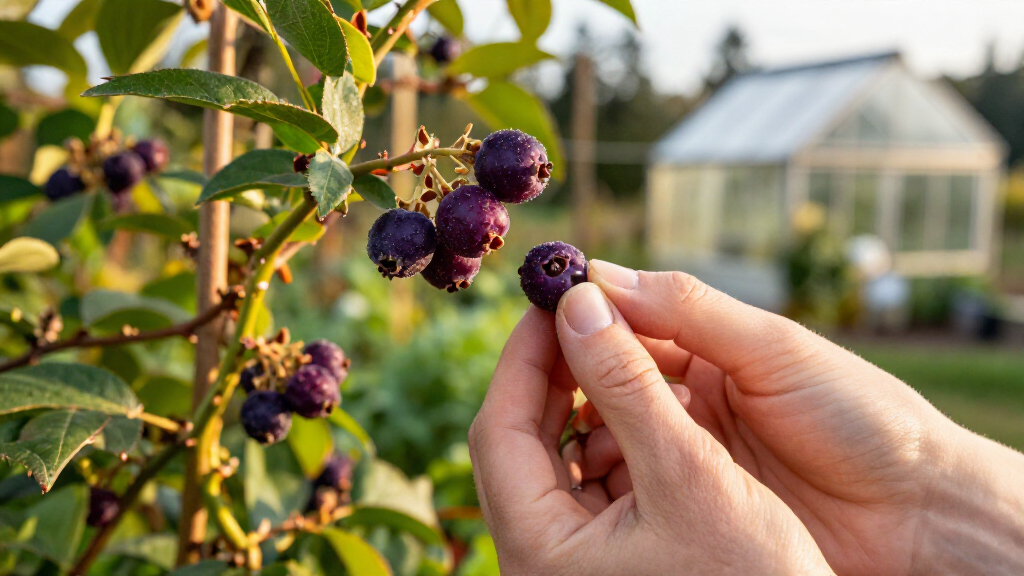
In Oregon, trailing blackberries generally ripen in summer, although the exact timing varies with location, weather and growing season. The berries are ready to pick when fully dark and when they come away with a gentle pull. Grow Organic advises handling them carefully and cooling them soon after harvest.
““The Cabernet of blackberries””
— Grow Organic
Current Crop Figures and Local Conditions
The supplied material does not give a current year’s marionberry production total, current acreage or a specific harvest forecast. Its 28 million to 33 million-pound range is attributed to historical Oregon sources without a stated year-by-year breakdown, so it cannot establish how much is being grown now.
Harvest dates also vary by growing season and location. The source gives no fixed statewide start or end date. It lists USDA Zones 6–9 as a general growing range, while cautioning that hardiness zones alone do not describe all site conditions. Results depend on factors such as winter cold, sunlight, drainage and summer moisture.
Harvest Timing and Growing Advice
For consumers, the next practical marker is the local summer harvest. Timing depends on the season and location, so shoppers seeking fresh fruit can check with regional farmers markets and growers rather than assume a single statewide date. Ripe berries should be fully dark, release easily with a gentle pull and be handled carefully.
For gardeners, Grow Organic recommends choosing a suitable sunny site with well-drained soil, summer moisture and protection from damaging winter cold. Marionberry canes trail and need a sturdy trellis. The plant has a two-year cane cycle: first-year canes grow, while second-year canes bear fruit. After harvest, spent fruiting canes are removed and healthy new canes are kept. Gardeners should check local Extension guidance for advice suited to their area.
Key Questions
Are marionberries the same as blackberries?
Marionberries are one blackberry cultivar. The word “blackberry” describes a broader group of plants, while ‘Marion’ is a specific named type.
What do marionberries taste like?
Ripe marionberries are aromatic, juicy, sweet and noticeably tart. Flavor can vary with ripeness and growing conditions.
Where are marionberries grown?
Oregon is the main region associated with commercial marionberry production, particularly the Willamette Valley. The plants may grow elsewhere where climate and site conditions are suitable.
When are marionberries in season?
In Oregon, trailing blackberries generally ripen in summer. The precise timing varies with the cultivar, location, weather and growing season.
What are marionberries’ parent varieties?
The ‘Marion’ cultivar resulted from a cross between the blackberry varieties ‘Chehalem’ and ‘Olallie’.
Source: rss