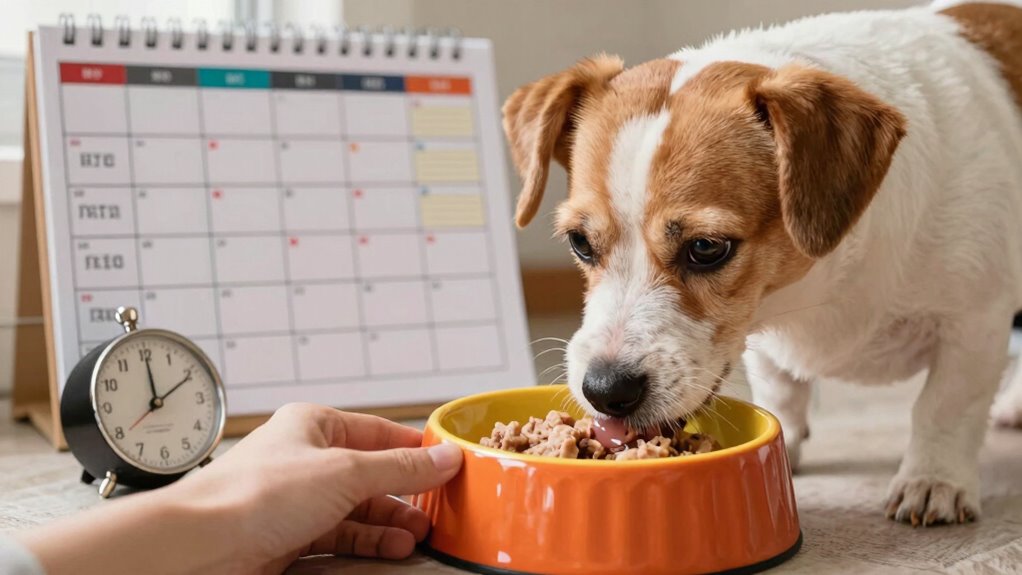
To help stressed pets eat again during emergencies, establish a consistent feeding schedule by offering small, frequent meals every 4-6 hours. Use easy-to-digest, tempting foods like warmed rice or chicken, ensuring water and hydration are always available. Maintain a calm environment and stick to routine to reduce anxiety. Staying attentive and consistent encourages your pet’s appetite and recovery; more helpful tips await to guide you through the process.

Get garden gear delivered free with Prime
- Fast, free delivery on millions of items
- Prime Video, Amazon Music and more included
- Member-only deals all year
Key Takeaways
- Establish a consistent feeding schedule every 4-6 hours to provide stability and reduce anxiety.
- Offer easily digestible, tempting foods like warm, aromatic, or recovery-specific meals to stimulate appetite.
- Maintain free access to fresh water and use small doses of fluids for dehydrated pets.
- Minimize environmental stressors and create a calm, secure feeding area to support recovery.
- Follow routine and be attentive to pet cues to encourage eating and rebuild normal habits.

During an emergency, having a clear feeding schedule for your pets can make a significant difference in maintaining their health and well-being. When stress levels are high and routines are disrupted, your pets can easily become anxious or refuse to eat. Establishing a consistent, easy-to-follow plan helps reassure them and guarantees they receive the necessary nutrients to stay healthy. In these situations, understanding pet nutrition is essential—knowing what types of food and feeding methods best support their recovery and stress management can make a big difference. Feeding tips like offering smaller, more frequent meals can help stimulate appetite and prevent gastrointestinal upset, which stressed pets are more prone to.
Maintaining a consistent feeding schedule helps pets feel secure and supports their recovery during stressful emergencies.
You should aim to keep feeding times as consistent as possible, ideally spreading meals throughout the day, such as every four to six hours. This regularity provides a sense of stability amid chaos and helps prevent sudden drops in energy or dehydration. When choosing pet food during emergencies, prioritize easily digestible options, like boiled chicken, rice, or specially formulated pet recovery foods, which are gentle on their stomachs and rich in essential nutrients. Avoid sudden changes in diet, as that can cause further gastrointestinal upset. If your pet is refusing to eat, don’t force feed them; instead, try offering tempting, warm, or aromatic foods that appeal to their senses. Sometimes, adding a little warm water or broth can make dry kibble more enticing and easier to swallow.
Monitoring your pet’s hydration is equally important. During stressful times, pets often forget to drink. Make sure fresh water is always available, and consider using a syringe or dropper to give small amounts of water or electrolyte solutions if dehydration becomes a concern. Proper hydration is crucial because dehydration can exacerbate stress and health issues which can impair recovery. Recognizing that biodiversity and environment-related factors can influence a pet’s resilience and recovery is also important in emergency planning. Additionally, understanding how environmental factors impact a pet’s stress levels can help in developing more effective recovery strategies. Properly managing stress levels is essential because prolonged stress can weaken a pet’s immune system, making recovery more difficult. Remember, stress can affect a pet’s ability to digest and absorb nutrients, so maintaining a balanced diet that includes pet nutrition fundamentals is essential for their recovery.
In the end, your goal is to keep your pet nourished and comfortable, minimizing stress-related refusal to eat. By following these feeding tips, maintaining a structured schedule, and choosing suitable foods, you help your stressed pet regain their strength, feel secure, and eventually return to their normal eating habits. Your consistency and attentiveness during these times play an integral role in their recovery, making sure they stay as healthy and happy as possible, even in difficult circumstances.
pet recovery food for stressed pets
As an affiliate, we earn on qualifying purchases.
As an affiliate, we earn on qualifying purchases.
Frequently Asked Questions
How Long Should I Follow the Emergency Feeding Schedule?
You should follow the emergency feeding schedule until your stressed pet starts eating normally again, which can take a few days to a week. During this time, monitor their response and gradually reintroduce regular food. Incorporate nutritional supplements if recommended by your vet, and adjust feeding frequency as your pet’s appetite improves. Keep a close eye on their behavior and health, and consult your vet if issues persist.
Can I Use Human Food During Emergencies?
Imagine your pet’s hunger as a storm threatening calm. During emergencies, you can use human food temporarily, but it’s essential to focus on homemade recipes that support pet nutrition. While some human foods are safe, many aren’t, so avoid harmful ingredients. Always prioritize pet-specific foods when possible, and consult your vet. Remember, human food is a short-term solution, not a substitute for proper pet nutrition during stressful times.
What Signs Indicate My Pet Isn’t Tolerating the Schedule?
If your pet shows signs of distress—such as vomiting, diarrhea, lethargy, or loss of appetite—they might not tolerate the schedule well. Keep an eye on their pet hydration levels, guaranteeing they’re drinking enough water, and observe if the feeding environment seems to cause stress. If symptoms persist or worsen, consult your veterinarian promptly to adjust the schedule and ensure your pet’s well-being.
How Do I Introduce New Foods Safely?
You should always treat change carefully, believing that gradual introduction is key to a successful new food experience. Start by mixing a small amount of the new food with your pet’s current diet, increasing the ratio slowly over several days. Watch for any signs of digestive upset or refusal. This method reduces stress and helps your pet adapt comfortably, ensuring they accept the new food without discomfort.
What Should I Do if My Pet Refuses to Eat?
If your pet refuses to eat, focus on pet hydration first by offering fresh water or ice cubes to encourage drinking. For stress management, create a calm environment with familiar items and avoid sudden changes. You might also try warming their food slightly or offering tempting treats. If refusal continues, consult your veterinarian promptly to rule out health issues and get personalized advice to help your stressed pet eat again.
Conclusion
Implementing an emergency feeding schedule can dramatically improve your stressed pet’s recovery, helping them regain strength and trust. Did you know that 70% of pets experience improved appetite and behavior after just a few days of consistent, gentle feeding routines? By staying patient and attentive, you’re giving your furry friend an essential boost toward feeling safe and loved again. Remember, your calm presence and routine are key to helping them heal and thrive.
Halloween Picks
halloween
As an affiliate, we earn on qualifying purchases.