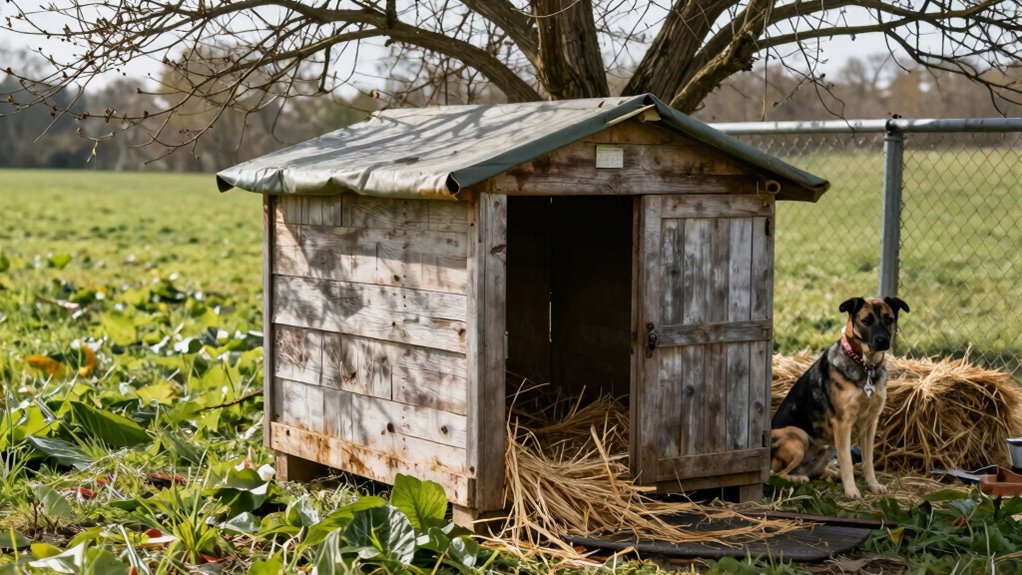
To prepare an emergency shelter for your outdoor farm dogs, guarantee it’s sturdy, weather-resistant, and well-insulated to protect against extreme conditions. Use durable materials like metal or treated wood and build a sloped roof with proper ventilation for airflow. Place water sources in shaded, accessible areas, and check regularly to keep them clean and unfrozen. Maintain and repair the shelter as needed to keep your dogs safe and comfortable in any weather—more helpful tips await you.

Get garden gear delivered free with Prime
- Fast, free delivery on millions of items
- Prime Video, Amazon Music and more included
- Member-only deals all year
Key Takeaways
- Ensure shelters are weather-resistant with durable materials and proper insulation to withstand extreme outdoor conditions.
- Position water sources in shaded, accessible areas and regularly check for freezing or contamination.
- Design shelters with sloped roofs, solid foundations, and sturdy walls to prevent damage from weather and pests.
- Conduct routine inspections and repairs to maintain shelter integrity and safety for outdoor dogs.
- Provide protection from predators, wind, rain, snow, and hazards to ensure continuous safety and comfort.
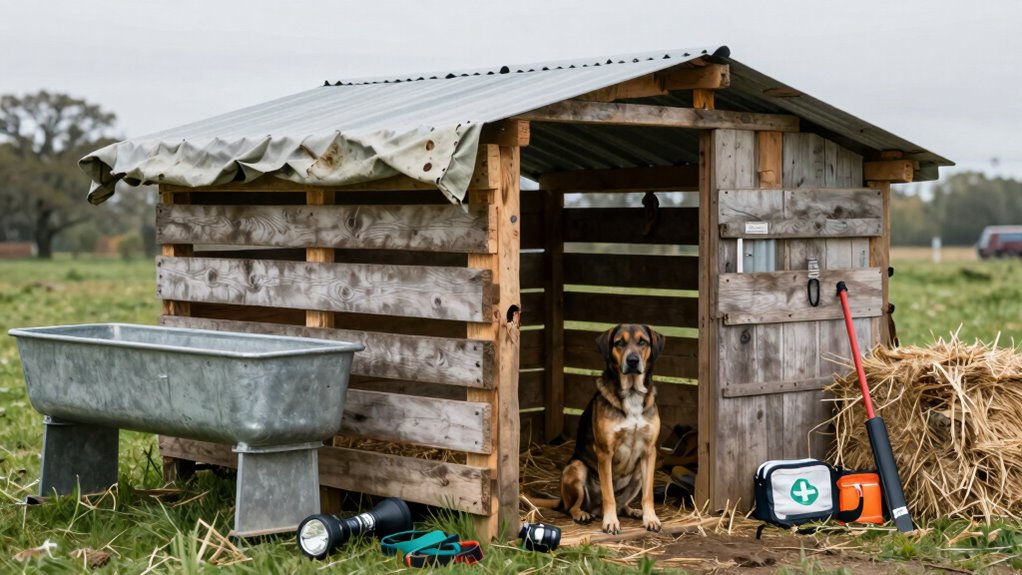
Living outdoors on a farm means your dogs face the elements year-round, so it’s imperative to have an emergency shelter prepared. This shelter isn’t just a cozy spot; it’s an essential safeguard that protects your dogs from extreme weather, predators, and unexpected hazards. To make certain it serves its purpose, focus on two key areas: hydration strategies and shelter material durability. Proper hydration is critical, especially during hot summer days or winter storms when water sources might freeze or become contaminated. You should provide a reliable, insulated water container that won’t tip over easily and guarantee fresh water is always available. Check it regularly, especially in freezing weather, to prevent it from freezing over or spilling. During summer, consider adding a shade or cover to keep water cool and prevent algae growth. Hydration strategies also include positioning the water source in a shaded, easily accessible spot, so your dogs can drink whenever they need without risking injury or dehydration. Additionally, understanding the importance of shelter material durability can help you choose the best materials for long-term protection. Using materials that resist weather damage ensures your shelter remains functional over time and reduces maintenance needs. Incorporating weather-resistant materials can further extend the lifespan of your shelter and minimize repairs. The shelter’s walls, roof, and flooring should be sturdy enough to resist wind, rain, snow, and even chewing if your dogs are persistent. Metal or heavy-duty plastic often work best because they’re resistant to rotting, pests, and moisture damage. Wood can work too, but only if it’s treated to resist rot and pests, and you check it regularly for signs of wear. It’s also beneficial to use proper fastening techniques during construction to enhance the shelter’s stability against strong winds. The roof should be sloped to allow water runoff, and it should be made from waterproof or weather-resistant material. The shelter’s foundation needs to be solid—concrete or gravel can prevent your dogs from sinking into mud or frost. Ventilation is another essential element; proper airflow prevents overheating in summer and reduces moisture buildup that could cause mold or discomfort. Ensuring the shelter is well-ventilated also helps to maintain good air quality, which is vital for your dogs’ health. In addition to choosing resilient materials, guarantee the shelter is well-insulated to handle extreme temperatures. Proper insulation helps maintain a stable interior climate, protecting your dogs from cold drafts or scorching heat. Regular maintenance is key; inspect the shelter often for damage or wear and repair it promptly. This proactive approach guarantees your dogs remain safe, comfortable, and protected, no matter the weather. Remember, a durable shelter combined with effective hydration strategies ensures your outdoor farm dogs stay healthy, safe, and ready to face whatever Mother Nature throws their way.
As an affiliate, we earn on qualifying purchases.
Frequently Asked Questions
How Often Should I Check and Maintain the Shelter?
You should check and maintain the shelter at least once a week to guarantee it’s clean and secure. Regularly inspect for damage, clean out debris, and refresh bedding to promote good shelter cleanliness. While doing so, also consider your dog’s nutrition needs, making sure they have enough food and water. Consistent maintenance keeps your farm dog safe, comfortable, and healthy, especially during extreme weather conditions.
What Are the Best Materials for Insulating Outdoor Dog Shelters?
Think of your shelter as the dog’s fortress against the elements. For insulation, durable materials like cedar, plastic, or heavy-duty foam work well. They can withstand weather and last over time. Pair these with heating options such as heated pads or lamps for extra warmth. This combo keeps your farm dog cozy and safe, even when the weather turns nasty. Remember, a well-insulated shelter is a dog’s best friend in tough times.
How Can I Prevent Pests From Entering the Shelter?
To prevent pests from entering your outdoor dog shelter, you should implement pest proofing techniques like sealing any gaps or cracks with weatherproof caulk. Use durable materials such as hardware cloth or fine mesh screens over ventilation openings and entry points. Regularly inspect and maintain the shelter, ensuring all seals are intact. These shelter sealing methods will keep pests out while maintaining a safe, comfortable environment for your farm dogs.
Should I Include Bedding Inside the Shelter?
Yes, you should include dog bedding inside the shelter. Imagine your loyal friend curling up in a cozy nest amid the cold—this is what shelter comfort offers. Dog bedding provides insulation and softness, helping your farm dog stay warm and secure during harsh weather. It’s a simple yet essential step to guarantee they feel safe and cared for, especially when outdoor conditions turn unforgiving.
How Do I Ensure Proper Ventilation in the Shelter?
You can guarantee proper ventilation by installing ventilation fans to promote airflow and prevent stuffiness. Use airflow strategies like placing vents or windows on opposite sides of the shelter to create a cross-breeze, which keeps fresh air circulating. Regularly check that these systems work effectively, especially during extreme weather. Good ventilation helps prevent overheating and respiratory issues, keeping your farm dog comfortable and safe in their outdoor shelter.
Conclusion
Just like a sturdy lighthouse guides ships safely through storms, your prepared shelter can protect your farm dogs during harsh weather. When you take the time now to build and reinforce their refuge, you’re anchoring their safety against nature’s unpredictability. Think of it as planting a strong tree that stands tall through every season, offering shelter and comfort. Your readiness guarantees your loyal companions remain safe, no matter how fierce the weather gets.
Fall Picks
fall essentials
As an affiliate, we earn on qualifying purchases.