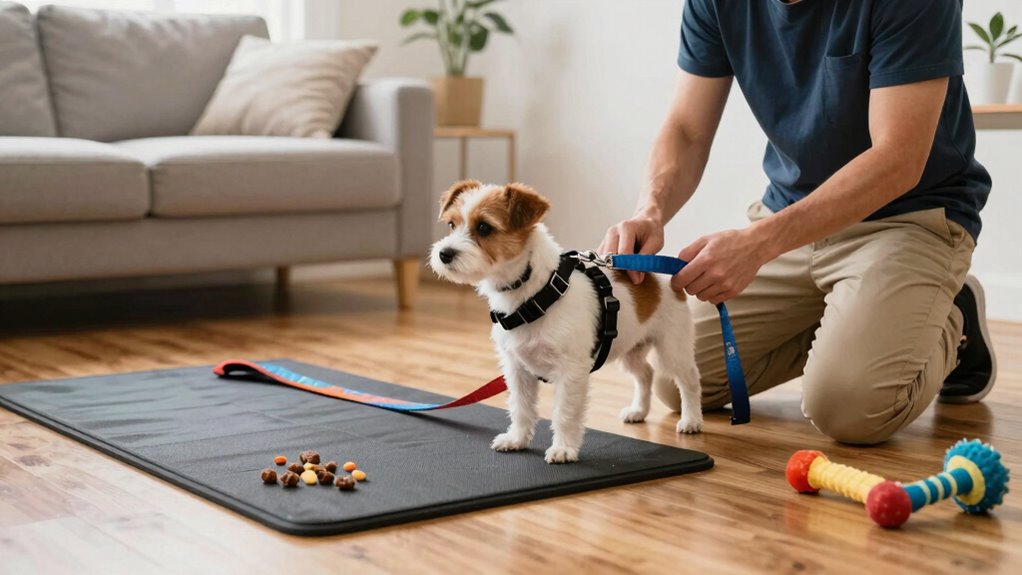

To practice emergency leash and carrier drills at home, start in a quiet, familiar space and use your pet’s regular leash and carrier. Gently encourage your pet to enter the carrier with treats and praise, and reward calm behavior during handling. Simulate quick removal from the environment by guiding your pet onto the leash and into the carrier, adding mild distractions gradually. Keep practicing these steps consistently, and you’ll build your pet’s confidence for real emergencies. Still, there’s more to master—continue for additional tips.
Key Takeaways
- Use a quiet space to conduct drills, gradually introducing the leash and carrier with treats and praise.
- Practice attaching/detaching the leash calmly, rewarding relaxed behavior to build comfort.
- Simulate quick removal from the environment, guiding the pet into the carrier with positive reinforcement.
- Incorporate distractions and vary locations to increase the difficulty and adaptability of the drills.
- Regularly review and reinforce training routines to build confidence and ensure a calm, quick response during emergencies.
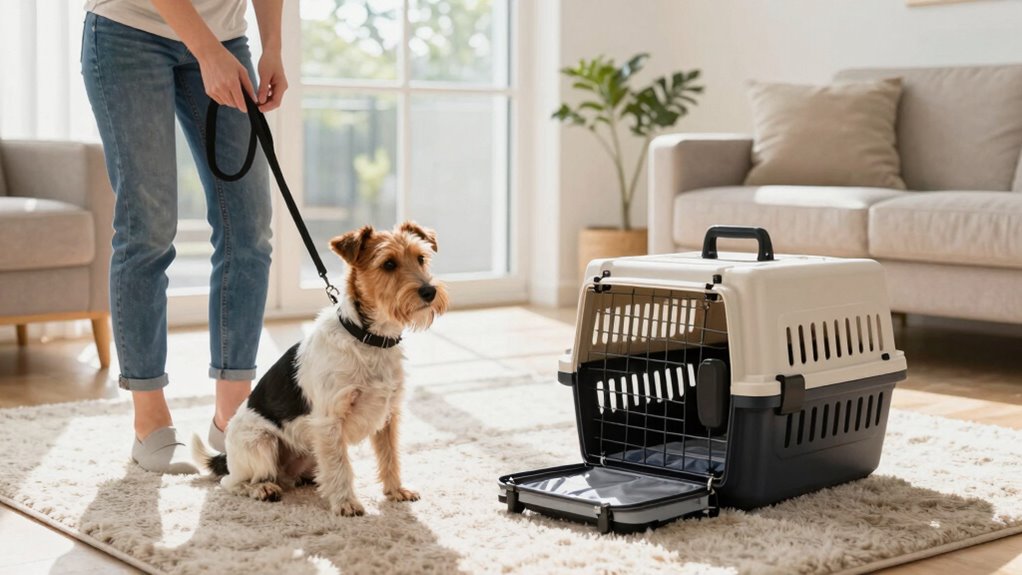
In emergencies, staying calm and prepared can make all the difference. Practicing emergency leash and carrier drills at home is an essential step to ensure your pet’s safety and to build your confidence in managing unexpected situations. When you regularly rehearse these scenarios, you help your pet become familiar with procedures that could save their life during real emergencies. The key is to incorporate effective training techniques that reinforce calm behavior and cooperation, making the process feel natural rather than stressful.
Start by choosing a quiet, distraction-free space in your home where you can run these drills. Use your pet’s regular leash and carrier to maintain familiarity, which helps reduce their anxiety. Your goal is to make these tools part of your pet’s routine, so they see them as safe and normal. To begin, gently introduce your pet to the carrier, encouraging them with treats and praise each time they approach or enter voluntarily. This positive reinforcement creates a sense of security around the carrier and supports pet safety by reducing fear or resistance. Similarly, practice attaching and detaching the leash calmly, rewarding your pet for remaining relaxed. Consistency is key—short, frequent sessions help build trust and train techniques that minimize stress during emergencies.
Once your pet is comfortable with the carrier and leash, simulate emergency scenarios. For example, have your pet on a leash and practice quick, calm removal from their usual environment, guiding them into the carrier with treats and gentle commands. Keep your tone reassuring, and never force your pet into the carrier, as this can create negative associations. Instead, use training techniques that emphasize patience and reward compliance. Over time, increase the complexity of the drills by adding mild distractions or practicing in different parts of your home. This helps your pet adapt to unpredictable situations, reinforcing pet safety and responsiveness when it matters most. Additionally, understanding the importance of emergency preparedness can further enhance your ability to respond effectively in critical moments. Incorporating training consistency into your practice routine ensures your pet remains confident and responsive in actual emergencies. Regularly reviewing these techniques helps to build confidence, both for you and your pet, ensuring you’re ready for any unexpected event. Moreover, staying informed about pet safety protocols can help you respond more effectively during real emergencies. Practicing these skills regularly also helps to establish a training routine that becomes second nature in stressful situations.

Pet Emergency Kit for Cats – in Cinch Bag
Already have a carrier for your cat? This is the perfect companion to get you prepared for an…
As an affiliate, we earn on qualifying purchases.
As an affiliate, we earn on qualifying purchases.
Frequently Asked Questions
How Often Should I Practice Emergency Leash and Carrier Drills?
You should practice emergency leash and carrier drills weekly to build your pet’s confidence and responsiveness. Incorporate consistent training schedules so your pet becomes familiar with routines. Use reward systems like treats or praise to reinforce positive behavior during drills. Regular practice helps your pet stay calm and prepared for emergencies, making shifts smoother when you need to act quickly. Keep sessions short and positive to maintain engagement.
What Supplies Do I Need for Emergency Drills?
For emergency drills, you need supplies that prioritize pet safety and aid emergency preparedness. Gather a well-fitting leash, a sturdy carrier, treats for positive reinforcement, and a flashlight. Keep extra water and a basic first-aid kit nearby. These supplies guarantee you’re ready to swiftly secure your pet during emergencies, reducing stress and confusion. Regular practice with these items helps you and your pet stay prepared for any unexpected situation.
How Can I Keep My Pet Calm During Drills?
You can keep your pet calm during drills by creating a calm environment and using treat rewards to reinforce positive associations. When your pet remains relaxed, praise them and offer treats to encourage that behavior. Keep the atmosphere quiet and soothing, avoiding sudden movements or loud noises. Consistency helps, so practice regularly with patience, gradually increasing difficulty while rewarding calm behavior, making the experience safe and stress-free for your furry friend.
What Signs Indicate My Pet Is Stressed During Practice?
You’ll notice behavioral cues like panting, whining, trembling, or trying to escape, which are clear stress indicators during practice. Your pet might also show avoidance, lip licking, or yawning when they’re overwhelmed. Keep an eye on these stress indicators to gauge when they’re feeling uncomfortable. If you see these signs, calmly pause the drill, offer reassurance, and give them time to relax before continuing, ensuring they stay as calm as possible.
Should I Practice With Multiple Pets at Once?
Don’t put all your eggs in one basket—especially when practicing with multiple pets. It’s best to start with one pet at a time to avoid chaos and guarantee each gets proper attention. Once they’re comfortable, you can gradually introduce multi pet dynamics into your training schedule. This approach helps each pet adapt without feeling overwhelmed, making emergency drills more effective and less stressful for everyone involved.

Pet Botanics 10 Oz. Pouch Training Reward Mini Soft & Chewy, Beef Flavor, with 500 Treats Per Bag, The Choice of Top Trainers
Approx. 500 treats per bag!
As an affiliate, we earn on qualifying purchases.
As an affiliate, we earn on qualifying purchases.
Conclusion
Practicing emergency leash and carrier drills at home prepares you for unexpected situations, helping keep your pet safe and calm. Remember, a recent survey found that 68% of pets involved in emergencies were rescued more quickly when their owners had practiced these drills beforehand. So, dedicate a few minutes regularly to simulate emergencies—you’ll feel more confident and your pet will be less stressed when it truly counts. Stay proactive, and both of you will be better prepared for anything.

Yipincover Carriers Soft-Sided Pet Carrier Case for Small Medium Cats Dogs Puppy Under 15 lbs,Airline Approved Cat Carrier with 4 Ventilated Windows (Medium,Grey&Black)
👍Medium Carrier Measures:17.5” L x 11” W x 11” H,Recommended max load of 15 lbs pets puppies.Please do…
As an affiliate, we earn on qualifying purchases.
As an affiliate, we earn on qualifying purchases.

BOOMIBOO Dog Harness with Leash Set, No Pull Adjustable Reflective Step-in Puppy Pet Vest Harnesses for Small Medium Large Dogs and Cats,Pink XS
【NO PULL & NO CHOKE】Our non-pulling dog harness featured with 2 metal leash rings, easy links to traction…
As an affiliate, we earn on qualifying purchases.
As an affiliate, we earn on qualifying purchases.