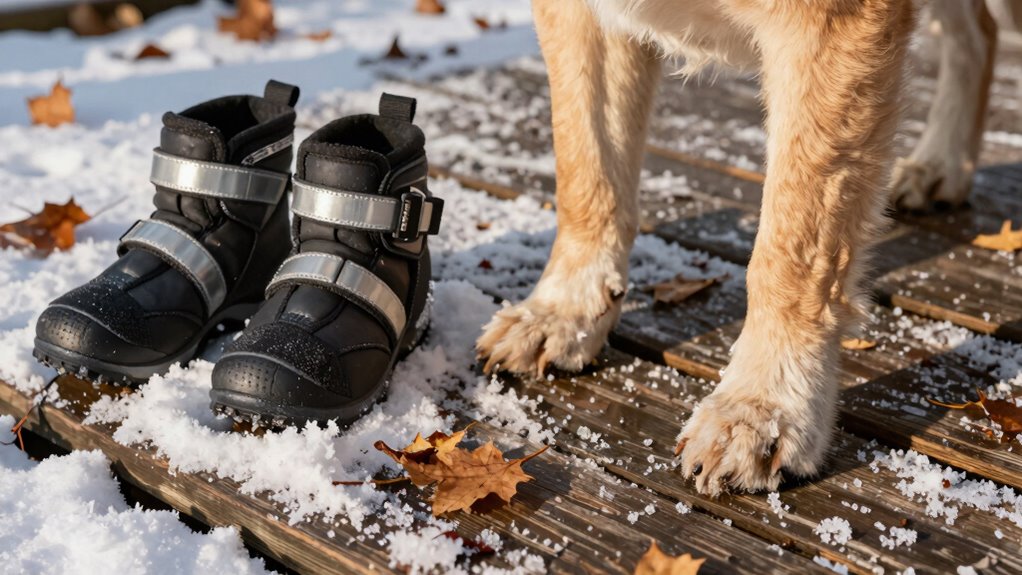

To protect your pet’s paws after a storm, regularly inspect for cuts, cracks, and debris like sticks or rocks. Trim fur between their paw pads, and use paw balm or moisturizer before walks to create a barrier against ice, heat, or chemicals. Wash and dry paws thoroughly after outdoor activity, especially in salted or treated snow. Be alert for signs of irritation or injury, and consult a vet if needed. Keep your pet safe and comfortable—find out more tips below.

Get garden gear delivered free with Prime
- Fast, free delivery on millions of items
- Prime Video, Amazon Music and more included
- Member-only deals all year
Key Takeaways
- Apply pet-safe paw balm before outdoor activity to create a protective barrier against ice and cold temperatures.
- Inspect paws regularly for debris, cuts, or cracks, especially after storms, and clean them promptly.
- Trim fur between paw pads to prevent debris buildup and reduce the risk of ice or snow accumulation.
- Avoid walking on salted or chemically treated surfaces; wash and dry paws thoroughly after walks.
- Limit outdoor exposure during extreme weather conditions and monitor for signs of irritation or injury.
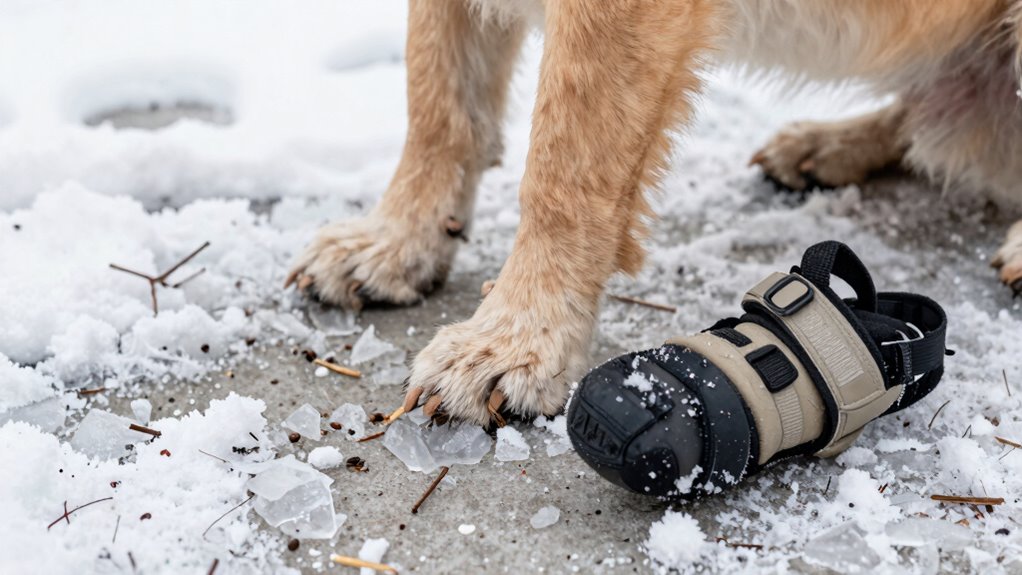
Ever wonder how to keep your pet’s paws healthy and safe? After a storm, your pet’s paws face a variety of hazards like ice, heat, and debris. Ensuring pet paw safety is essential to prevent injuries and infections. The first step is to regularly inspect their paws for cuts, cracks, or foreign objects. Storm debris such as sharp sticks, glass shards, or sharp rocks can cause painful injuries, so you need to be vigilant. Pet paw grooming becomes an important part of this process—keeping the fur between their paw pads trimmed helps prevent mats and traps that can harbor debris or moisture, which could lead to infections. Regular paw inspection helps catch issues early and maintain paw health. Additionally, using appropriate grooming tools can make this process easier and more effective. To further protect their paws, consider using paw protection products designed to shield against harsh weather conditions.
When it’s cold and icy outside, paws become vulnerable to frostbite and cracking. You should consider applying a pet-safe paw balm or moisturizer before heading outdoors. These products create a barrier that helps protect against ice and cold temperatures. During walks, try to limit exposure time, especially if ice is thick or the ground is covered with salted or chemically treated snow. Salt and deicers can irritate and dry out your pet’s paw pads, so wash their paws with lukewarm water after walks and dry them thoroughly. If you notice redness or soreness, consult your vet, as these could be signs of irritation or injury. Regular pet paw grooming can help keep the pads supple and healthy, reducing the risk of cracking or splitting. Additionally, environmental hazards such as chemicals or rough terrain can further impact paw health, so staying attentive is key. Maintaining awareness of paw health is crucial for preventing long-term issues related to outdoor hazards.
As an affiliate, we earn on qualifying purchases.
Frequently Asked Questions
Can Certain Dog Breeds Tolerate Extreme Weather Better Than Others?
Certain dog breeds do tolerate extreme weather better due to their breed resilience and weather adaptability. For instance, thick-coated breeds like Siberian Huskies handle cold much better, while short-haired breeds like Greyhounds adapt to heat more comfortably. You should consider your dog’s breed resilience when planning outdoor activities, especially after storms. Knowing your dog’s weather adaptability helps protect their paws from harsh conditions and keeps them safe and comfortable.
How Often Should I Check My Pet’s Paws After a Storm?
Right after a storm, you should check your pet’s paws frequently—at least every few hours—especially during outdoor paw checks. Imagine tiny paw pad injuries hiding beneath snow or debris, risking infection or pain. Gently inspect each paw, feeling for cuts, cracks, or foreign objects. Regular, careful checks help catch problems early, keeping your furry friend comfortable and safe as they recover from the storm’s aftermath.
Are There Specific Paw Protectors for Different Weather Conditions?
Yes, there are specific paw protector types for different weather conditions. Weather-specific paw covers are designed to suit hot, cold, or debris-filled environments. For example, insulated paw protectors help in cold weather, while breathable, lightweight covers are best for hot days. Using the right paw protector types guarantees your pet’s paws stay safe and comfortable, whether you’re steering icy sidewalks, scorching pavement, or muddy terrain.
What Are Signs My Pet Has Paw Injuries or Irritations?
If your pet starts limping or shows paw redness that seems like a fiery inferno, they might have an injury or irritation. Watch for exaggerated limping symptoms or excessive licking, which are clear signs something’s wrong. Swelling, bleeding, or refusal to walk are serious red flags. Pay close attention to any signs of discomfort, and if you notice these, it’s time to consult your vet immediately to prevent further damage.
How Can I Prevent My Pet From Licking or Chewing Protective Gear?
To prevent your pet from licking or chewing protective gear, make certain it fits snugly without causing discomfort. Use deterrent sprays or bitter-tasting coatings on the gear to discourage paw licking. Keep your pet engaged with toys or treats to divert their attention, and supervise them closely during recovery. Consistent training and positive reinforcement help your pet accept the protective gear, reducing their urge to lick or chew, keeping their paws safe and protected.
Conclusion
Now that you know how to shield your pet’s paws from ice, heat, and debris, you can guarantee they stay safe and comfy no matter the weather. Think of yourself as a modern-day Dr. Dolittle, tending to your furry friend’s needs with care and foresight. Remember, a little preparation goes a long way—just like the trusty cobbler fixing shoes in a bustling Victorian workshop. Keep those paws protected and your pet happy all year round!
Halloween Picks
halloween
As an affiliate, we earn on qualifying purchases.