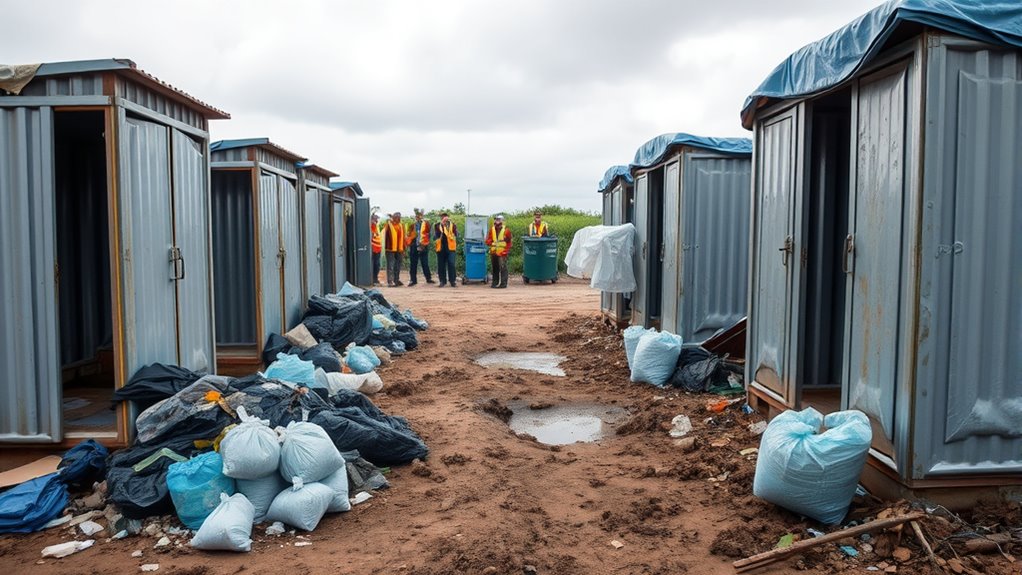

In emergencies, effective sanitation and waste disposal are essential to protect your community’s health and dignity. Portable toilets provide immediate solutions, but they need regular maintenance and waste management to prevent contamination and disease spread. On-site waste treatment methods, like chemical treatment or bioreactors, help reduce environmental impact. Planning and coordinating these efforts ensures safe, hygienic conditions. Continue exploring how proper sanitation practices can help you respond effectively and safeguard everyone involved.
Key Takeaways
- Portable toilets provide immediate sanitation solutions during emergencies when permanent facilities are unavailable.
- Proper waste containment and regular removal prevent environmental contamination and disease spread.
- On-site waste treatment methods, like chemical systems or bioreactors, neutralize waste and reduce health hazards.
- Coordination of sanitation logistics ensures efficient deployment, waste disposal, and environmental protection.
- Maintaining hygiene and dignity requires integrating portable sanitation with effective waste management strategies.

Have you ever considered how proper sanitation and waste disposal impact your daily life? When emergencies strike—whether natural disasters, large-scale events, or sudden infrastructure failures—the usual systems we rely on can quickly become overwhelmed or inaccessible. That’s where emergency sanitation measures come into play, guaranteeing health, safety, and dignity are maintained even in the most challenging circumstances. One of the most visible and immediate solutions is the use of portable toilets. These units are designed to be easily transported and quickly set up, providing a much-needed alternative when permanent facilities are unavailable or unsafe. Portable toilets are a critical component of emergency sanitation because they prevent open defecation, reduce contamination risks, and help control the spread of disease.
In crisis situations, waste treatment becomes an urgent concern. Without proper waste management, human waste can contaminate water supplies, attract pests, and create unsanitary conditions that threaten both health and morale. Emergency responders often deploy portable toilets alongside temporary waste treatment solutions. These portable units often come equipped with features like hand sanitizer dispensers, odor control, and sealed tanks to contain waste securely. They serve as a vital stopgap, but they also require proper maintenance, timely waste removal, and disposal to prevent environmental damage. The waste collected from these units must be handled with care, following strict protocols to prevent leaks or spills that could cause further health hazards.
Proper waste management and timely disposal are essential to prevent contamination and protect health during emergencies.
The process of waste treatment in emergency settings often involves transporting waste to designated treatment facilities or employing on-site methods like portable waste treatment units. These can include chemical treatment systems or mobile bioreactors designed to safely neutralize waste on-site. Such solutions help reduce the volume of waste and minimize environmental impact, making cleanup more manageable and sustainable. Proper waste treatment not only prevents the spread of germs but also helps maintain hygiene standards, which is essential for the well-being of affected populations.
In an emergency, planning for sanitation and waste disposal means considering both immediate needs and long-term safety. Portable toilets provide quick relief, while waste treatment ensures that waste doesn’t become a lingering threat. Coordinating these efforts requires a clear understanding of logistics, environmental impact, and health protocols. When done right, these measures help communities recover faster, reduce disease outbreaks, and restore a sense of normalcy. Ultimately, investing in effective emergency sanitation solutions isn’t just about convenience; it’s about safeguarding lives, protecting the environment, and maintaining dignity amid chaos.
Frequently Asked Questions
What Are the Best Portable Sanitation Options for Emergencies?
You should choose portable toilets with chemical treatment for emergencies, as they effectively control odors and bacteria. Look for models that are easy to transport and set up, ensuring quick deployment. Consider options with sealed tanks and sturdy construction for durability. Using chemical treatments inside the units helps maintain sanitation standards, making them reliable for temporary use. Always have extra chemicals and waste disposal plans ready to maintain hygiene and safety.
How Can Waste Disposal Be Managed Safely in Remote Areas?
A stitch in time saves nine, so start by engaging your community actively in waste management. You should implement waste segregation to separate biodegradable from non-biodegradable waste, reducing health risks. Use simple composting methods for organic waste and secure, designated disposal sites for hazardous materials. Educate everyone on proper waste disposal practices, ensuring safe handling and minimizing environmental impact. Your proactive approach keeps remote areas clean and safe for all residents.
What Materials Are Most Effective for Emergency Latrine Construction?
You should use durable materials like treated wood, concrete, or sturdy plastic for emergency latrine construction, as they guarantee longevity and withstand environmental conditions. Prioritize locally available materials to simplify logistics and speed up setup. Durable latrine construction reduces the need for frequent repairs, making it more effective in emergency situations. Always consider material availability to ensure you can quickly build a safe, hygienic, and sustainable sanitation facility.
How Do Waste Disposal Methods Vary in Different Disaster Scenarios?
In disaster scenarios, waste disposal methods vary based on waste categorization and disposal site selection. You should separate biodegradable, hazardous, and non-biodegradable waste to prevent contamination. Choosing a suitable disposal site involves locating a safe, accessible area away from water sources and living zones. You might use burial, incineration, or containment methods, depending on local conditions and available resources, ensuring environmental safety and public health are prioritized.
What Training Is Recommended for Emergency Sanitation Workers?
Imagine a landscape reshaped by chaos; your training must prepare you for such scenes. You should undergo hazard assessment training to identify risks quickly and understand sanitation protocols to manage waste safely. First aid, infection control, and gear handling are essential skills. Regular drills reinforce these practices, ensuring you’re ready to act swiftly. This extensive preparation helps you protect public health and maintain sanitation standards amid disaster.
Conclusion
In emergencies, quick and effective sanitation is crucial. Did you know that poor waste disposal can increase disease spread by up to 70%? You play a vital role in maintaining hygiene standards to protect yourself and others. By properly managing waste and sanitation, you help prevent outbreaks and save lives. Stay vigilant, follow guidelines, and remember that your actions make a significant difference in ensuring community health during crises.