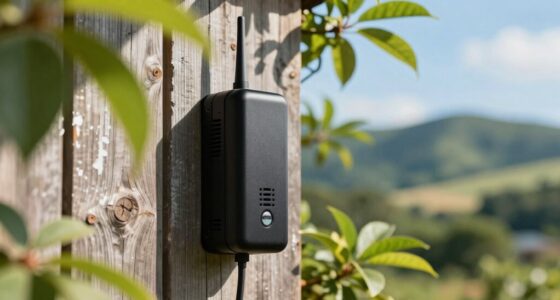

Ignoring terrain challenges is the biggest mistake that kills your long-range farm radio performance. Uneven terrain, hills, and obstacles can weaken signals and create dead zones, making communication unreliable when you need it most. Without proper antenna placement, repeaters, or power management, your radios won’t reach their full potential. To keep your operations smooth and connected, you’ll need to understand and address terrain issues—stick around to discover more ways to optimize your setup.
Key Takeaways
- Ignoring terrain features can cause signal dead zones, reducing radio coverage and communication reliability.
- Poor radio placement without considering topography leads to increased interference and communication failures.
- Failing to use repeaters or high-gain antennas to overcome terrain obstacles limits effective range.
- Neglecting terrain analysis during setup results in unpredictable signal degradation and operational disruptions.
- Not adjusting for terrain interference diminishes signal strength, impairing communication during critical farm activities.

Another often-overlooked aspect is battery life management. Long-range radios rely on batteries, and neglecting this can leave you stranded when you need the radio most. Heavy terrain and extended use drain batteries faster, especially if your radio isn’t optimized for efficiency. You should always monitor battery levels and carry spare batteries or portable chargers, so communication stays uninterrupted. Regularly replacing or recharging batteries during the day ensures your radios are ready for any situation, whether it’s coordinating machinery or responding to emergencies. Proper battery management also includes turning off radios when not in use and choosing models with longer battery life, especially if you operate in remote areas where charging options are limited. Understanding how terrain affects your radio’s performance is just as important as managing its power. Terrain interference can be unpredictable, and the more you know about your farm’s topography, the better you can plan radio placement and coverage. Using high-gain antennas can help extend reach and reduce dead zones, but they won’t solve interference issues caused by terrain features. Combining good antenna choice with strategic positioning and repeaters will give you more reliable coverage. Meanwhile, don’t disregard battery life — a radio that runs out of juice mid-shift is useless, no matter how good the signal is. Keep an eye on your batteries, plan for replacements, and adjust your usage to maximize both coverage and operational time. Only by tackling terrain obstacles and battery management can you truly access your long-range farm radios’ full potential. Additionally, understanding terrain interference can help you implement more effective solutions to improve communication, especially when considering the topography’s impact on signal propagation. Being aware of signal degradation caused by uneven terrain can help you optimize your radio setup and prevent unexpected communication failures. Incorporating knowledge of radio placement strategies can further enhance coverage in challenging environments. Recognizing terrain-related signal loss and adjusting your approach accordingly can make a significant difference in maintaining reliable communication across your farm.
As an affiliate, we earn on qualifying purchases.
Frequently Asked Questions
How Do Terrain Features Specifically Impact Radio Signal Strength?
Terrain features directly impact your radio signal strength through obstacle interference and signal reflection. Hills, trees, and buildings can block or weaken signals, causing interference. Signal reflection occurs when signals bounce off these features, creating dead zones or weak spots. You need to be mindful of terrain when positioning your radios, ensuring clear lines of sight and avoiding obstacles to maintain strong, reliable communication across your farm.
What Are the Legal Regulations for Long-Range Farm Radio Use?
You must follow the law, of course! For long-range farm radios, this means obtaining the right frequency licensing and ensuring regulatory compliance. Ignoring these rules can lead to hefty fines or equipment confiscation—hardly the reward you want after all that radio setup. So, check with the FCC or your local authority to confirm you’re tuned into legal frequencies and operating within the law. Stay compliant, stay connected!
Can Weather Conditions Affect Radio Performance Over Long Distances?
Yes, weather conditions can affect your long-range farm radio performance. Interference sources like thunderstorms or heavy rain can disrupt signals, causing static or loss of communication. Signal obstacles such as fog, snow, or high humidity can also weaken radio signals, reducing their effective range. To maintain clear communication, you should monitor weather forecasts and adjust your radio usage during adverse conditions, or consider equipment with weather-resistant features.
What Are the Best Practices for Maintaining Radio Equipment Outdoors?
Think of your radio as a crucial vine—proper antenna placement guarantees it climbs high and spreads wide for clear signals. Keep your equipment dry and secure, avoiding extreme weather. Regularly check and maintain batteries, like tending to roots, to prevent power failures. Protect your radio from dust and moisture, and store it in a safe, shaded spot. These practices keep your communication line strong and reliable across rugged terrain.
How Do Different Radio Frequencies Perform Across Various Terrains?
You’ll notice that higher frequencies, like those using Frequency Modulation (FM), often deliver clearer Signal clarity in open terrains, but they struggle to penetrate obstacles like trees or hills. Lower frequencies provide better range across rugged landscapes, but may sacrifice some clarity. Understanding how terrain affects these frequencies helps you choose the right radio for your farm, ensuring reliable communication regardless of whether you’re steering through flat fields or hilly areas.
Conclusion
If you ignore the terrain, your long-range farm radios become like a boat without a rudder—drifting aimlessly and losing their way. To keep your communication sail steady, understand the landscape and choose the right radio setup. Don’t let terrain mistakes sink your performance; instead, navigate wisely. With proper planning, your radios will cut through the obstacles like a sharp ship’s prow, ensuring your farm stays connected and your operations stay afloat.