Regular maintenance is key to preventing funky water from gravity filters. Make sure you clean and sanitize the components regularly, replace filter elements based on usage and signs of buildup, and flush the system to prevent mineral deposits and bacteria growth. Avoid neglecting these steps, as they can cause off-tastes and reduced filtration. Keep your system in top shape by following proper procedures—continue further to discover essential tips for maintaining fresh, great-tasting water.
Key Takeaways
- Regularly disassemble and thoroughly clean filter components to prevent bacterial, mold, and mineral buildup.
- Sanitize reservoirs and tubing periodically using mild solutions like vinegar or safe disinfectants.
- Monitor filter lifespan and replace cartridges promptly to avoid foul tastes and reduced filtration efficiency.
- Flush and rinse the system routinely to maintain water quality and prevent funky odors during long-term use.
- Follow proper cleaning procedures, avoid harsh chemicals, and handle parts gently to extend filter life and ensure safe water.
Why Regular Maintenance Prevents Funky-Tasting Water
Regular maintenance of your gravity water filter is essential because neglecting it can lead to the buildup of bacteria, mold, and mineral deposits. Over time, mineral buildup can clog the filter media, reducing its effectiveness and shortening its lifespan. When minerals accumulate, they can cause water to taste off or funky, making your filtered water less enjoyable and potentially unsafe. By maintaining your filter regularly, you prevent these issues from occurring, ensuring it continues to function properly. Proper upkeep helps maintain the filter’s lifespan, so you don’t have to replace it prematurely. Understanding filtration systems is key to ensuring your water remains safe and tastes great. Consistent maintenance also minimizes the risk of bacteria and mold growth, which can develop in stagnant or dirty filters, further contributing to unpleasant-tasting water. Additionally, filter maintenance supports the longevity of the entire filtration system, saving you money in the long run. Regularly inspecting filter components can help catch wear and tear early before performance is compromised. Performing preventative maintenance can also help avoid costly repairs or replacements in the future. Maintaining your filter also involves checking for any wear and tear, which can compromise its performance. Keep your filter clean to enjoy fresh, great-tasting water every time.
How to Clean Your Gravity Water Filter Properly

To clean your gravity water filter effectively, start by disassembling its components carefully. Then, use the appropriate cleaning solutions to remove buildup and bacteria. Proper maintenance guarantees your filter works efficiently and keeps your water tasting fresh. Incorporating regular cleaning of essential oil residues can help prevent any lingering odors or contaminants that may affect water quality. Additionally, inspecting filter performance and lifespan regularly ensures optimal operation and prevents unexpected failures. Keeping track of the connection standards and ensuring they are properly maintained can also improve the overall efficiency of your filtration system. Remember, routine maintenance not only extends the life of your filter but also ensures safe, clean drinking water at all times. Regularly monitoring water quality can alert you to potential issues before they become serious, maintaining the health and safety of your household.
Disassemble Filter Components
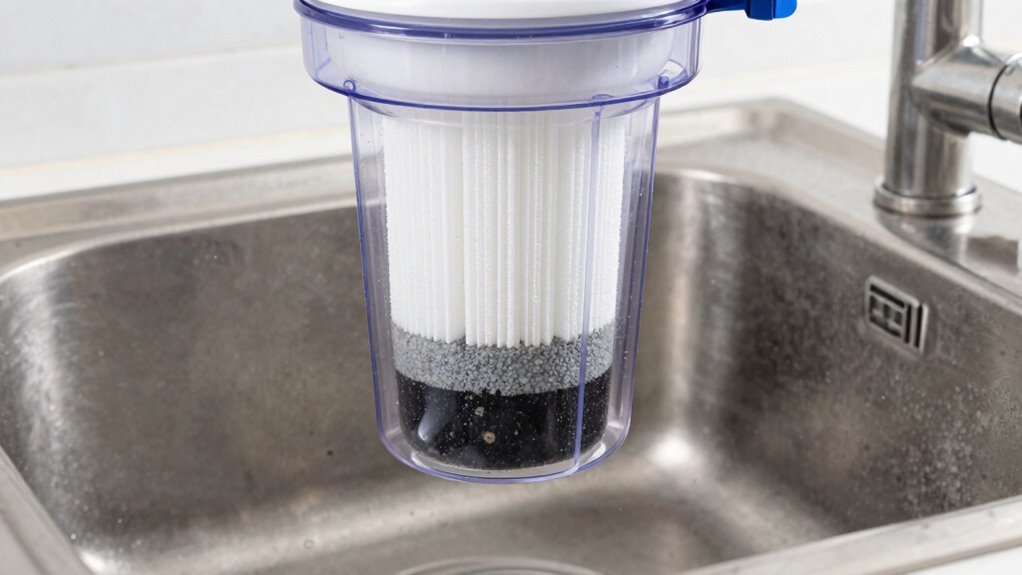
Before you start cleaning your gravity water filter, it’s important to disassemble its components carefully. Begin with filter disassembly by removing the reservoir, filter housing, and any detachable parts. Take note of how each component fits together, so reassembly is smooth. During this process, perform a thorough component inspection to identify any signs of damage, mold, or buildup. Check the hoses, seals, and filter media for wear or blockages. Handle each piece gently to avoid cracks or breakage. Keep track of small parts like washers and O-rings. Disassembling correctly ensures you can clean each part thoroughly and spot potential issues early. Proper disassembly also helps maintain the color accuracy of the filter system, which is vital for ensuring clean and safe drinking water. Taking your time during filter disassembly makes the overall cleaning process more effective and prevents future problems. Additionally, understanding the importance of preventing contamination can help in maintaining the effectiveness of your filtration system. Regularly inspecting and disassembling your filter components also supports system longevity, ensuring your water stays safe over time. Remember that proper maintenance is essential for keeping your water quality high and avoiding unnecessary repairs.
Use Proper Cleaning Solutions
Using the right cleaning solutions is essential to effectively remove dirt, mold, and bacteria from your gravity water filter without damaging its components. Regular cleaning with a proper solution prevents mineral buildup, which can clog filters and reduce flow. For deep sanitation, consider UV sterilization to kill bacteria and viruses without harsh chemicals. Avoid using strong bleach or abrasive cleaners that might degrade filter parts. Instead, opt for mild soap or vinegar solutions, and rinse thoroughly to prevent residue. When dealing with mineral deposits, a vinegar soak can dissolve buildup without harming the filter. Additionally, choosing environmentally friendly cleaning options can support sustainable backyard practices and reduce chemical impacts. Proper cleaning solutions also help maintain the filter’s effectiveness and prevent foul tastes and odors. Using the correct cleaning agents is also vital to avoid damage to filter components, which can compromise water quality. Always follow manufacturer instructions for cleaning solutions to guarantee you don’t compromise your filter’s integrity or performance. Proper cleaning solutions keep your water fresh, safe, and free of funky tastes. Maintaining your filter’s performance and longevity is also crucial for ensuring consistently clean water.
When and How to Replace Filter Elements

Knowing when to replace your gravity water filter is essential for maintaining clean and safe drinking water. Typically, you should monitor the filter’s lifespan, which varies depending on usage and water quality, but generally ranges from two to six months. Pay attention to changes in flow rate or taste, as these are signs it’s time for a replacement. Follow the manufacturer’s instructions for your specific filter model to determine the recommended replacement frequency. To replace the filter element, first turn off the water supply and drain the system. Remove the old filter carefully, noting its orientation, and insert the new one securely. Regular replacement guarantees ideal filtration and prevents buildup of contaminants that can lead to funky-tasting water. Understanding filter lifespan and its factors helps ensure optimal performance, especially when managing water quality in outdoor or remote settings. Additionally, staying aware of maintenance schedules can prolong your filter’s effectiveness and overall system longevity. Proper maintenance also reduces the risk of contaminant buildup, which can compromise water safety over time, especially since solar energy can influence environmental conditions that impact water purity.
Easy Tips for Sanitizing Your Water Filter to Stop Bacteria
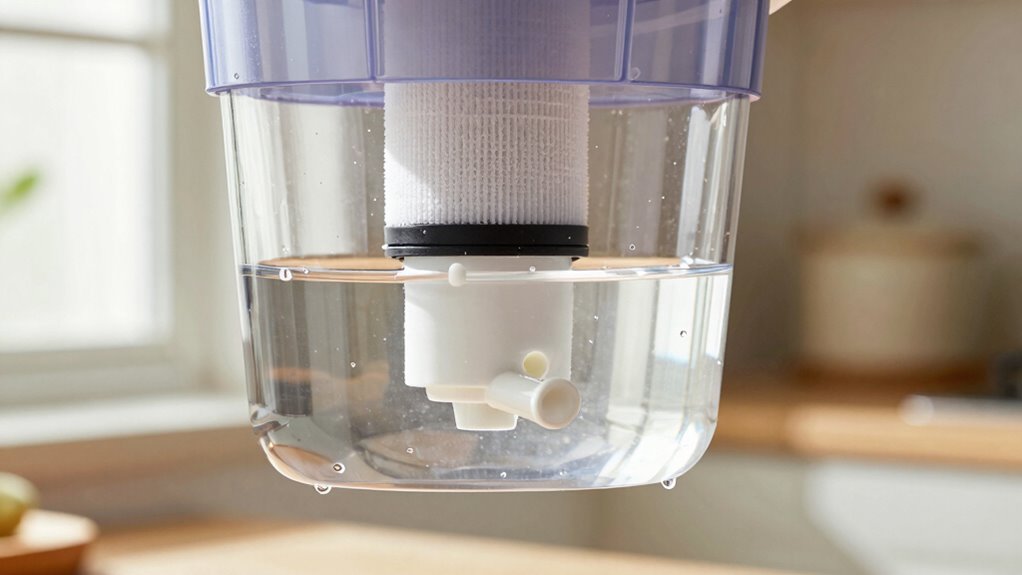
Regularly sanitizing your water filter is essential to prevent bacteria buildup that can compromise water safety. Start by rinsing all parts with hot, soapy water, then disinfect them with a solution of one teaspoon of unscented bleach per quart of water. Let the parts soak for 10 minutes, then rinse thoroughly to remove any residue. This process helps extend your filter’s lifespan and prevents mineral buildup, which can harbor bacteria. Avoid using harsh chemicals that could damage the filter or leave harmful residues. Make sterilizing a routine every few months or after extended periods of non-use. Proper maintenance ensures your filter remains effective, providing clean, safe water and reducing the risk of funky tastes or bacterial contamination. Proper maintenance is key to maintaining good indoor air quality and overall home health.
How to Recognize Signs Your Filter Needs Attention

If your water starts looking cloudy or murky, it’s a clear sign your filter might need cleaning or replacement. Unusual smells, like musty or rotten odors, can also indicate buildup or bacteria growth. Keep an eye on these signs to make certain your water stays clean and safe to drink.
Changes in Water Clarity
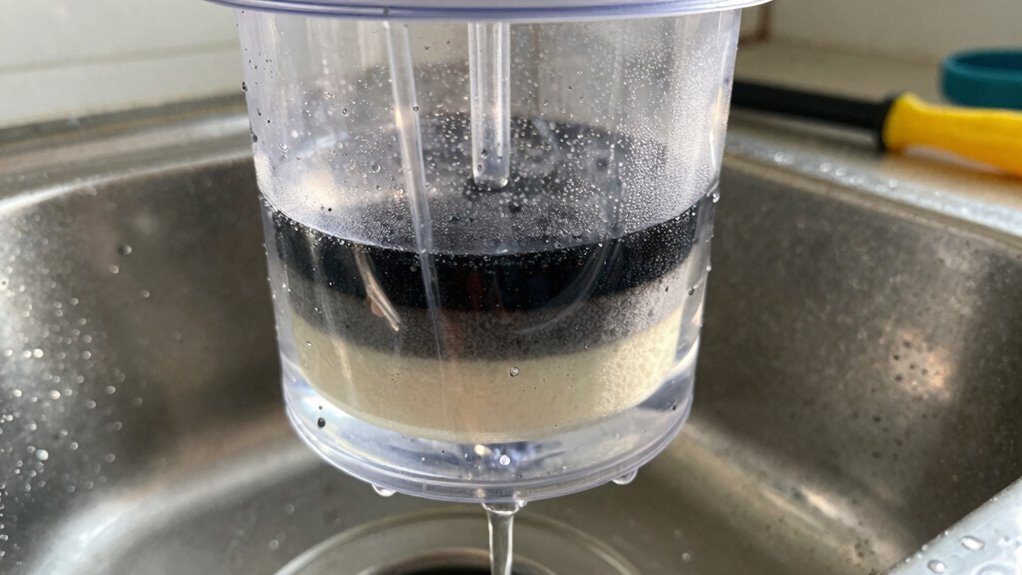
Changes in water clarity are one of the clearest signs that your gravity water filter may need attention. If you notice cloudiness or particles in the filtered water, it could be due to water sedimentation or mineral buildup inside the filter. Over time, minerals from your water can accumulate, reducing the filter’s effectiveness and causing cloudy or murky water. Additionally, increased sedimentation indicates the filter is becoming overwhelmed or clogged, which can compromise water quality. You should regularly inspect the filter for visible deposits or discoloration. If water clarity deteriorates, it’s a sign you need to clean or replace the filter components. Addressing these issues promptly guarantees your water remains clear, safe, and free from unwanted particles or mineral deposits.
Unusual Water Smells
Have you noticed a strange or foul smell coming from your filtered water? Unusual odors often indicate that your filter’s lifespan is nearing its end or that water mineralization has altered the water’s taste and smell. Over time, minerals and impurities can build up, causing a musty or rotten smell. If your filter isn’t replaced on schedule, bacteria and mold can develop, intensifying the foul odor. Regularly check for these signs and remember that a filter’s effectiveness diminishes as it ages. Proper maintenance ensures your water stays fresh and safe. If you detect any unusual smells, it’s time to clean or replace your filter to prevent funky-tasting water and maintain ideal water mineralization.
Best Practices for Flushing and Rinsing Your System

Regularly flushing and rinsing your gravity water filter is essential to maintain its performance and guarantee clean drinking water. Proper maintenance helps extend the filter’s lifespan and keeps bacteria at bay. Start by disassembling the system and rinsing all parts with clean water. Use the maintenance checklist to ensure no step is missed, like replacing filters or cleaning the reservoir. Visualize this process:
| Step | Action |
|---|---|
| 1 | Disassemble the system |
| 2 | Rinse all parts thoroughly |
| 3 | Check for buildup |
| 4 | Reassemble and flush |
This routine prevents funky tastes and guarantees your system functions at its best, avoiding unnecessary replacements and costly repairs.
Maintaining Water Quality During Long-Term Use

To keep your water clean over time, you need to replace your filter regularly and follow proper cleaning techniques. Skipping these steps can lead to reduced filter efficiency and compromised water quality. Staying consistent with maintenance guarantees your filter continues to provide safe, great-tasting water.
Regular Filter Replacement
Keeping your gravity water filter in good shape requires replacing the filter cartridge at the right intervals. This guarantees you get the full filter lifespan and prevents mineral buildup that can clog the system. Regular replacement maintains maximum flow rate and water quality, avoiding the risk of funky tastes or odors. Check your manufacturer’s recommendations for how often to swap out the cartridge, which can vary based on usage and water quality. Don’t wait until the filter looks dirty or water flow slows considerably—proactive replacement keeps your filter functioning efficiently. By sticking to a replacement schedule, you’ll avoid mineral buildup that compromises filtration and extend the life of your entire system. It’s a simple step that makes a big difference in clean, fresh-tasting water.
Proper Cleaning Techniques
Maintaining your gravity water filter’s performance over time involves more than just replacing the cartridge; it also requires proper cleaning to prevent buildup and guarantee consistent water quality. Regular cleaning extends your filter’s lifespan and ensures it functions effectively. Start by disassembling the components and rinsing them with clean water to remove debris. For deeper cleaning, use chemical cleaning solutions recommended by the manufacturer to eliminate mineral deposits and bacteria. Be sure to follow instructions carefully to avoid damaging parts. After cleaning, thoroughly rinse all components before reassembling. Proper cleaning techniques prevent the growth of mold and bacteria, keeping your water safe and fresh. Regular maintenance like this helps your filter work efficiently over the long term, reducing the need for costly replacements.
Common Mistakes That Cause Bad-Tasting Water
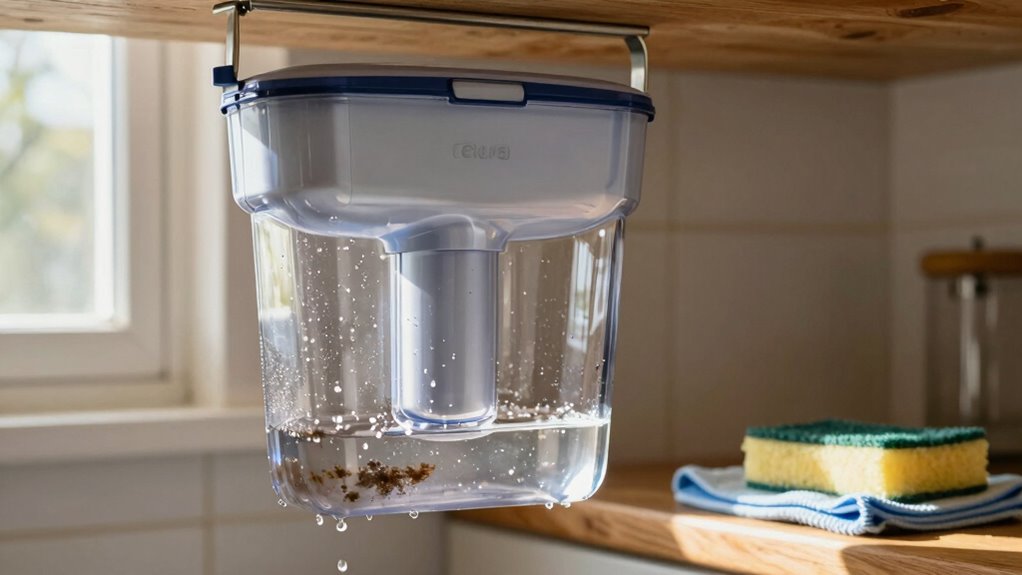
One common mistake that causes bad-tasting water is neglecting regular filter maintenance. When you don’t monitor the filter lifespan, mineral buildup can occur, leading to unpleasant flavors. Over time, minerals from your water accumulate on the filter media, reducing its effectiveness and allowing impurities to pass through. This buildup can alter the water’s taste, making it metallic or stale. Failing to replace or clean the filter as recommended accelerates this process, resulting in funky-tasting water. To avoid this, stay attentive to your filter’s lifespan and replace it before mineral deposits become severe. Proper maintenance guarantees your filter continues to remove contaminants effectively, keeping your water fresh and tasting clean. Ignoring these steps is a quick path to compromised water quality.
Creating a Maintenance Schedule for Your Filter Type
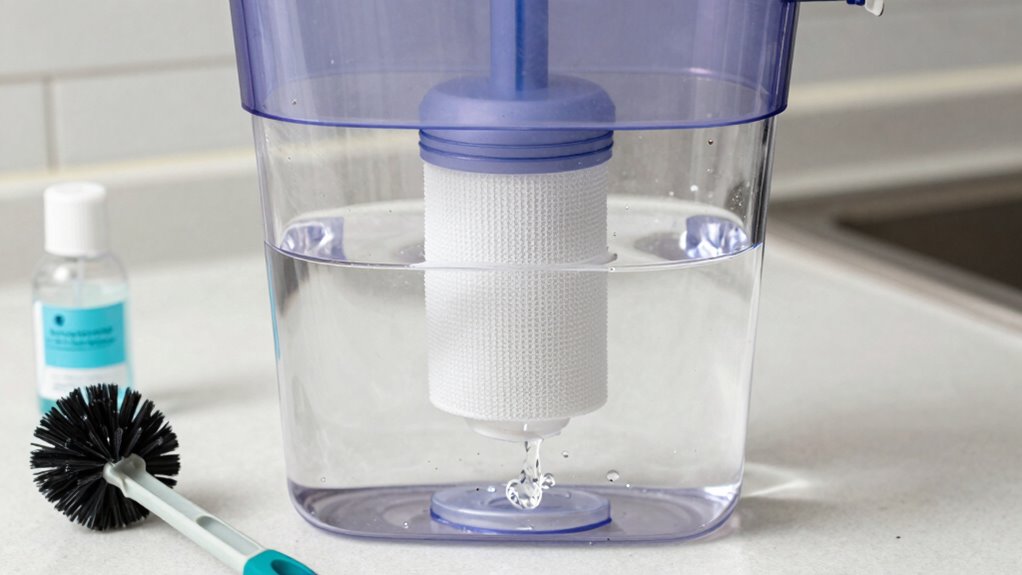
Creating a maintenance schedule tailored to your filter type guarantees your water stays clean and tastes fresh. To guarantee maximum performance, consider your filter’s lifespan and set regular intervals for cleaning or replacing parts. A solid maintenance checklist helps you stay on track:
- Check filter condition every month
- Replace or clean filters as per manufacturer guidelines
- Sanitize the housing annually
- Record maintenance dates for tracking
- Monitor water flow rate for signs of clogging
Troubleshooting Persistent Funky Odors or Tastes
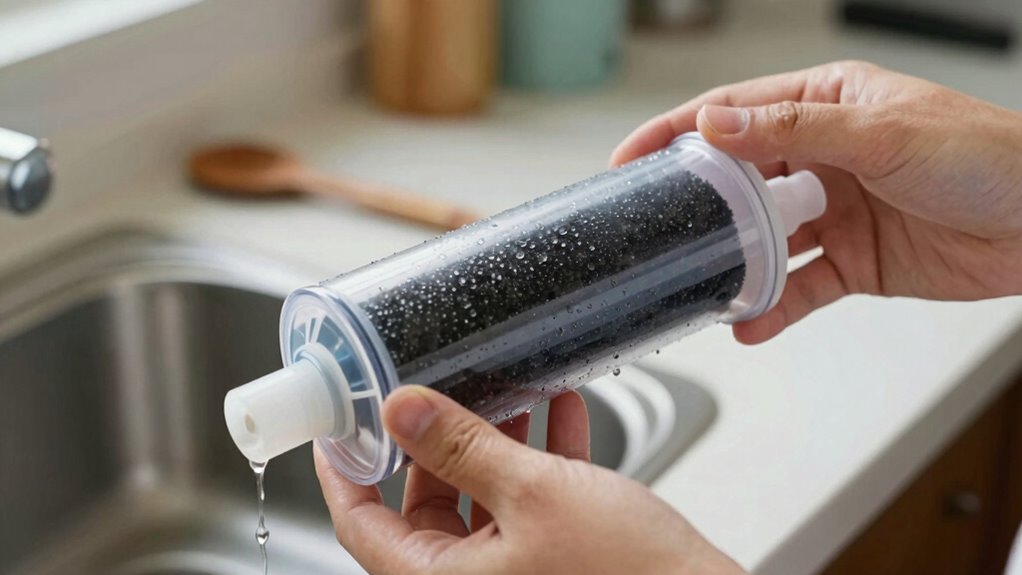
Even with a regular maintenance schedule, you might notice persistent funky odors or strange tastes in your water. This often indicates your filter’s lifespan is nearing its end or mineral buildup has occurred. When filters are overdue for replacement, they can’t effectively remove impurities, resulting in off-putting flavors. Mineral buildup inside the filter can also cause unpleasant tastes, especially if hard water is used. To troubleshoot, first check the filter’s recommended lifespan and replace it if needed. Clean the filter housing thoroughly to remove any mineral deposits. If odors persist, consider flushing the system with clean water or soaking the filter in a vinegar solution to dissolve mineral buildup. Regularly maintaining your filter helps prevent these issues and ensures fresh, good-tasting water.
Frequently Asked Questions
Can I Use Vinegar to Sanitize My Gravity Water Filter?
Yes, you can use vinegar cleaning to sanitize your gravity water filter. Vinegar is effective for water sanitization and helps remove mineral buildup and bacteria. Mix equal parts vinegar and water, then run it through your filter. Let it sit for a few minutes before rinsing thoroughly with clean water. Regular vinegar cleaning keeps your filter functioning properly and guarantees safe, fresh-tasting water.
How Often Should I Check for Mold Growth Inside the System?
You should check for mold growth inside your gravity water filter during routine inspections at least once a month. Mold prevention is essential for maintaining safe, clean water. Look for any discoloration, slimy patches, or musty odors, and clean the system promptly if you notice any signs. Regular inspections help catch mold early and keep your filter functioning properly, ensuring your water stays fresh and safe to drink.
Are There Specific Filters Recommended for Hard Water Conditions?
Did you know that over 85% of households in hard water areas experience scale buildup? For this, look for filters specifically designed for water softening, ensuring they’re compatible with your system. Choose filters labeled for hard water conditions, as they’re built to handle mineral-heavy water without clogging or losing efficiency. Always verify filter compatibility with your gravity system to keep your water tasting fresh and prevent funky tastes.
What Are the Environmental Impacts of Replacing Filter Elements Frequently?
Replacing filter elements frequently can increase plastic waste and recycling implications. You might contribute to more landfill trash if filters aren’t recycled properly or if they’re made from non-biodegradable plastics. To minimize environmental impact, look for filters with recyclable components or consider using reusable filters. By doing so, you reduce plastic waste and support eco-friendly practices, helping protect the environment while maintaining clean, safe water.
Can Mineral Deposits Affect My Filter’s Performance Over Time?
Mineral buildup can turn your filter into a sluggish mess, drastically affecting its performance over time. As mineral deposits accumulate, they cause filter clogging, reducing water flow and filtration efficiency. If you ignore these deposits, your filter’s ability to purify water diminishes, making your drinking water less safe and tasteless. Regular maintenance prevents this buildup, ensuring your filter continues to work effectively and keeps your water fresh and clean.
Conclusion
Think of your gravity water filter as a trusted partner—neglected, it can turn from a reliable source to a source of funky water. But with regular maintenance, you keep it functioning smoothly, ensuring clean, crisp-tasting water. Ignoring this step is like leaving your favorite plant unwatered; it withers. Stay proactive, follow your schedule, and enjoy the pure, invigorating water you deserve—because a well-maintained filter makes all the difference.