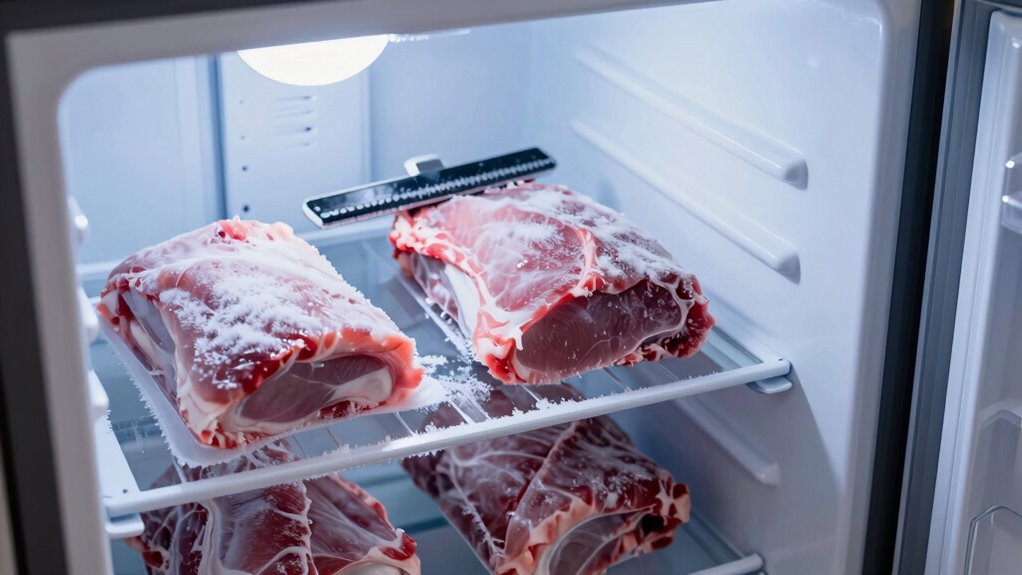

During a power outage, keep your freezer door closed as much as possible to prevent warm air from entering. Use insulation like blankets or reflective covers, and add ice packs or dry ice around your frozen items to maintain cold temperatures longer. Organize and pack your meat properly to reduce open-door times and ensure even cooling. Following these tips will help you extend your freezer’s cold hold time and prevent spoilage—learn more to protect your food effectively.
Key Takeaways
- Keep the freezer door closed to maintain cold temperatures and prevent warm air from entering.
- Use insulation like blankets or reflective barriers to slow heat transfer during outages.
- Place ice packs or dry ice strategically around and on top of stored items for even cooling.
- Monitor freezer temperature with a thermometer, aiming to stay below 40°F, and act quickly if it rises.
- Limit door openings and organize contents to maximize cold retention and reduce spoilage risk.
Why Power Outages Cause Your Freezer to Warm Up and What It Means for Your Meat
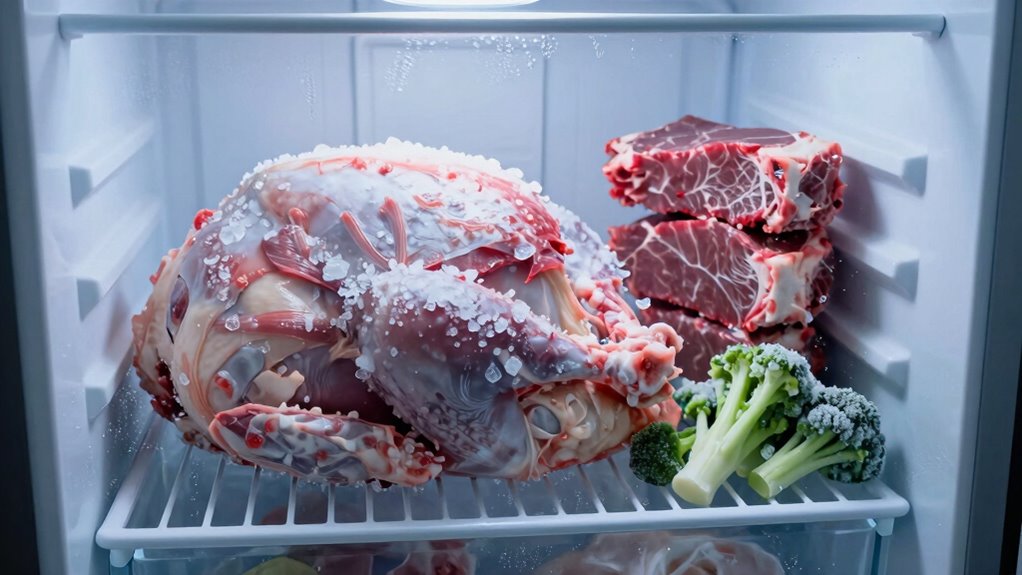
Have you ever wondered why your freezer warms up during a power outage? When the power goes out, your freezer no longer maintains a steady cold temperature, leading to temperature fluctuations. As the temperature rises, frost buildup on the freezer walls can occur, which insulates the interior and hampers heat exchange. This frost buildup can cause uneven cooling, making some areas warmer than others. The warm air causes your frozen meat to begin thawing gradually. The longer the power is out, the more these temperature fluctuations happen, increasing the risk of spoilage. Understanding this process highlights why it’s vital to minimize opening the freezer during outages and to act quickly once power returns to preserve your meat’s quality. Additionally, using a reliable backup power source can help maintain consistent temperatures and prevent spoilage during outages.
How Long Is Frozen Meat Safe to Eat Without Power?
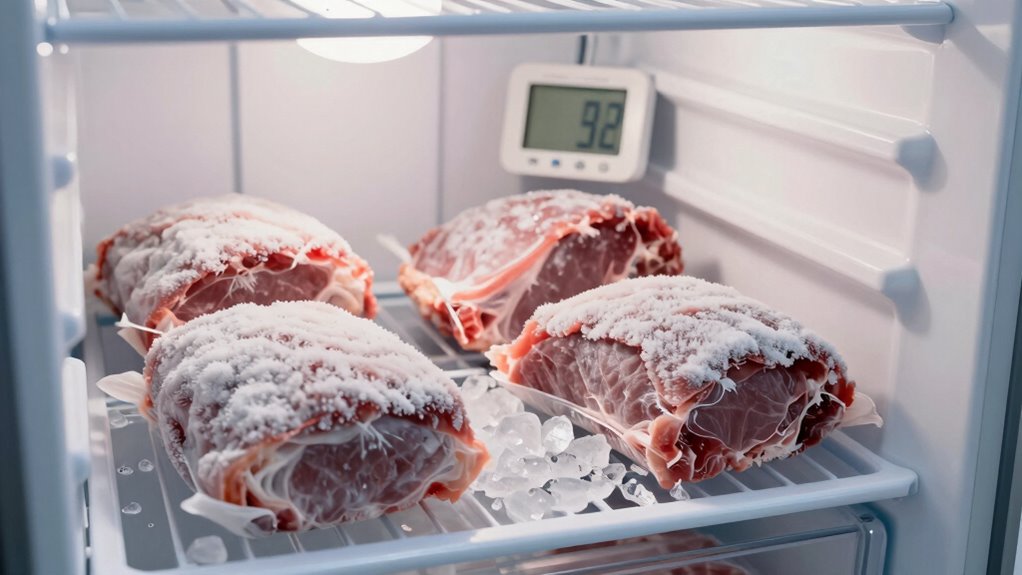
When the power goes out, how long your frozen meat remains safe depends on several factors, including the freezer temperature and how often you open it. Generally, if your freezer stays closed, meat can last about 24-48 hours before meat spoilage becomes a concern. The table below shows typical safe durations:
| Freezer Temperature | Duration of Safe Storage | Food Safety Tip |
|---|---|---|
| 0°F or below | Up to 48 hours | Keep the door closed |
| 0°F or below | Up to 24 hours | Use a thermometer to monitor |
| Slightly above 0°F | 12 hours or less | Check for thawing or spoilage |
| Slightly above 0°F | Less than 12 hours | Use or discard meat |
| Warmer than 40°F | Not safe to eat | Avoid consuming meat |
Additionally, using a temperature monitor can help you better track the freezer’s condition during an outage. It’s also helpful to understand that proper freezer organization can minimize the number of times you need to open the door, thereby maintaining the internal temperature longer. Ensuring your freezer is well insulated can also help keep the temperature stable during power disruptions. Maintaining a consistent freezer temperature is crucial for food safety and freshness, especially during power outages. Proper freezer maintenance can prevent spoilage and extend the safe storage time of your frozen foods.
Quick Tips to Keep Your Freezer Cold During a Power Outage
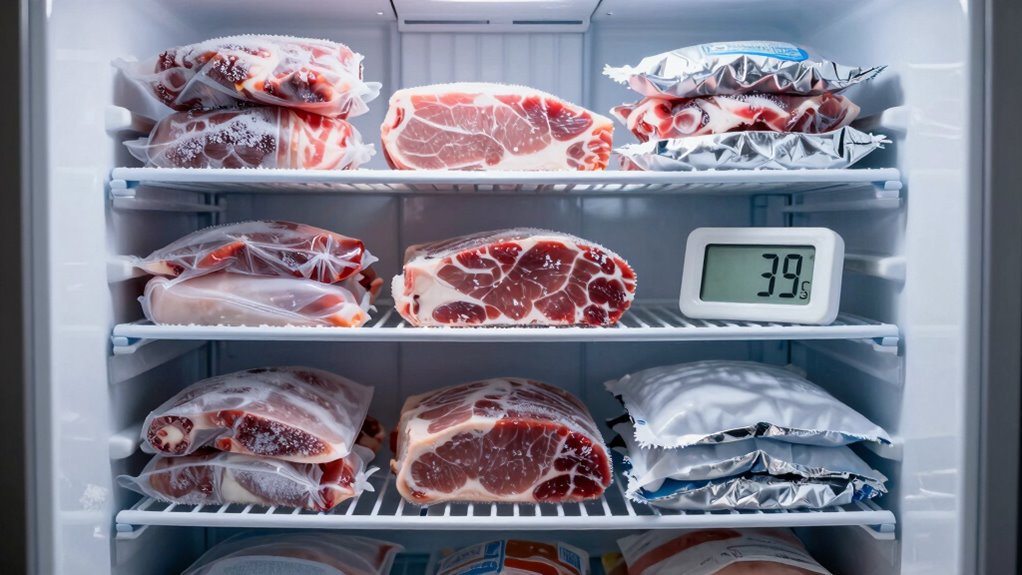
Keeping your freezer cold during a power outage requires quick action to preserve food safety. To minimize temperature fluctuations, avoid opening the door unless necessary, as each opening lets in warm air and raises the internal temperature. Keep the door closed as much as possible to maintain the cold environment. If you have a thermometer, monitor the temperature regularly; ideally, it should stay below 40°F. Once power is restored, don’t rush to open the freezer—wait for it to stabilize before checking the contents. If you notice significant temperature increases or food has been above safe levels for more than two days, consider safety before consuming. Acting swiftly helps keep your frozen food safe until power is back. Understanding electrical safety and proper backup solutions can help prevent prolonged outages and protect your appliances. Additionally, knowing how to properly store frozen foods can help maximize their preservation during outages.
How to Insulate Your Freezer and Use Frozen Items Strategically
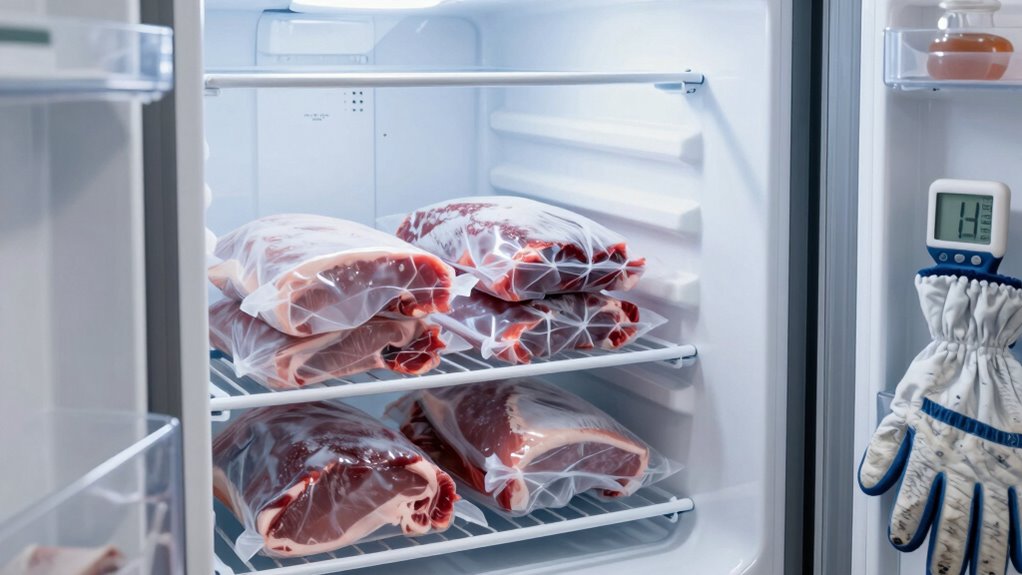
Insulating your freezer effectively can considerably slow temperature rises during a power outage, helping preserve your food longer. Use insulation materials like foam board, reflective blankets, or thick blankets to wrap around your freezer, especially if it’s in an unheated space. Seal gaps and cracks with weatherproofing techniques such as weatherstripping or caulk to prevent cold air from escaping. These methods help maintain internal temperature longer, giving your frozen items extra time before thawing. Proper temperature management and insulation techniques create a buffer that slows heat transfer, giving you more control during power outages. Keep the freezer lid closed as much as possible to maximize insulation benefits. Strategically using frozen items also helps maintain cold temperatures naturally. Additionally, understanding the importance of air quality and how temperature fluctuations can affect food safety can help you plan better during outages. Improving thermal insulation around your freezer can significantly enhance its ability to retain cold, extending the safe storage period during outages. Incorporating insulation techniques can further optimize your freezer’s efficiency and prolong its cold retention capacity during unexpected power interruptions. Enhancing your freezer’s insulation with energy-efficient methods can also reduce energy consumption when power is restored.
Easy Ways to Organize and Package Meat for Better Preservation
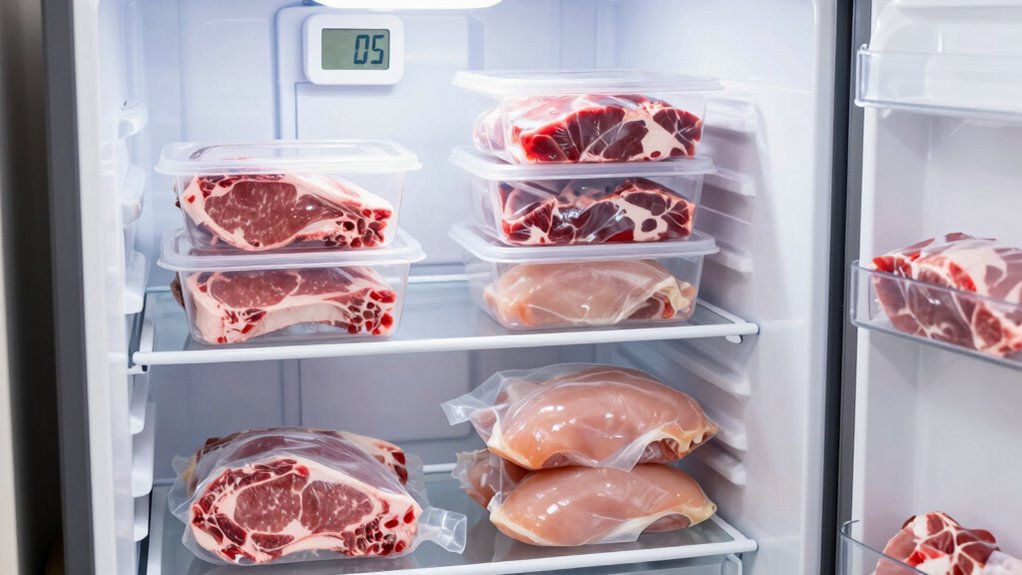
Looking for simple ways to keep your meat fresh and well-preserved? Effective meat packaging and freezer organization are key. To maximize preservation, consider these steps:
Keep meat fresh longer with proper packaging and organized freezer storage.
- Label each package clearly with date and content to track freshness.
- Use airtight, freezer-safe bags or containers to prevent freezer burn.
- Organize your freezer by grouping similar meats together, making it easier to find and rotate stock. Incorporating freezer organization with labels and groupings can further improve efficiency.
- Incorporate local automation in your freezer management to monitor storage conditions and automate alerts for optimal preservation. Using proper maintenance practices can also help ensure your freezer runs efficiently and maintains consistent temperatures. Staying informed about AI cybersecurity can help protect your device systems connected to smart freezer technology.
Diy Tricks to Maintain Freezer Temperature During Power Failures
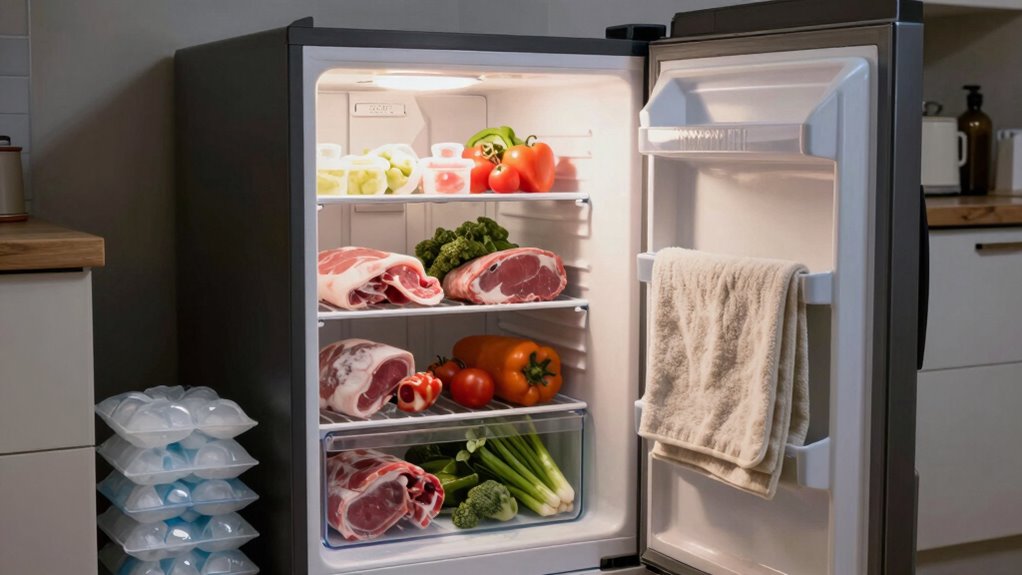
When a power outage strikes, taking quick action can help keep your freezer cold and preserve your food. Proper freezer maintenance and having a plan for power outage preparedness are essential. Start by keeping the freezer door closed as much as possible to maintain the cold temperature. You can also stuff the freezer with frozen water bottles or ice packs if available, which helps stabilize the temperature longer. Insulating the freezer with blankets or towels can provide extra thermal protection, slowing heat transfer. Avoid opening the freezer frequently to prevent temperature spikes. These DIY tricks are simple, cost-effective ways to extend the time your food stays frozen. Additionally, understanding the weight of your freezer can help you plan for moving or temporary placement during outages or repairs. Regularly checking your freezer’s seal integrity ensures minimal cold air loss and maintains efficiency during power disruptions. Knowing the thermal insulation properties of your freezer can further help optimize its energy retention during outages. Moreover, being aware of the security features of your appliances can help prevent accidental damage or theft during emergencies. Being familiar with your freezer’s capacity can also assist in organizing and maximizing storage during such events.
When and How to Use Ice Packs or Dry Ice Safely in Your Freezer
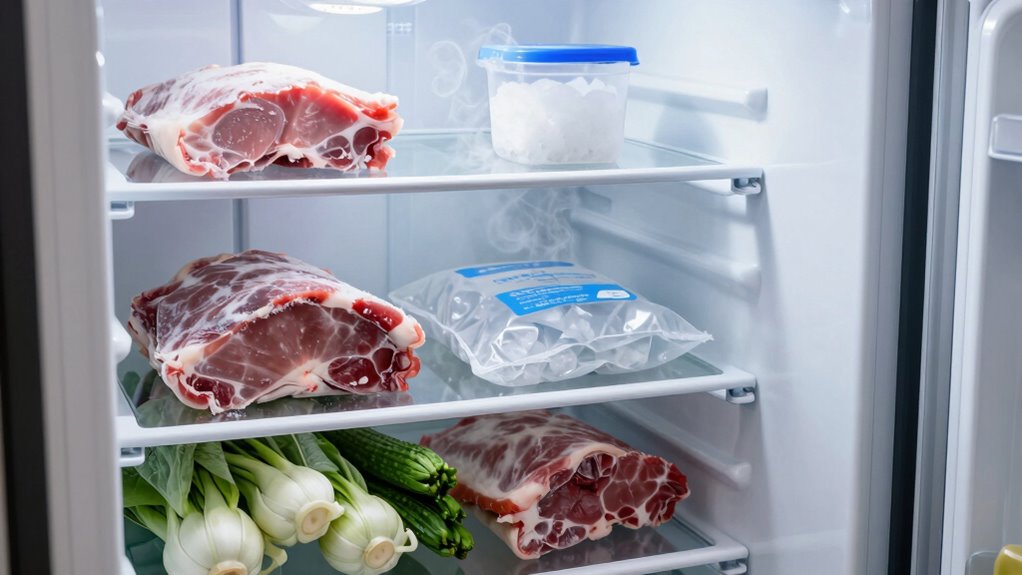
To keep your freezer safe during a power outage, you need to know the proper handling procedures for ice packs and dry ice. Always wear gloves when handling these cold sources to prevent frostbite or burns. Make sure to place them correctly inside the freezer to maximize cooling without damaging the appliance. Additionally, air purifier maintenance techniques such as proper airflow and filter replacement can help improve indoor air quality during extended outages. Understanding Gold IRA markets can also be beneficial for financial planning during unpredictable events, ensuring your investments are protected even in times of crisis.
Safe Handling Procedures
Handling ice packs and dry ice safely is essential to prevent injuries and protect your food during a power outage. Improper handling can compromise food safety and disrupt temperature control. Follow these steps:
- Always wear gloves when handling dry ice to avoid frostbite.
- Use insulated containers to prevent direct contact with ice packs or dry ice, maintaining safe temperature levels.
- Keep dry ice and ice packs away from children and pets to prevent accidental ingestion or injury.
Proper Placement Tips
Proper placement of ice packs or dry ice in your freezer can make a significant difference during a power outage. Use effective placement techniques to maximize cooling and keep your food frozen longer. Place ice packs or dry ice near the top and center of your freezer, where cold air naturally settles, ensuring even temperature distribution. Avoid stacking them directly on top of stored food to prevent freezer burn or contamination. Instead, position them around the perimeter or layered between items, maintaining good freezer organization. This method helps sustain the cold temperature uniformly and prolongs the time your food stays frozen. Remember to handle dry ice with gloves and avoid direct contact to prevent injury. Proper placement techniques are essential for maintaining a safe and effective freezer environment during outages.
How to Spot Spoiled Meat After a Power Outage
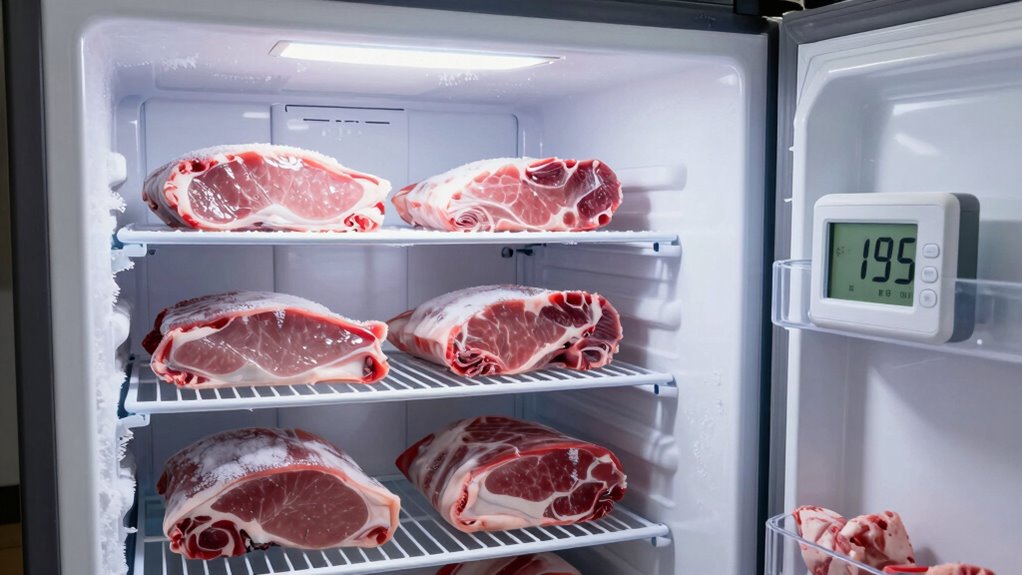
After a power outage, it’s essential to check whether your meat is still safe to eat before cooking or consuming it. To do this, focus on signs of meat spoilage, especially odor detection. First, examine the meat’s smell; a sour or off-putting odor indicates spoilage. Second, check the meat’s texture—if it feels slimy or sticky, discard it. Third, look for discoloration; any grayish, greenish, or dull appearance suggests it’s no longer safe. Remember, odor detection is your most reliable indicator of spoilage, as bacteria can grow even in frozen meat if the temperature rises. Trust your senses, and when in doubt, it’s safer to throw out questionable meat to avoid foodborne illness.
What to Do When Power Comes Back On: Thawing and Food Safety Tips
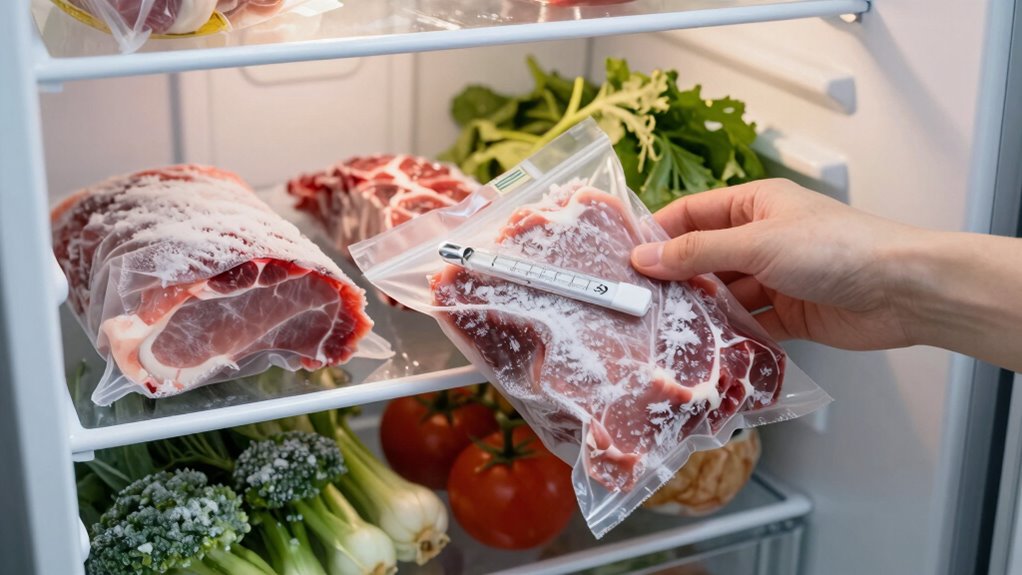
When your power finally comes back on, it’s crucial to act quickly to guarantee your food remains safe. First, check the temperature of your freezer; if it’s below 40°F, your food should stay safe. Use proper thawing techniques like refrigerator thawing, cold water, or microwave. Never leave food out at room temperature. To visualize, imagine:
| Frozen Item | Thawed in Refrigerator | Food Reheating Method |
|---|---|---|
| Chicken | 24 hours | Microwave or stovetop |
| Vegetables | 12 hours | Boil or steam |
| Meat | 24-48 hours | Oven or skillet |
Create an Emergency Plan to Protect Your Freezer and Food Storage
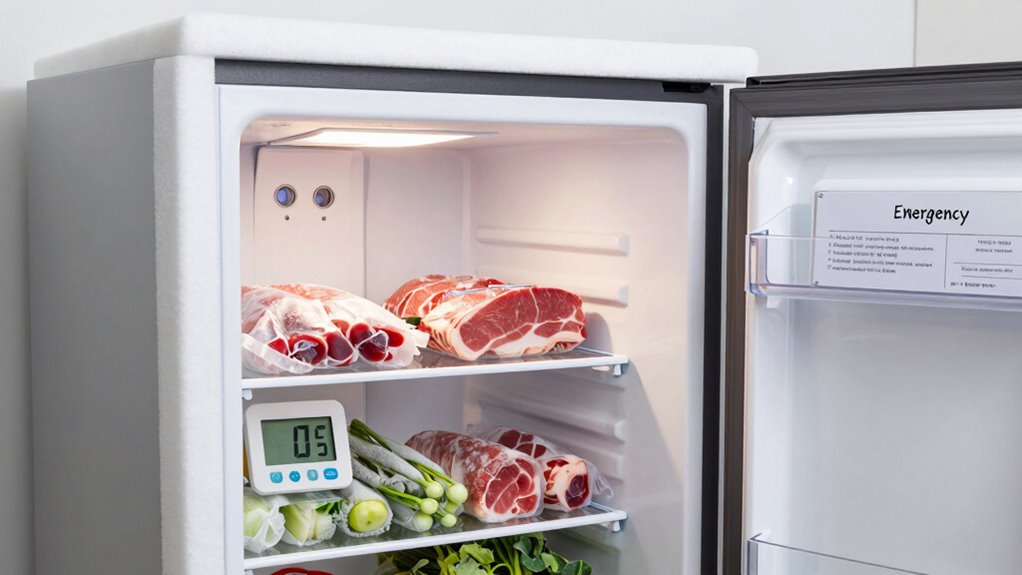
To effectively protect your freezer and food storage during a power outage, it’s essential to have a well-thought-out emergency plan in place. Start by ensuring your generator maintenance is up to date, so it’s ready when needed. Next, assemble an emergency kit that includes extra ice, coolers, and supplies to keep food cold if power is lost. Finally, create a clear plan for monitoring the outage and conserving energy:
- Know how to safely run your generator and keep it outside.
- Identify a backup location to store perishable foods temporarily.
- Establish communication methods with family members and neighbors to share updates.
Having these steps ready minimizes food spoilage and keeps your freezer contents safe longer, even during extended outages.
Frequently Asked Questions
Can I Refreeze Meat After a Power Outage if It Still Feels Cold?
Yes, you can refreeze meat after a power outage if it still feels cold, following refreezing guidelines. Make certain the meat is at 40°F or below, and check for any signs of spoilage like bad odor or sliminess. If it remains frozen solid or just thawed but still cold, it’s safe to refreeze. Always prioritize meat safety tips to prevent foodborne illnesses and maintain quality.
How Do I Safely Dispose of Spoiled Meat Post-Outage?
When you detect a foul odor from spoiled meat after a power outage, it’s safest to dispose of it promptly. Use odor detection to confirm spoilage, then wrap the meat tightly in plastic or foil. Place it in a sealed bag and discard it in your trash, avoiding contact with other foods. Wash your hands thoroughly afterward. Proper disposal prevents contamination and keeps your home safe.
What Are the Signs My Freezer Is Permanently Damaged After a Power Failure?
You’ll notice your freezer is permanently damaged if the compressor fails to run, causing temperatures to rise. Check for persistent interior frost buildup, which indicates poor cooling. If your freezer isn’t maintaining cold temperatures despite the compressor running, and frost won’t melt away, it’s likely damaged. These signs mean you should consider repairing or replacing your freezer to prevent food spoilage and further issues.
Are There Specific Types of Meat More Vulnerable to Spoilage During Outages?
During a power outage, you’ll find that vulnerable meats like seafood, poultry, and ground meats spoil fastest, risking rapid spoilage and foodborne illnesses. These meats have higher moisture and fat content, making them more susceptible to bacteria growth. To minimize spoilage risks, prioritize consuming or freezing these items early on. Keep a close eye on your freezer’s temperature and avoid opening it unnecessarily to preserve the cold environment as long as possible.
How Can I Estimate Remaining Safe Storage Time Without Power?
To estimate remaining safe storage time without power, monitor your freezer’s temperature regularly, aiming to keep it below 40°F. Use ice packs generously to maintain consistent temperature, especially if the power outage lasts beyond 24 hours. If the temperature rises above safe levels or ice packs melt, consume or cook the meat promptly. Staying attentive to temperature changes helps guarantee your meat remains safe to eat.
Conclusion
So, next time the lights flicker and your freezer threatens to turn your meat into a science experiment, remember—you’re now the mastermind of cold storage chaos. Keep calm, stay strategic, and maybe invest in a few ice packs. After all, who needs a weather forecast when you’ve got your freezer’s survival plan? With these tips, you’ll be the hero who keeps the meat frozen, not the one serving up a science project.