
To store emergency fuel smarter on your country property, consider modern solutions like solar-powered pumps and secure, compliant tanks that minimize risks and maximize safety. These systems operate independently of the grid, are easy to install, and reduce spills through automatic shut-off features. Prioritizing regular maintenance, safety regulations, and proper training guarantees your fuel stays safe, accessible, and environmentally friendly. Keep exploring to discover effective strategies that protect your property and ensure reliable fuel access when you need it most.
Key Takeaways
- Use modern, secure fuel storage tanks with spill containment and safety features to prevent environmental hazards.
- Implement solar-powered fuel pumps for independent, reliable, and eco-friendly fuel access in remote areas.
- Follow strict safety regulations on tank placement, venting, and fire safety to ensure compliance and safety.
- Conduct regular inspections and maintenance to detect leaks, corrosion, and ensure secure fittings.
- Provide proper training on emergency procedures and handling to reduce risks and ensure preparedness during outages.
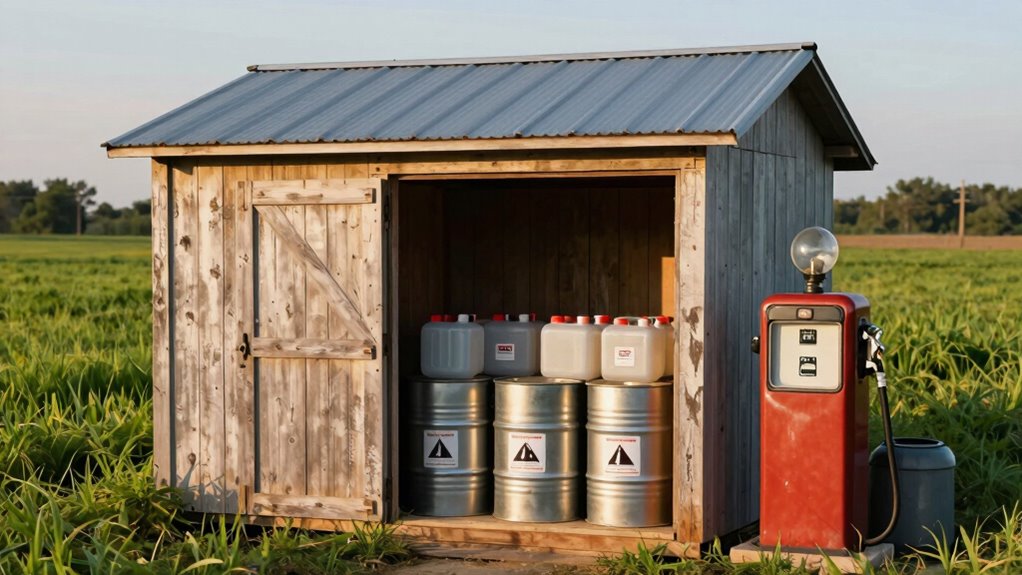
Living in the countryside offers many benefits, but it also means you need to be prepared for emergencies, especially when it comes to fuel supply. Reliable fuel storage is vital if you want to keep your operations running smoothly during power outages or supply disruptions. Traditional methods like metal drums or large tanks are common, but they come with safety concerns and regulatory hurdles. A smarter approach involves integrating modern solutions like solar powered pumps and understanding fuel safety regulations to guarantee your storage system is both efficient and compliant.
Using solar powered pumps can notably enhance your emergency fuel setup. These pumps operate independently of the grid, making them ideal for remote locations. They’re easy to install and require minimal maintenance, which means you won’t have to worry about power failures preventing fuel transfer. Solar pumps also reduce the risk of spills or accidents, as they often come with automatic shut-off features and secure fittings. Plus, since they rely on renewable energy, they’re both cost-effective in the long run and environmentally friendly. With a solar-powered pump, you can safely and efficiently dispense fuel from your storage tanks, guaranteeing you have access when you need it most, without relying on external power sources.
Solar-powered pumps ensure safe, efficient fuel transfer in remote areas, reducing spills and environmental risk.
However, safety isn’t just about the equipment you choose; it’s also about following fuel safety regulations. Regulations are in place to prevent accidents, leaks, and environmental hazards, so it’s essential to know and adhere to them. These rules often specify tank sizes, storage locations, venting requirements, and fire safety measures. For example, you might need spill containment systems or proper fencing around your storage area to prevent unauthorized access. Staying compliant not only protects your property and the environment but also helps avoid fines and legal issues. Regular inspections and maintenance are also part of good safety practices—checking for corrosion, leaks, and ensuring all fittings are secure. Incorporating fuel safety regulations into your planning ensures that your setup remains both safe and compliant over time. Additionally, understanding fuel storage regulations can help you optimize your setup to meet all legal standards efficiently. Implementing proper safety measures further enhances the security and safety of your fuel storage. Being aware of emergency preparedness protocols can also help you respond swiftly and effectively in case of an incident.
Furthermore, investing in training and education for safe handling and emergency procedures can significantly reduce risks associated with fuel storage. Combining modern technology like solar powered pumps with strict adherence to fuel safety regulations results in a smarter, safer fuel storage system. It minimizes risks, reduces costs, and boosts your peace of mind. You’ll know that your emergency fuel supply is reliable, accessible, and compliant with all safety standards. Whether you’re preparing for power outages, natural disasters, or just want a more sustainable setup, this approach keeps your country property ready for any situation. In the end, investing in intelligent storage solutions means you’re better equipped to handle emergencies without compromising safety or environmental integrity.

TaskStar Diesel Transfer Pump Kit: 12V 13GPM Electric Fuel Transfer Pump with Fuel Nozzle & Hoses for Diesel Kerosene Transformer Oil, Portable Self-Priming Pump for Tractor Truck Boat
- High Flow Rate: 13 GPM for quick fuel transfer
- Remote & High-Position Fueling: Draw from 9.8 ft away, pump to 26.2 ft
- Versatile Fluid Compatibility: Diesel, kerosene, oil, transformer oil
As an affiliate, we earn on qualifying purchases.
As an affiliate, we earn on qualifying purchases.
Frequently Asked Questions
What Safety Equipment Is Recommended for Emergency Fuel Storage?
You should prioritize fuel container safety by using approved, vented containers and keeping them upright. For storage area security, install fire extinguishers nearby, verify proper labeling, and keep the area well-ventilated and away from heat sources. Additionally, use spill-proof containers, store fuel in a locked, secure location, and regularly inspect for leaks or damage. These measures help prevent accidents and guarantee safe emergency fuel storage on your property.
How Often Should Stored Emergency Fuel Be Rotated or Replaced?
You should rotate or replace stored emergency fuel every 6 to 12 months. Did you know that fuel begins to degrade after just a few months, losing potency and risking engine damage? Proper fuel stabilization helps extend storage life, but it’s essential to regularly check your storage container. By re-stabilizing or replacing fuel within this timeframe, you guarantee your emergency supply stays safe and ready when you need it most.
Are There Legal Restrictions on Storing Large Fuel Quantities?
Yes, there are legal restrictions and storage regulations on storing large fuel quantities. You need to check local, state, and federal laws, as they often limit how much fuel you can store and require proper containers and safety measures. Failing to adhere to these rules can lead to fines or safety hazards. Always contact your local authorities or fire department to guarantee your storage setup complies with all relevant regulations.
What Are the Best Practices for Preventing Fuel Theft?
To prevent fuel theft, you’ve got to outsmart thieves like a superhero with secret weapons. Use fuel concealment techniques—hide tanks behind false walls or underground—and install high-tech security alarms that scream loudly at any suspicious movement. Keep your fuel out of sight and monitored constantly. These smart strategies make thieves think twice, protecting your valuable emergency fuel from sneaky hands and keeping your stash safe and sound.
How Can I Safely Transport Emergency Fuel to Remote Locations?
To safely transport emergency fuel to remote locations, choose the right fuel container types like approved, leak-proof jerry cans or portable fuel tanks. Use secure transportation methods such as a truck or trailer designed for fuel transport, and guarantee containers are tightly sealed and upright. Keep the containers in ventilated, stable areas of your vehicle, prevent spills by avoiding overfilling, and always follow safety regulations to protect yourself and the environment.
Conclusion
Think of your property as a fortress in times of crisis, much like the legendary homes of old that stood strong through storms. By storing emergency fuel wisely, you’re not just preparing for tomorrow—you’re safeguarding your future. With a smart and secure setup, you’ll be ready to face any challenge head-on, much like the resilient heroes of stories past. Keep your fortress fortified, and peace of mind will always be within your reach.